
You may find that “change drive letter and paths greyed out” when using Disk Management to modify, assign, or remove a drive letter for a hard drive. You can solve it by formatting the drive or using MiniTool Partition Wizard to assign a drive letter.
If the Change Drive Letter and Paths option is greyed out in Disk Management, Windows usually prevents you from assigning a drive letter because of file system limitations, protected partitions, disk initialization issues, or partition corruption.
This guide explains all possible causes and provides step-by-step fixes without losing data.
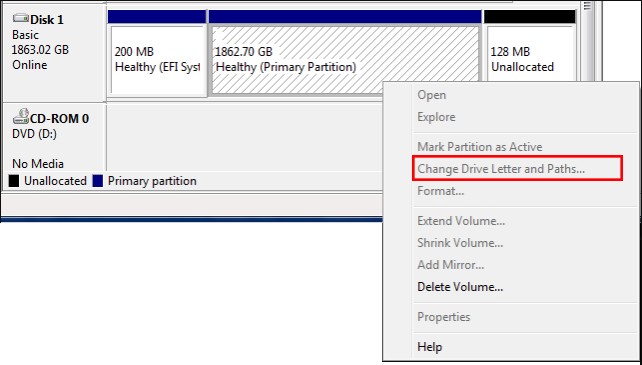
Why Is Change Drive Letter and Paths Greyed Out?
The “Change Drive Letter and Paths” option may be greyed out due to an unsupported file system, a protected system partition, or a disk issue. Common causes include:
Common Cause | Common Cause | Fix |
Special Partitions | EFI, OEM, or Recovery partitions protected by Windows | Do not modify these partitions |
Unsupported File System | Windows cannot read the file system, or it is corrupted | Windows cannot read the file system, or it is corrupted |
Unallocated Space | The disk has no partition or volume yet | Create a new volume and assign a drive letter |
Try the following methods to fix the issue and assign a drive letter to your drive.
Top recommendation: Ext4 vs NTFS vs HFS+: Differences and Which One Should You Use
Method 1. Check if It’s a System or Reserved Partition
The first step to troubleshoot the greyed-out option is confirming whether your target partition is a system-protected special partition, which cannot be modified by design.
The system-protected partition includes the EFI system partition, the recovery partition, and the system reserved.
Method 2. Initialize the Disk
New blank disks without valid volume configurations will disable drive letter setting functions.
If the drive shows as “Not Initialized”, it needs to be initialized. Then you can modify the drive. To initialize the disk, here is the guide:
- In Disk Management, right-click the disk and select Initialize Disk.
- Select MBR or GPT.
- Right-click unallocated space, select New Simple Volume, and follow the wizard to create a valid partition and assign a drive letter.
Method 3. Format the Drive
The drive formatted for Mac (HFS+/APFS) cannot be assigned letters in Windows. Because Windows doesn’t natively support that file system, it will often appear as RAW or an unknown partition.
The easiest and most direct way is to use the drive on a Mac computer. If you need to use the drive on a Windows computer, you need to format the drive to NTFS/FAT32.
Here are the steps to format the drive using Diskpart:
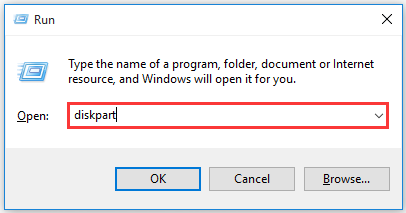
Step 1. Press the Win + R key to open the Run dialog box, and then type diskpart in the box and press Enter.
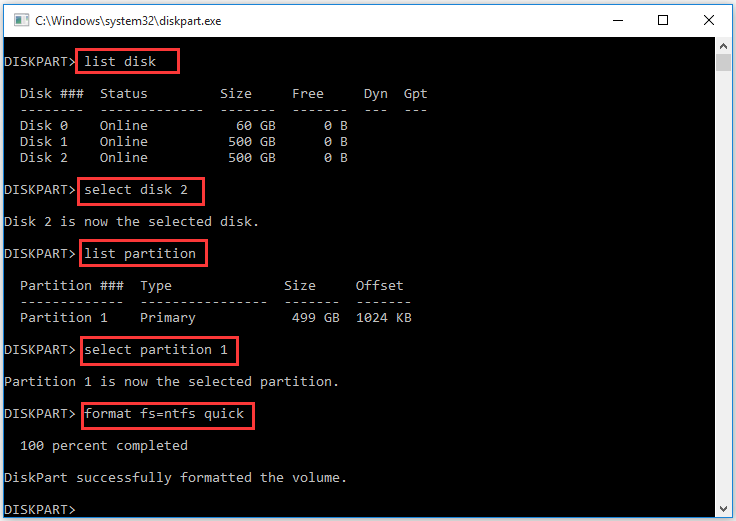
Step 2. In the Diskpart window, type the following commands one by one and press Enter after each command.
- list disk
- select disk *(replace * with the number of your connected drive)
- list partition
- select partition 1 (the 1 represents the partition you want to format)
- format fs=ntfs quick or format fs=fat32 quick
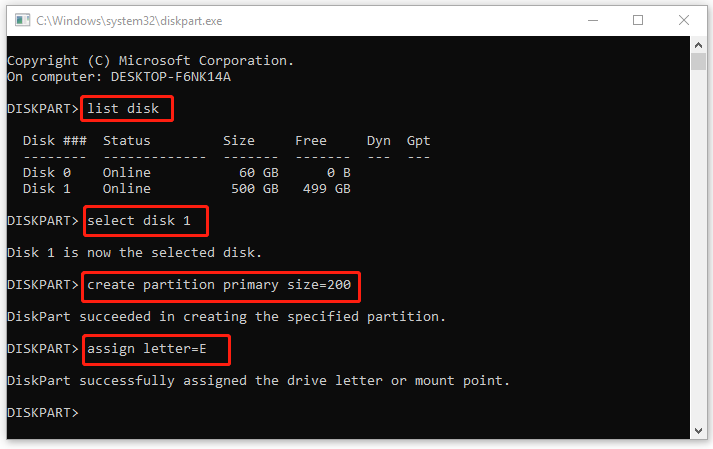
Step 3. Assign a drive letter for the drive. Type the following commands and press Enter.
- list disk
- Select disk 1 (the 1 represents the disk you want to create a partition in)
- create partition primary size=x (x represents the extended partition size in MB)
- assign letter=E (replace E with the letter you want to assign for the drive)
Method 4. Change Drive Letter with MiniTool Partition Wizard
The easiest way to avoid this issue is to use an alternative to Disk Management to change the drive letter. MiniTool Partition Wizard, as a free partition manager, can help you change the drive letter, format a large drive, extend the partition, etc.
MiniTool Partition Wizard FreeClick to Download100%Clean & Safe
Now, follow the steps to change the drive letter using this tool.
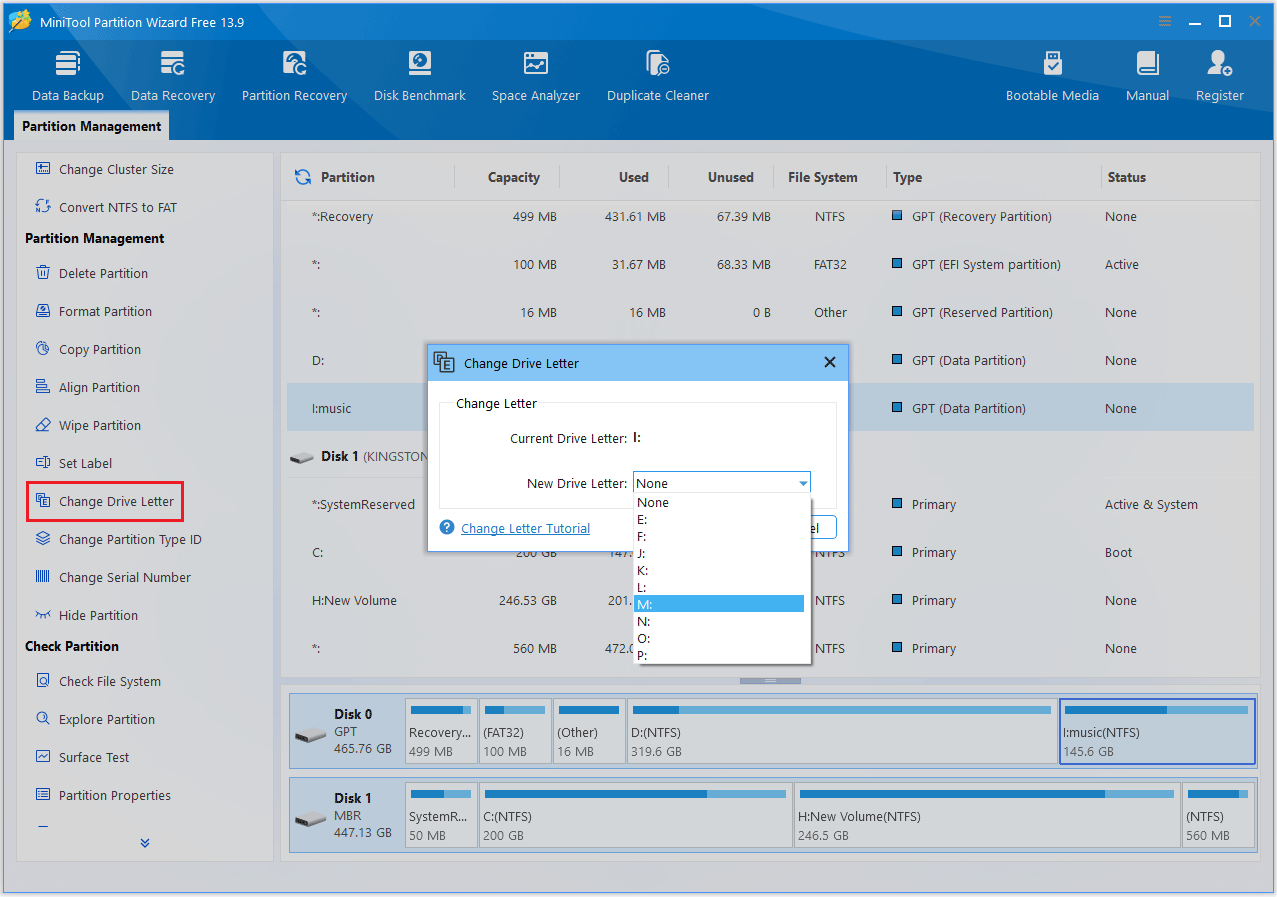
- Launch this software. Highlight the target partition and select Change Drive Letter from the left action panel.
- Choose a drive letter from the list and then click OK.
- Click Apply to operate.
Method 5. Convert MBR to GPT
On the Microsoft forum, some users reported that they can change drive letters successfully after converting an MBR disk to GPT. Here you may have a try. How to convert MBR to GPT without data loss? MiniTool Partition Wizard can make it!
MiniTool Partition Wizard FreeClick to Download100%Clean & Safe
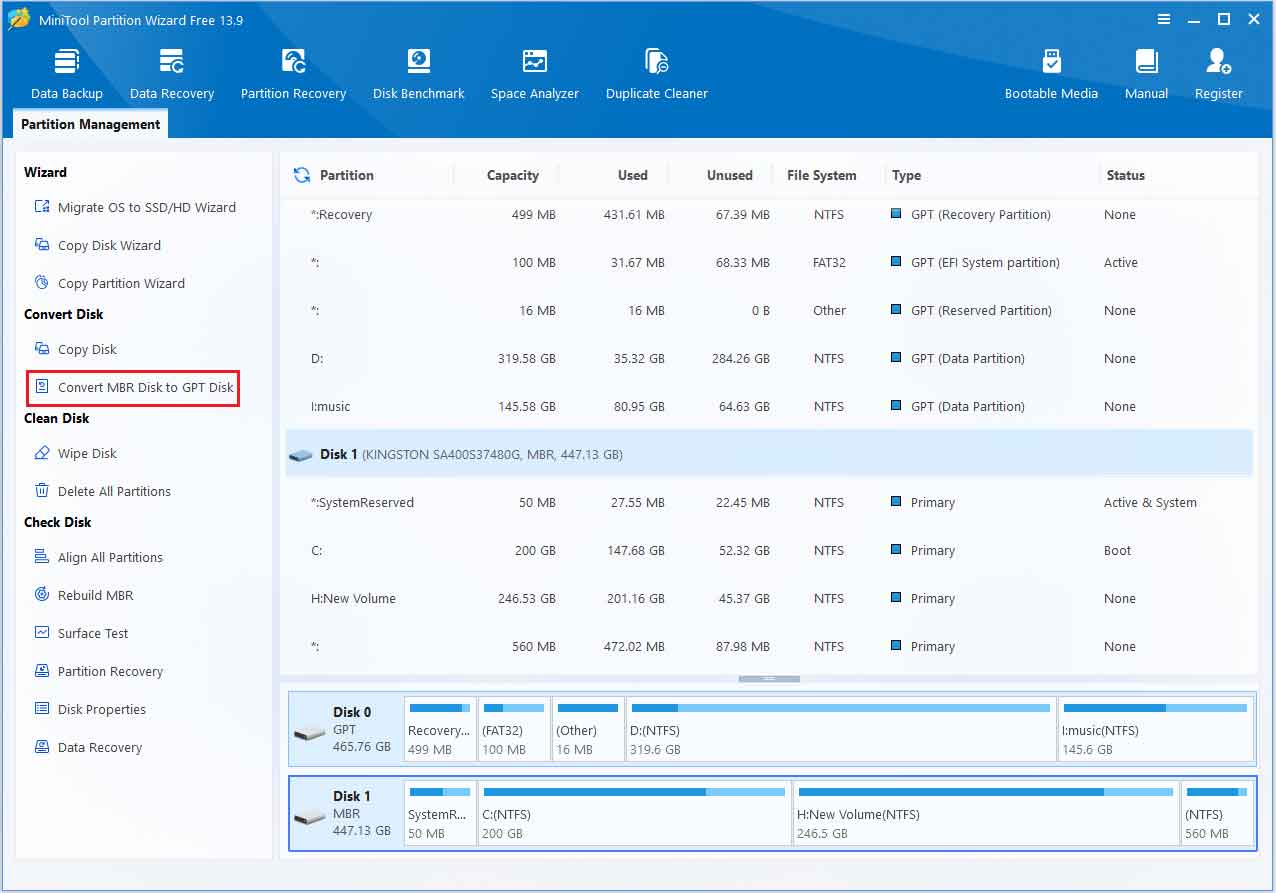
- In the main interface, select the target drive and click Convert MBR Disk to GPT Disk from the left pane.
- Click Apply to execute the pending operation. Once done, you can check if you can change the drive letter.
Important: Recover Data from the Hard Drive
If your drive contains important files and you cannot access the drive (the data is inaccessible), you need to use a data recovery tool to recover the data.
Here’s how to use MiniTool Partition Wizard to recover data from the drive.
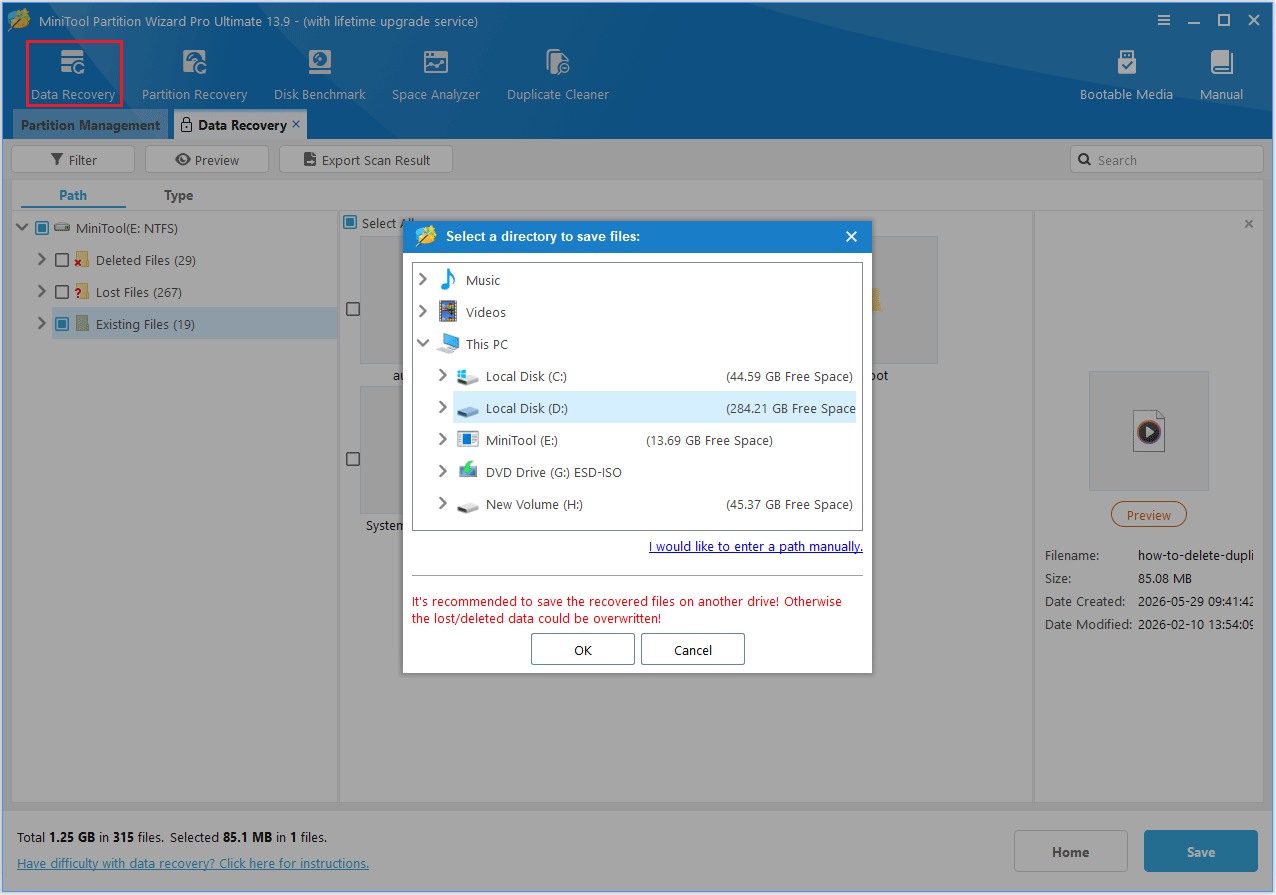
- Run this software, and then click Data Recovery on the top toolbar.
- Select the drive you want to recover data from and click Scan.
- Once the scan completes, check the boxes next to the needed files and click Save.
- Select a different directory to save the recovered files and click OK.
Change Drive Letter and Paths Greyed Out FAQ
- Press Win + R keys to open the Run dialog box, and then type mscin the text box and click on OK to open Disk Management.
- Right-click the drive and select the Change Drive Letter and Paths
- Click on Change and select a drive letter from the drop-down menu, and click on OK.
- Click on Yes to confirm the operation.
After investigating extensive user reports, we summarize 7 applicable methods to fix the Parameter Is Incorrect error:
- Compress these large files
- Convert FAT32 to NTFS
- Format your storage device to NTFS
- Replace your hard drive with a larger one
- Check file system errors
- Connect your external drive to another different computer
- Update your USB and Disk Drive drivers
What’s Your Opinion
The “Change Drive Letter and Paths greyed out” is a common Windows disk management fault with clear targeted solutions.
For any questions or suggestions on the MiniTool program, you send us an email to [email protected]
User Comments :