
If your computer doesn’t reach the minimum storage space limit of a certain game, you can’t run it successfully. If your PC barely meets the minimum storage requirement, you may also encounter various issues like content package no longer available, game crashing, lag spike, etc.
Therefore, sufficient storage space can enhance the gaming experience, which is crucial for gaming PCs.
How Much Storage Should a Gaming PC Have?
For most gamers, a gaming PC should ideally have between 1TB and 2TB of storage. Modern AAA games often require over 100GB of space, making 1TB the starting point, while 2TB is currently the mainstream choice for a comfortable gaming experience.
The specific capacity requirement depends on your gaming habits.
- 500GB: Suitable for casual gamers. Only allows 2-3 large games to be installed simultaneously. Ideal for players who specialize in only a few esports games (such as League of Legends and CS:GO).
- 1TB: Standard configuration. The default configuration for most entry-level and mid-range gaming laptops. Can install 10-15 medium to large-scale games simultaneously, balancing cost and practicality.
- 2TB: An ideal and comfortable choice. Allows you to build a medium-sized game library with 20-30 games installed, eliminating the need to frequently uninstall old games to install new ones.
- 3TB: Suitable for dedicated gamers. Allows you to expand your game collection and play more versions. Meets the demand of content creators who would like to record their gaming sessions.
- 4TB: Designed for game collectors. Suitable for hardcore gamers who enjoy hoarding games and trying out new titles.
Upgrade the Storage of a Gaming PC
As games grow larger and game libraries expand, you may need to upgrade your storage. The easiest method is to add an SDD or HDD and manually point any new games to that drive instead of your main one.
You can also upgrade your main drive, but this involves either cloning the old drive onto the new one or reinstalling Windows, drivers, and your games.
If you choose the disk cloning method, use MiniTool Partition Wizard. Here is the guide:
MiniTool Partition Wizard DemoClick to Download100%Clean & Safe
Step 1: Connect the new hard disk to your computer via an M.2 to USB adapter (If you have a spare SSD slot, you can install the SSD directly).
Step 2: Launch MiniTool Partition Wizard. Right-click on the system disk and choose Copy. Then, select the newly-connected SSD as the destination disk and click Next. Click Yes to confirm the selection.
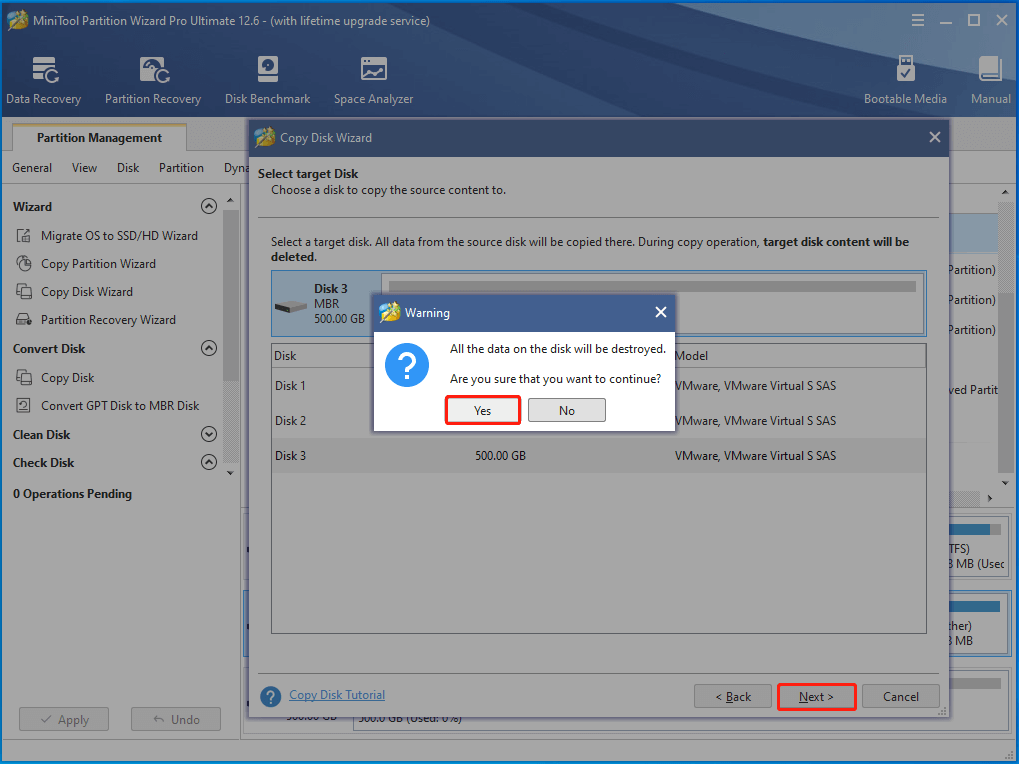
Step 3: You need to choose copy options and click Next in the next window. If you don’t have special requirements, you can follow the default settings.
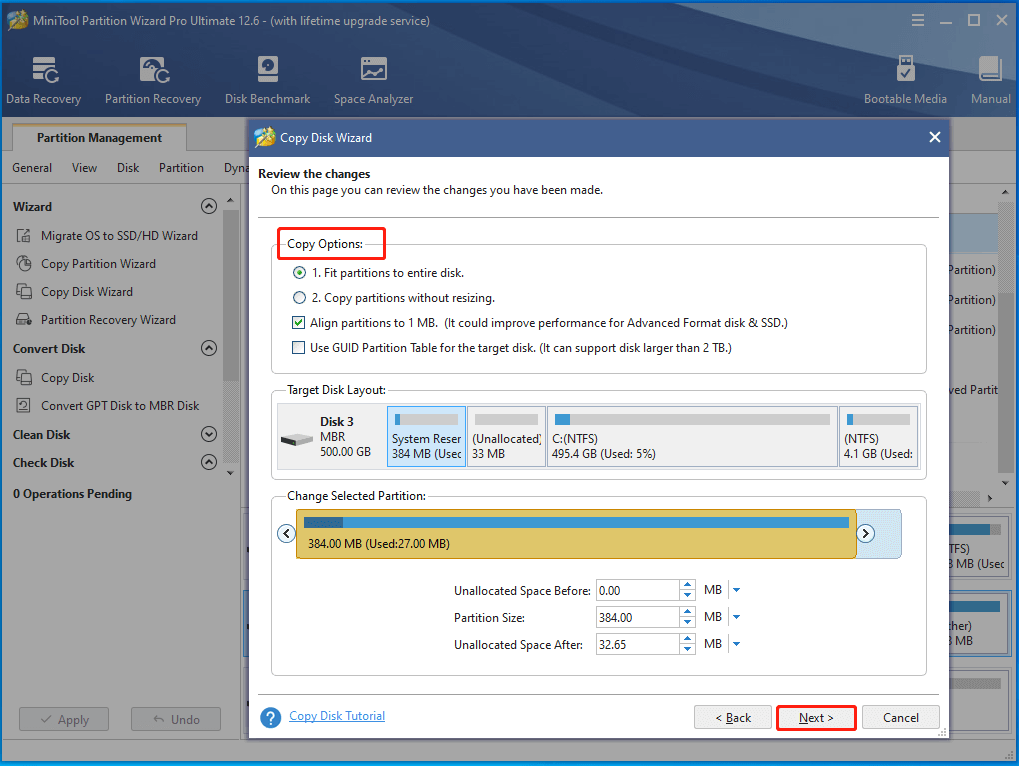
Step 4: Click the Finish button in the elevated window to save the changes.
Step 5: After backing to the main interface, click Apply to execute the operation. Then you can take out the original disk and put the copied disk into the device. Finally, boot up your PC.
Also read: How to Upgrade a Gaming PC? Detailed Instructions Are Here
How Much Storage Should a Gaming PC Have? 500GB/1TB/2TB/3TB/4TB?Click to Tweet
How Much Storage Should a Gaming PC Have FAQ
Of course, depending on your computer’s specific situation, you need to consider whether the SSD is compatible with your computer (form factor, interface, etc.). In addition, you also need to weigh the SSD’s capacity, speed, durability, and price.
Meanwhile, the larger HDD (2TB or more) acts as a secondary storage solution for the older games, indie games with quick loads, and media files like movies, music, or documents.
This hybrid approach allows you to enjoy the responsiveness and speed of an SSD while benefiting from the cost-effective storage capacity of a larger HDD. However, it has declined in recent years due to the lowering prices of higher-capacity SSDs.
However, one large SSD is the best choice for most gamers, because it only takes up one M.2 slot, leaving free slots for the future. In addition, larger SSDs often have slightly higher durability (TBW) and maintain faster speeds during heavy write operations.
On the other hand, two smaller SSDs allow you to place the OS and games into 2 different hard drives, which can protect your game library better.
2. Keep 10%–20% Free Space: Never fill your SSD to maximum capacity, because SSDs require “over-provisioning” space to shuffle data around and manage wear leveling. Without it, performance degrades noticeably.
3. Update Firmware: SSD manufacturers frequently release firmware updates that fix bugs, improve stability, and boost read/write performance.
Bottom Line
How much storage for gaming PC? It is decided by your needs for games. You can get the recommended storage for gaming PCs. How to get more storage on PC? To reach the purpose, simply upgrade to a larger disk with the offered steps.
If you have any thoughts on the best storage for gaming PCs, please share with us in the comment area below. For any questions about MiniTool Partition Wizard, directly contact us by sending an email via [email protected].
About The Author

Position: Columnist
Linda has been an editor at MiniTool for seven years. She continuously learns about computers and puts her knowledge into practice. Moreover, she is particularly knowledgeable in disk management, data recovery, system installation, and PDF editing. Her articles typically reference multiple examples or are based on her own experience, providing users with the most suitable solutions.
User Comments :