
When running the Windows optimization tool, many users encounter the Windows 10 defrag optimization not available issue. If you are also trying to resolve it, you come to the right place. This post of MiniTool summarizes 5 effective fixes.
When you open Defragment and Optimize Drives in Windows 10/11, you may find that a drive shows “Optimization not available” and the Analyze or Optimize button is grayed out. This can happen with HDDs, SSDs, external drives, USB storage devices, or volumes whose file system or storage controller is not properly recognized.
“Optimization not available” means that Windows cannot currently perform the normal optimization operation for that particular volume through the Defragment and Optimize Drives interface.
The good news is that “Optimization not available” does not always mean your drive is damaged. Windows optimizes different types of storage in different ways. HDDs are typically defragmented, while SSDs are optimized using TRIM and other operations. Windows normally handles drive optimization automatically on a schedule.
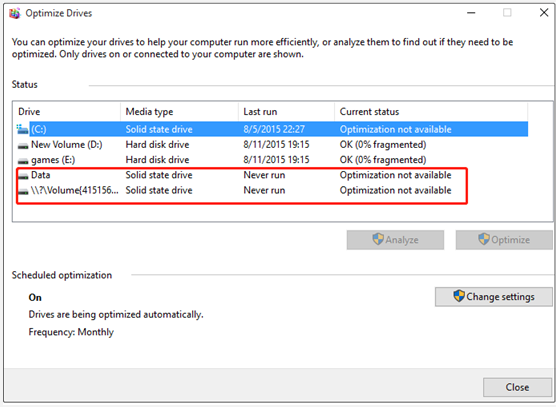
Why Does Windows Say Optimization Not Available?
Several issues can cause this message:
- The drive’s file system is not supported by the Windows optimization tool.
- Windows cannot correctly identify the drive’s media type.
- TRIM is disabled or unavailable for an SSD.
- A storage controller or chipset driver is causing a compatibility problem.
- The drive is connected through an external enclosure or USB controller.
- Defragmentation statistics are corrupted.
- The volume has file-system errors.
- The drive is encrypted or configured in a way that limits optimization.
- Windows has not correctly detected the storage device.
Now, follow the methods below to solve this problem.
MiniTool System Booster TrialClick to Download100%Clean & Safe
Method 1. Use Command Line to Defrag Your Drive
If you can’t optimize system reserved by using the Defragment tool in File Explorer, you can utilize the Command Line to defrag your drive. Here’s how to do that:
Step 1. Type cmd in the search box on the taskbar. And then right-click the Command Prompt app and select Run as administrator.
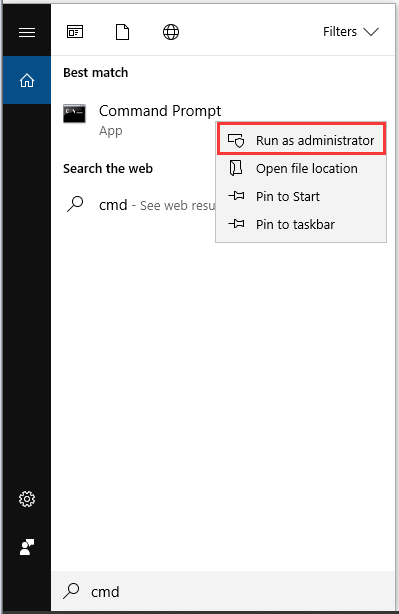
Step 2. In the elevated command prompt, you can perform an analysis for a specific volume. For example, type defrag c: /A and hit Enter. This command will analyze the fragmentation status of your C drive on the hard disk. Note that replace the c with the drive that you want to analyze.
Step 3. If the drive is fragmented, you can continue to run the defrag c: /U /V command. Then the command will run the defragmentation operation on your C drive.
Method 2. Use Third-party Defragmentation Software
In addition to the Windows built-in tools, you can use third-party defragment software like CCleaner Defraggler, Auslogics Disk Defrag, and so forth. To know more details, you can refer to this post “Best Defragmentation Software to Handle Disk Fragmentation”.
Method 3. Delete the Statistics Keys of Defrag
Some users reported that the “system drive won’t optimize” issue can be solved by deleting the corrupt defrag statistics keys. Windows will recreate these keys after you delete them. Here make sure that you back up the registry or create a system restore point in case anything goes wrong.
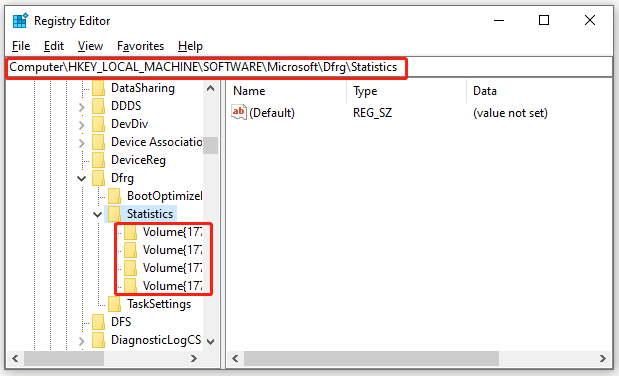
Step 1. Press Win + R keys to open the Run dialog box, and then type regedit in it and hit Enter.
Step 2. In the Registry Editor window, locate the following path via the left navigation bar.
HKEY_LOCAL_MACHINESOFTWAREMicrosoftDfrgStatistics
Step 3. Select all subkeys under the Statistics key, delete them, and reboot your computer. After that, you can reopen the Windows defragment tool and see if the “system drive won’t optimize” issue is fixed.
Method 4. Run Disk Defragmenter in Safe Mode
If you can’t optimize system reserved using the tool in File Explorer, you can try running Disk Defragmenter in Safe Mode. Safe Mode enables users to run with only default settings and drivers, which can minimize the software conflicts and help fix the defrag issue. If you don’t know how to start Windows 10 in Safe Mode, this post provides you with detailed steps.
![How to Turn off Low Disk Space Warning Windows 10 [Full Guide]](https://images.minitool.com/partitionwizard.com/images/uploads/2021/08/how-to-turn-off-low-disk-space-warning-win10-thumbnail.jpg)
Method 5. Check Hard Drive Errors
If none of these ways fix the optimization not available Windows 10 issue, you can check if there are any errors on the hard drive. CHKDSK is a useful tool that can help fix hard drive errors. Here’s a simple guide to use it.
Step 1. Open the Command Prompt app as an administrator.
Step 2. In the elevated command prompt, type chkdsk e: /f/ command and hit Enter. (Note: e represents the drive letter that you want to scan and repair.)
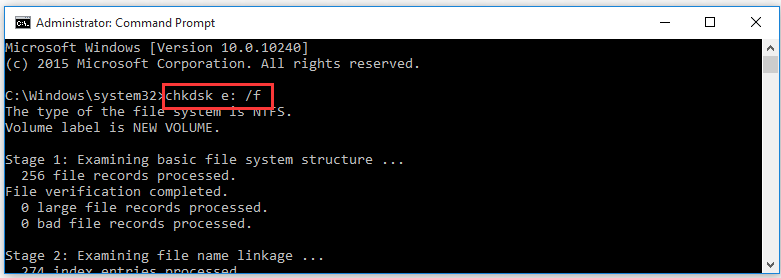
Once this repairing process completes, you can relaunch Disk Defragmenter and see if the error disappears.
Bottom Line
“Optimization not available” in Windows 10/11 does not always mean that your drive needs to be defragmented or that the drive is failing. Try the methods to solve it.
User Comments :