
Your Windows 11 black screen may appear before or after login. It is an annoying issue. This post lists its causes and offers solutions. Among them, MiniTool Partition Wizard offers data recovery for the black screen.
Windows 11 black screen usually happens because of graphics driver problems, failed Windows updates, corrupted system files, or hardware connection issues.
The fastest fixes include restarting Windows Explorer, resetting the graphics driver, entering Safe Mode, uninstalling recent updates, and repairing damaged system files.
In this guide, we’ll explain the common causes of the Windows 11 black screen issue and walk you through effective solutions to get your computer working normally again.
What Causes Windows 11 Black Screen
Here are some common types of Windows 11 black screen and their possible causes.
Common Windows 11 Black Screen Scenarios
Windows 11 black screen can happen in different situations, such as after signing in, installing an update, or starting your PC. The symptoms can help you identify what is causing the problem and find the right solution faster.
| Scenario | Symptoms | Possible Causes |
| Black screen after login with cursor | The cursor is visible and movable, but the desktop, taskbar, and icons do not appear | Explorer.exe failure, graphics driver issues, display process errors |
| Black screen after login without cursor | The screen stays completely black with no response from mouse or keyboard | Corrupted system files, driver problems, malware, or startup failures |
| Black screen after Windows update | The issue appears after installing a feature, system, or driver update | Incompatible drivers, damaged system files, incorrect system settings |
Common Causes of Windows 11 Black Screen
The table below lists the most common causes of black screens in Windows 11.
| Cause | Description |
| Graphics driver issues | Outdated, corrupted, or incompatible GPU drivers can prevent Windows from displaying properly |
| Failed Windows updates | Incomplete updates may damage system files and affect startup |
| Fast Startup conflicts | Hybrid shutdown issues can prevent Windows from waking hardware correctly |
| Hardware connection problems | Loose HDMI/DisplayPort cables or monitor issues can cause display failures |
| Software conflicts | Startup apps or malware may interfere with Windows processes |
| Failed explorer.exe | Windows Explorer fails to load, leaving the desktop unavailable |
After identifying the cause, you can try the following fixes to restore your Windows 11 display.
Method 1. Force Restart
Regardless of whether the black screen issue occurs before or after logging in, you should first try force restarting your computer.
To force restart a Windows 11 PC with a black screen, hold down the physical power button for 10–15 seconds until the device shuts down completely, then turn it back on.
Method 2. Check Hardware Connections and Peripherals
If a Windows 11 black screen is usually just a communication failure between the computer and the monitor, you can check the hardware connections and peripherals.
- Check display cables: Ensure HDMI/DisplayPort cables are securely plugged into both the monitor and GPU (desktops). Try a different cable or port to rule out cable damage.
- Disconnect external peripherals: Unplug all USB devices, external drives, printers, and monitors. Power on the PC. If the black screen is gone, one of the peripherals is faulty. Reconnect them one by one to identify the problematic device.
- Test the monitor: Connect the monitor to another device (e.g., a laptop) to confirm it is working. If the monitor shows a black screen on another device, it is defective and needs replacement.
Method 3. Reset Graphics Driver
Windows 11 has a built-in shortcut to reset the graphics driver and wake the display, ideal for black screens with a cursor:
Press Windows + Ctrl + Shift + B simultaneously. You will hear a beep, and the screen may flicker. This resets the GPU driver and often restores the display.
Method 4. Switch Display Mode
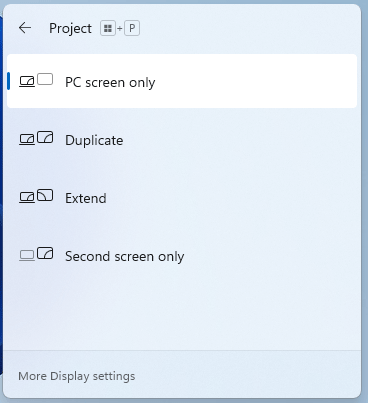
If resetting the graphics driver fails, press Windows + P to open display Project settings, then press P again and hit Enter to cycle through PC screen only, Duplicate, Extend, and Second screen only modes. This fixes black screens caused by incorrect display projection.
- PC screen only: Only the main display is used.
- Duplicate: Shows the same content on both screens.
- Extend: Expands the desktop across both screens, allowing windows to be dragged between them.
- Second screen only: Only the external monitor is used.
Method 5. Restart Windows Explorer
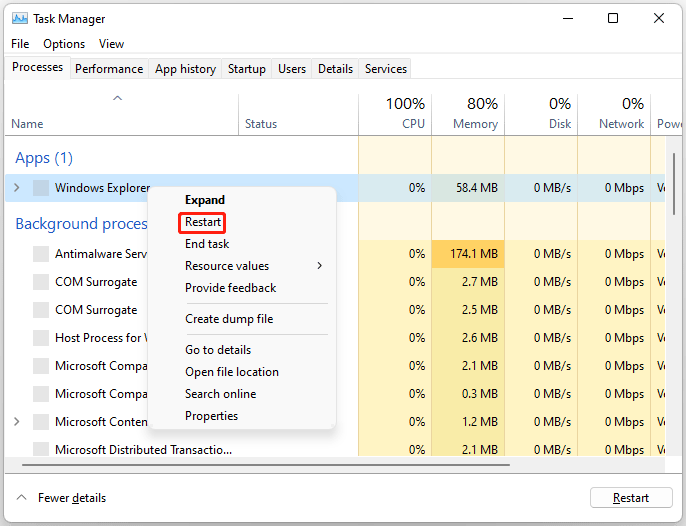
If you see a Windows 11 black screen with cursor, Windows Explorer is likely crashed. Restart it using Task Manager, and then the desktop will load immediately in most cases.
- Press Ctrl + Shift + Esc to open Task Manager directly. If this keyboard shortcut doesn’t work, use Ctrl + Alt + Delete and then select Task Manager.
- Under the Processes tab, find Windows Explorer, right-click it, and select Restart.
Method 6. Boot Windows 11 into Safe Mode
Safe Mode loads Windows with only essential drivers and services, eliminating third-party software conflicts. To boot Windows 11 into Safe Mode, the steps are as follows:
- Force shut down the PC 3 times in a row (hold the power button for 10 seconds each time) to enter Windows Recovery Environment (WinRE).
- In WinRE, select Troubleshoot > Advanced options > Startup Settings > Restart.
- After the PC restarts, press F5 to select Enable Safe Mode with Networking.
If the PC boots successfully into Safe Mode without a black screen, the issue is caused by a third-party driver, app, or service.
Method 7. Disable Fast Startup
Fast Startup is a common culprit for a black screen. Disable it following the steps below.
- Search for Control Panel in the Windows Search bar and open it.
- Go to Hardware and Sound > Power Options.
- In the left-hand panel, click What do the power buttons do.
- Click Change settings that are currently unavailable.
- Uncheck the Turn on fast startup (recommended) checkbox.
- Click Save changes.
Restart the PC normally and check if the Windows 11 black screen is resolved.
Method 8. Update, Roll Back, or Reinstall Graphics Drivers
Faulty graphics drivers are the top cause of post-login black screens. You can update, roll back, or reinstall graphics drivers. The steps are as follows:
Update drivers
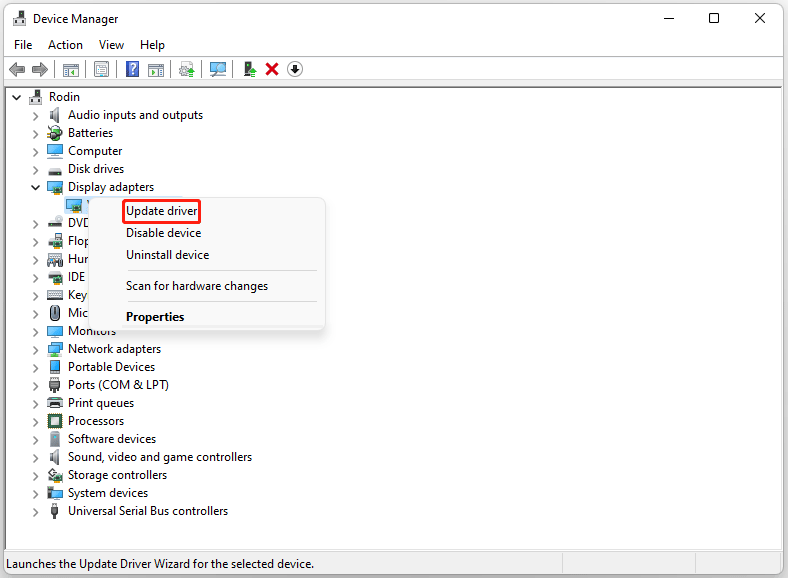
- Right-click Start and choose Device Manager.
- Expand Display adapters, right-click your GPU (Intel, NVIDIA, AMD), and select Update driver.
- Choose Search automatically for drivers. Then follow the prompts to install updates.
Roll back drivers
If the black screen started after a driver update, right-click the GPU and then select Properties > Driver > Roll Back Driver. This restores the previous working driver.
Reinstall drivers
If updating/rolling back the graphics driver fails, right-click the GPU, select Uninstall device, and check the box “Delete the driver software for this device”.
Restart the PC, and then Windows will automatically install a generic display driver. Then download the latest official driver from the GPU manufacturer’s website (NVIDIA, AMD, Intel) and install it manually.
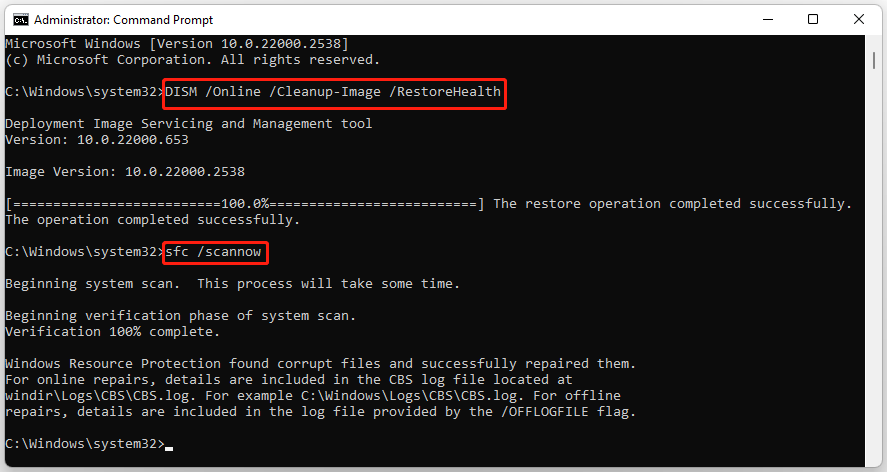
Method 9. Run SFC and DISM Scans to Repair System Files
Corrupted system files can cause Windows 11 black screen issues. Windows has built-in tools, Deployment Image Servicing and Management (DISM) and System File Checker (SFC), to scan and repair corrupted system files.
- Type cmd in the search bar, right-click Command Prompt, and then select Run as administrator.
- Type DISM /Online /Cleanup-Image /RestoreHealth and press Enter.
- After the DISM process finishes, type sfc /scannow and press Enter.
Method 10. Scan for Malware
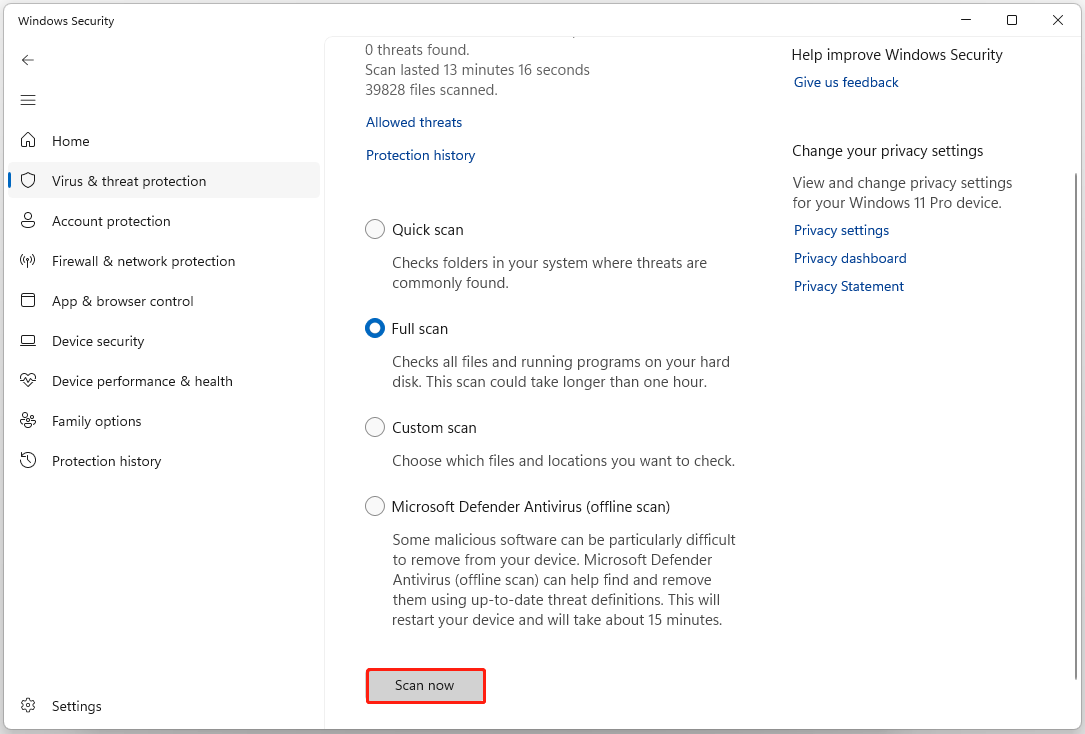
Virus or malware can damage system files and cause a black screen after login Windows 11. To scan for malware, here are the steps:
- Press Windows + I to open Settings.
- Go to Privacy & security > Windows Security > Virus & threat protection.
- Click Scan options to get more scan choices.
- Select Full scan for a comprehensive check or Offline scan for stubborn malware.
- Click Scan now to begin the process.
Method 11. Remove Windows Updates
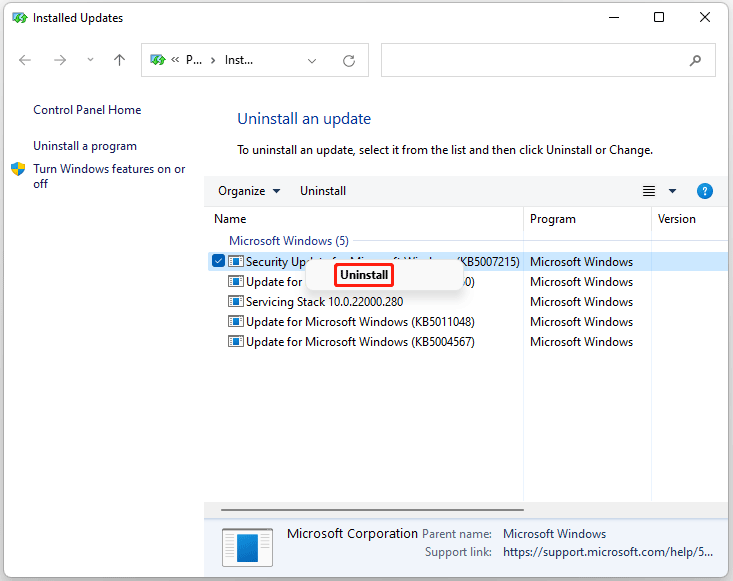
If the computer screen goes black after installing Windows updates, then removing them can restore the computer to normal. Here is the guide.
- Go to Settings > Windows Update > Update history > Uninstall updates.
- In the pop-up window, right-click the most recent KB package and click Uninstall.
Method 12. Perform a System Restore
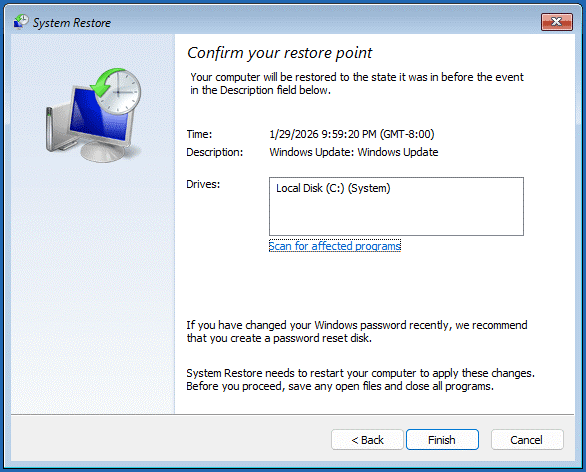
Performing a system restore can revert Windows 11 to a previous state when Windows runs well. The previous state is called a system restore point. If your computer won’t boot into Windows, enter WinRE. Here are the steps:
- Boot into WinRE, and then go to Troubleshoot > Advanced options > System Restore.
- On the pop-up window, click Next.
- Choose a restore point created before the black screen issue began, then click Next.
- Confirm your restore point and click Finish. Then, click Yes. The PC will restart, and all recent changes (updates, installs) will be undone.
Method 13. Reset Windows 11
If other methods fail to resolve the black screen issue, you may need to reset Windows 11, which will restore the operating system to factory settings. Here are the steps:
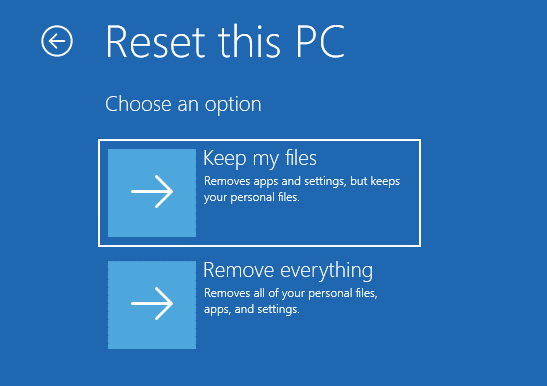
- In WinRE, select Troubleshoot > Reset this PC.
- Choose Keep my files and then Local reinstall. It will reserve personal data while reinstalling Windows and removing all apps/settings.
- Click Reset to start the reset process.
Once you resolve the black screen issue, take these steps to prevent it from recurring:
- Maintain hardware cooling: Clean dust from PC fans and heat sinks regularly. Ensure proper ventilation for laptops and desktops to prevent overheating.
- Use reliable antivirus software: Install a trusted antivirus tool to scan for malware and prevent system file corruption.
- Avoid forced shutdowns: Always shut down Windows using the Start menu. Never hold the power button unless necessary.
- Uninstall unused software: Remove unnecessary third-party apps and startup programs to reduce software conflicts.
How to Recover Data After Black Screen?
If a black screen prevents the computer from booting up and the problem cannot be resolved, performing data recovery is a good option.
How to recover data after your computer has suffered a black screen? Don’t worry. MiniTool Partition Wizard can recover data from internal hard drives, external hard drives, USB drives, SD cards, and more.
It is also a free partition manager that can format/wipe drives, move/resize/extend partitions, convert FAT32 to NTFS and vice versa, and more.
Now, follow the steps below to recover data.
MiniTool Partition Wizard DemoClick to Download100%Clean & Safe
Step 1. Make a bootable USB drive on a working computer.
- Insert a USB flash drive into a working PC. Building bootable media will format your USB drive. So, you need to back up the USB drive data if there are important files.
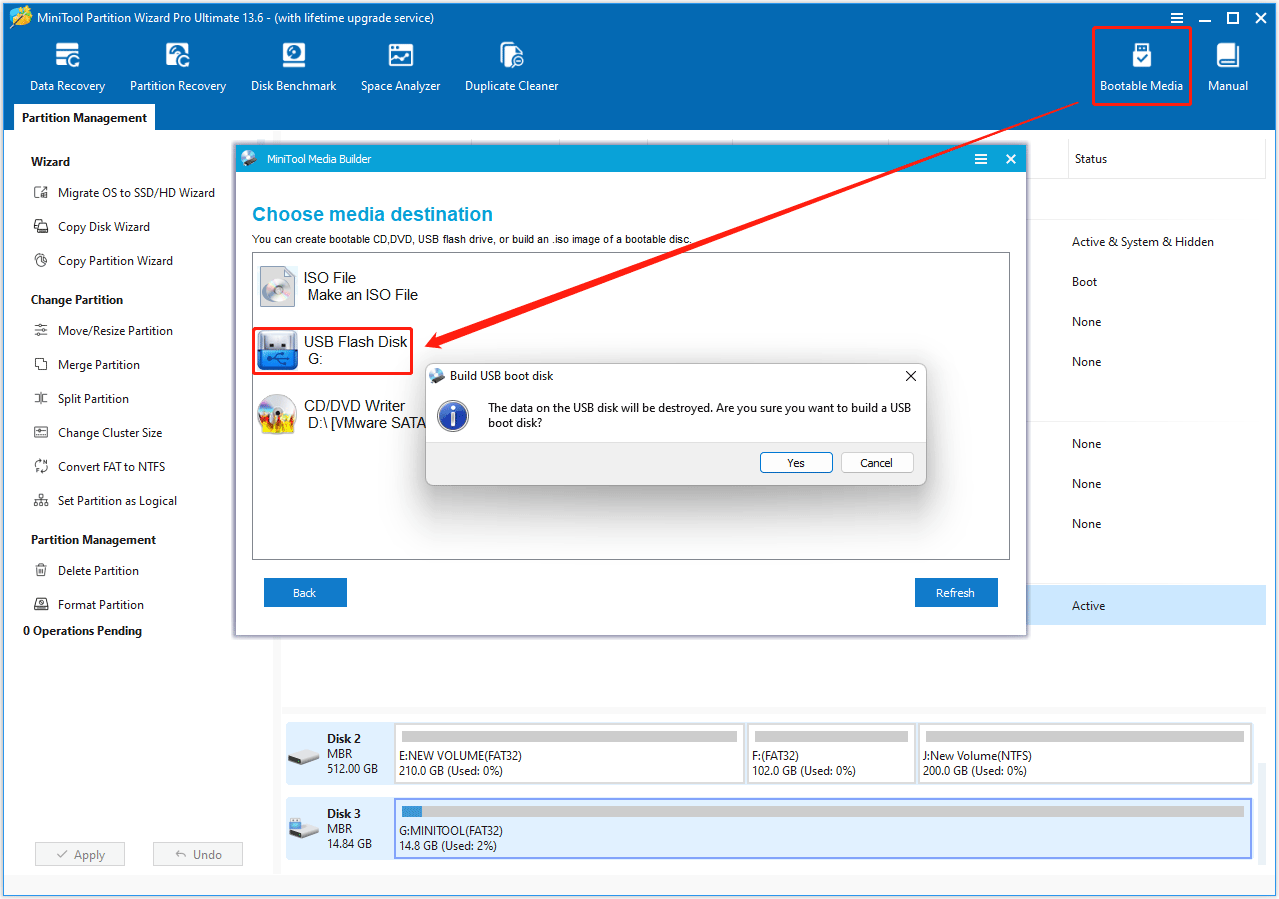
- Launch MiniTool Partition Wizard and click Bootable Media in the top right corner.
- In the pop-up window, click WinPE-based media with MiniTool plug-in.
- Select USB Flash Disk. You will be warned that the data on the USB disk will be destroyed. Click Yes and then MiniTool Partition Wizard will start to create a bootable drive.
- Wait patiently until the process ends and click Finish.
- Finally, eject the USB drive from the computer safely.
Step 2. Boot the problematic computer from the USB drive.
- Plug the bootable USB drive into the problematic computer.
- Restart the computer and then press the boot menu key (F2, F8, F9, F11, F12, Esc, etc.) immediately when the computer logo appears.
- When the Boot Menu appears, select the bootable USB drive.
- Then your computer will load from the USB drive and enter the main interface of MiniTool Partition Wizard after a while.
Step 3. Recover data to another drive.
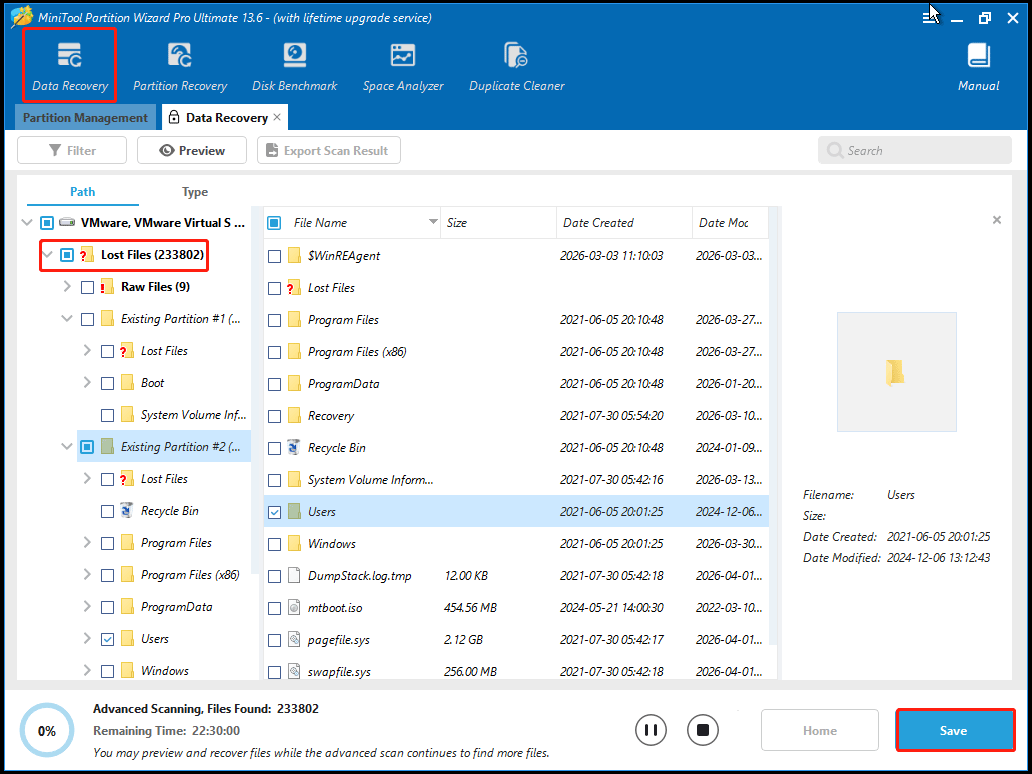
- On the software’s main interface, click Data Recovery on the top toolbar.
- Under the Devices section, select the system disk to Scan.
- After the scanning process is complete, expand Lost Files, and then locate the files you want to recover.
- Select the checkboxes next to the files you want to recover, and then click Save.
- In the pop-up window, select another drive to save the recovered files.
Windows 11 Black Screen FAQ
Bottom Line
This post analyzes the causes of the Windows 11 black screen and provides some effective methods to troubleshoot the error. Additionally, it offers a powerful tool, MiniTool Partition Wizard, to help you recover data after a black screen.
If you have any problems or suggestions when using MiniTool Partition Wizard, contact us at [email protected]. We’ll get back to you as soon as possible.
User Comments :