
To fix a Dell laptop black screen, first check whether the laptop powers on and whether the Dell logo appears. Depending on the cause, you may need to perform a hard reset, reset the graphics driver, restart Windows Explorer, or troubleshoot Windows and display hardware. If important files are at risk, recover your data before attempting advanced repairs or resetting Windows.
If your Dell laptop turns on but the screen stays black, the issue may be caused by display settings, Windows or graphics drivers, or faulty hardware. First, check whether the Dell logo appears and try connecting an external monitor to narrow down the cause.
Start by increasing the brightness, disconnecting external devices, performing a hard reset, or pressing Win + Ctrl + Shift + B to reset the graphics driver. If the Dell logo never appears or the LCD test fails, the problem is more likely hardware-related.
Continue reading for detailed steps to diagnose and fix the Dell laptop black screen issue.
Dell Laptop Black Screen: Identify the Problem First
A Dell laptop can show a black screen for different reasons, depending on what happens when you power it on. Use the symptoms below to identify the most likely cause and choose the appropriate troubleshooting method.
| What you see | Likely cause | What to try |
| Power light is on, but no Dell logo appears | POST, RAM, BIOS, display hardware | Hard reset, LCD test, Dell diagnostics |
| Dell logo appears, then screen goes black | Windows/driver/startup problem | Display reset, Safe Mode, graphics driver |
| Black screen with a cursor | Windows Explorer or graphics driver | Restart explorer.exe, reset display driver |
| External monitor works, laptop screen is black | LCD panel/cable/display hardware | LCD test, hardware inspection |
| Screen is very dim but visible with flashlight | Backlight/display hardware | LCD/display service |
| Black screen after Windows update | Driver/update/system issue | Roll back driver/update, System Restore |
| Black screen after BIOS update | BIOS/firmware issue | Dell BIOS recovery |
| Black screen with no power lights | Power/battery/adapter problem | Power troubleshooting |
Once you identify the symptoms, try the corresponding fixes below. Start with the simplest solutions first, then move on to more advanced troubleshooting if the black screen persists.

Method 1. Adjust the Brightness
A common oversight is that your screen may be on, but the brightness may be set to the lowest setting. To adjust the brightness settings, perform the following steps:
Press the Increase Brightness key (sun icon, usually F7 or F6) repeatedly. If there is no response, try holding down the Function (Fn) button and then repeatedly pressing the Increase Brightness button.
If the problem persists, proceed to the next step.
Method 2. Check the Cables and Connections
Laptop cables can sometimes become loose or worn, causing display problems. Check your laptop’s power cord and video cable for signs of damage or loose connections. If any are found, reconnect them securely.
Method 3. Perform a Hard Reset
Performing a hard reset can help clear temporary settings that might be causing the Dell laptop black screen issue. Here are the steps:
- Turn off your laptop.
- Disconnect the power adapter and remove the battery (if applicable).
- Disconnect all peripherals, including external monitors and docking stations.
- Press and hold the power button for 15-20 seconds.
- Reconnect the battery (if applicable) and the power adapter, then turn on your laptop.
Check if the black screen issue is resolved. If not, proceed to the next step.
Method 4. Connect to an External Monitor
Connecting an external monitor can help determine if the issue is with your laptop’s graphics card, LCD, or display settings. Here is the guide:
Connect your laptop to a known-good monitor using HDMI, DisplayPort, or another compatible cable. Then restart your laptop.
If the external monitor displays correctly, your laptop’s screen may have a hardware issue.
If the external monitor also shows black, the problem may be related to the graphics drivers or software issues. Try the following troubleshooting methods.
Method 5. Reset the Display Mode
A simple glitch can cause the screen to go black, especially when the computer wakes from sleep or hibernation mode.
To refresh the screen, press the Win + Ctrl + Shift + B keys. You should hear a short beep, and the screen will flicker or flash as it resets the connection to the display.
Method 6. Test the LCD
Dell laptops feature a built-in LCD test that can identify if there’s a hardware issue with your laptop’s LCD panel. If the screen remains black, use this tool to see if the hardware itself is broken.
- Turn off your laptop.
- Press the D key + power button to turn it back on.
- Release the D key when you see the screen flash different colors.
- If the screen cycles through solid colors (red, green, blue, white), the display hardware is functioning correctly, and the problem is related to the software. Proceed to the next step.
Method 7. Remove the Connected Devices
Accessories like external hard drives, USB devices, Wi-Fi antennas, printers, and VR headsets can sometimes interfere with the boot process.
If your computer screen remains black on startup, disconnect all non-essential peripherals. Reconnect the devices one by one to see which device might be causing the issue.
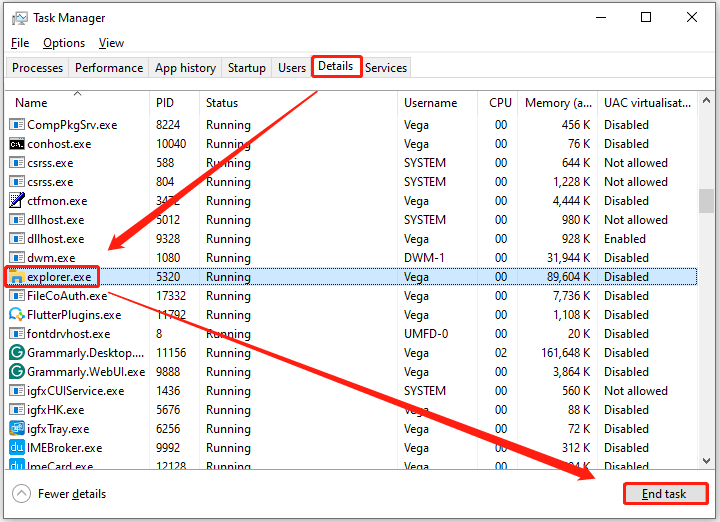
Method 8. Restart the Explorer.exe Process
The Windows Explorer process manages the desktop. If it crashes, you’ll see a black screen with a cursor. So, you should restart the explorer.exe process. The steps are as follows:
- Press the Ctrl + Shift + Esc keys to open Task Manager.
- In the Task Manager window, go to the Details tab, then locate “explorer.exe” and select End Task.
- Restart your laptop to see if that fixed your black screen.
Method 9. Update or Reinstall Graphics Drivers
Outdated, corrupted, or incompatible graphics drivers (Intel/NVIDIA/AMD) can cause the Dell laptop screen black. To fix it, you can update or reinstall your graphics drivers. The steps are as follows:
- Right-click the Start menu and select Device Manager.
- Expand Display adapters, and you’ll see your GPU (e.g., Intel HD Graphics, NVIDIA GeForce RTX 3050).
- Right-click the GPU, select Update driver > Search automatically for drivers. Follow prompts to install updates.
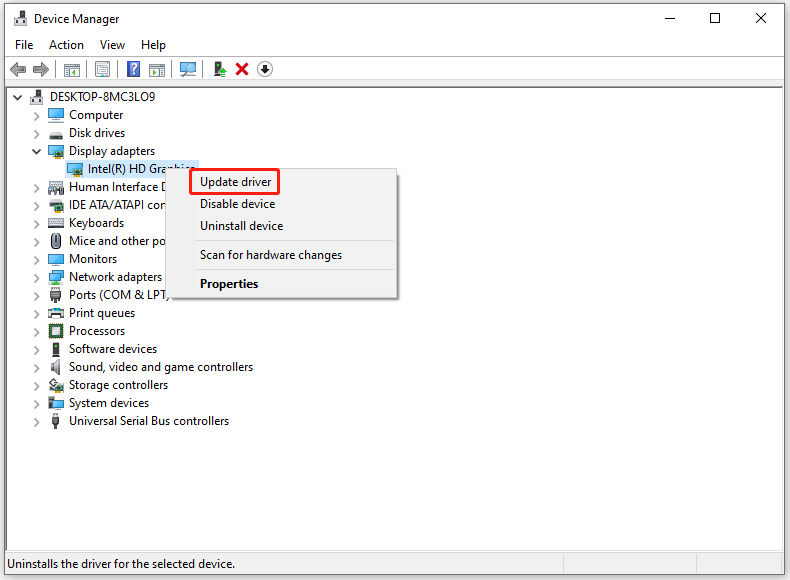
If the update fails, right-click the GPU, select Uninstall device. Check “Delete the driver software for this device” and click Uninstall. Restart the laptop, and then Windows will reinstall the default driver.
Besides, you can download the latest driver directly from Dell’s website.
Method 10. Update Windows
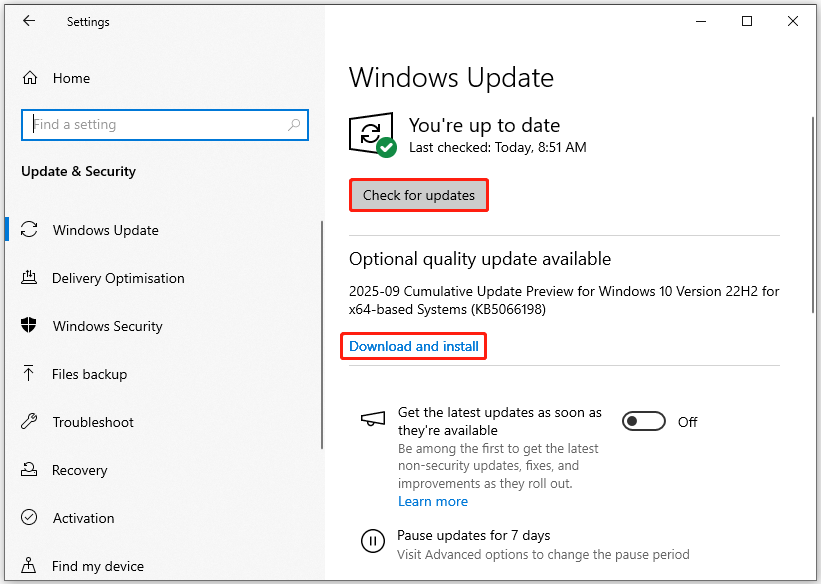
Outdated versions of Windows can cause problems. Windows Update can resolve bugs or glitches that occur. To update Windows, here are the steps:
- Right-click the Start menu and select Settings.
- Go to Update & Security > Windows Update.
- Click Check for updates. If updates are available, click Download & install.
- After installation, restart your PC to apply the updates fully.
Method 11. Factory Reset Your Laptop
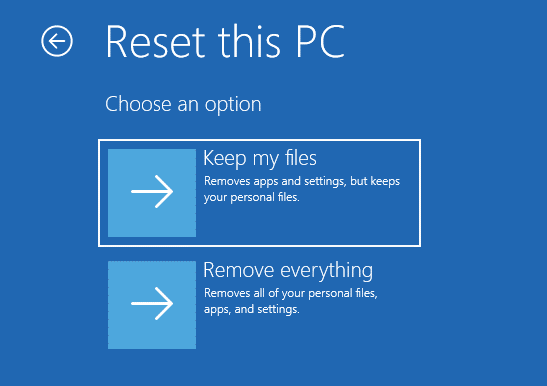
If the issue continues after performing the above methods, the best course of action is to reset your laptop. This process will reinstall the Windows OS and remove any changes you have made to settings.
Here are the steps to reset the PC:
- Open Settings. Then go to System > Recovery > Reset PC (Win 11); Update & Security > Recovery > Get Started under Reset this PC (Win 10).
- Select Keep my files.
- Select Cloud download or Local reinstall.
- Follow the prompts and click Reset. The computer will restart multiple times.
- Follow the on-screen instructions to complete the reset process. This takes some time, and your computer restarts.
If you have tried all the above steps and the problem persists, please contact Dell Support for professional assistance.
- Under warranty: If your laptop is still under warranty (Dell laptops have a 1-3 year warranty), you are eligible for free repair service.
- Out of warranty: Dell offers paid repair services. You can request a quote online or visit a Dell service center.
How to Recover Data Due to Dell Laptop Black Screen?
How to recover data from your laptop if the Dell laptop black screen error cannot be solved? Don’t worry.
The Data Recovery feature of MiniTool Partition Wizard can help you recover data when the computer is unable to boot up.
MiniTool Partition Wizard DemoClick to Download100%Clean & Safe
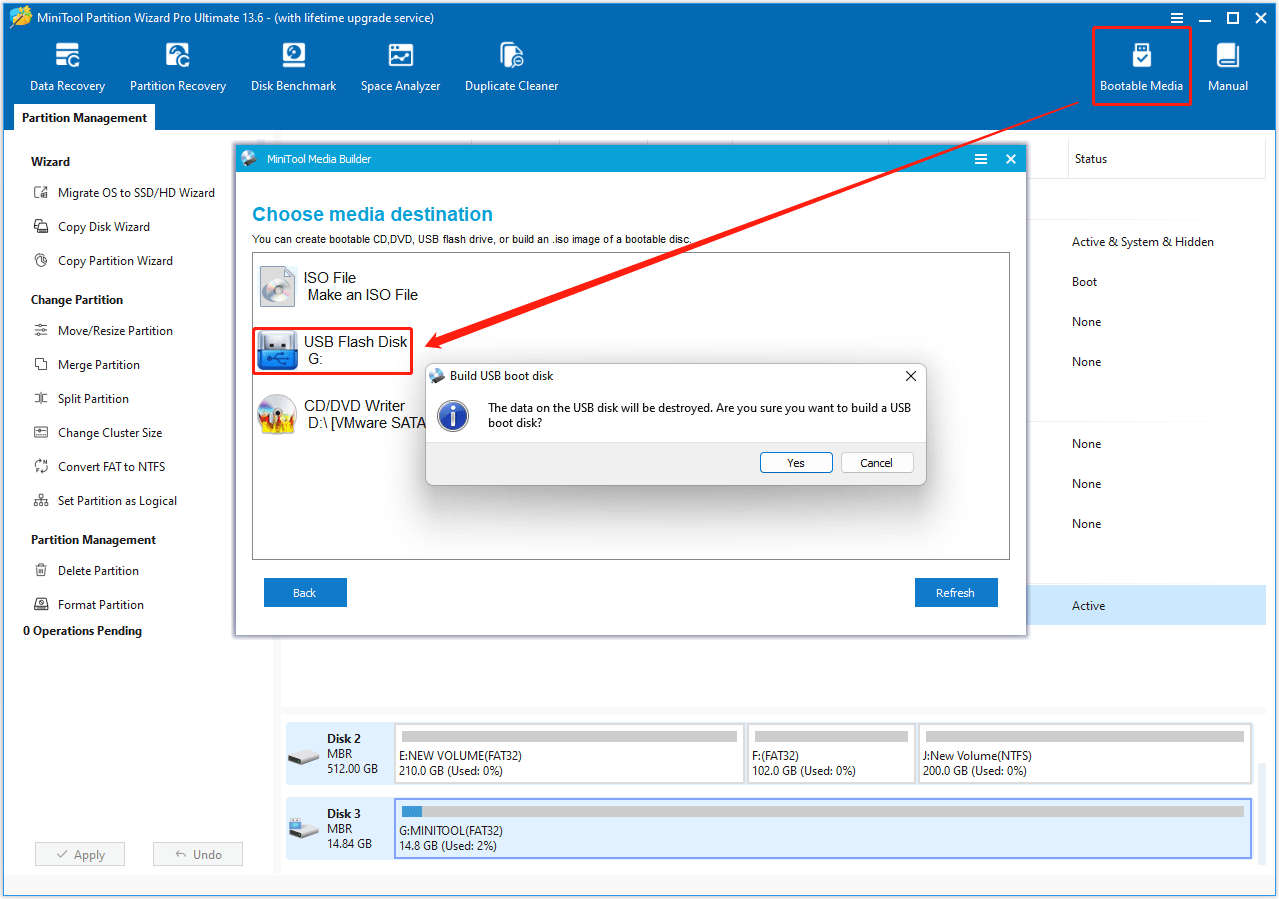
Step 1. Make a bootable USB drive with MiniTool Partition Wizard.
- Connect a USB drive to a working computer. Then launch MiniTool Partition Wizard on this PC.
- On the software’s interface, click Bootable Media in the top right corner.
- Click WinPE-based media with MiniTool plug-in.
- Select USB Flash Disk.
- Click Yes to confirm and start the process.
- After the process is complete, click Finish.
- Finally, eject the USB drive from the computer safely.
Step 2. Boot the black screen computer from the USB drive.
- Plug the bootable USB drive into the problematic computer.
- Connect an external drive to the computer.
- Restart the computer and press the F12 key immediately when the Dell logo appears.
- Select the bootable USB drive.
- Then your computer will load from the USB drive and enter the main interface of MiniTool Partition Wizard after a while.
Step 3. Recover data to an external hard drive.
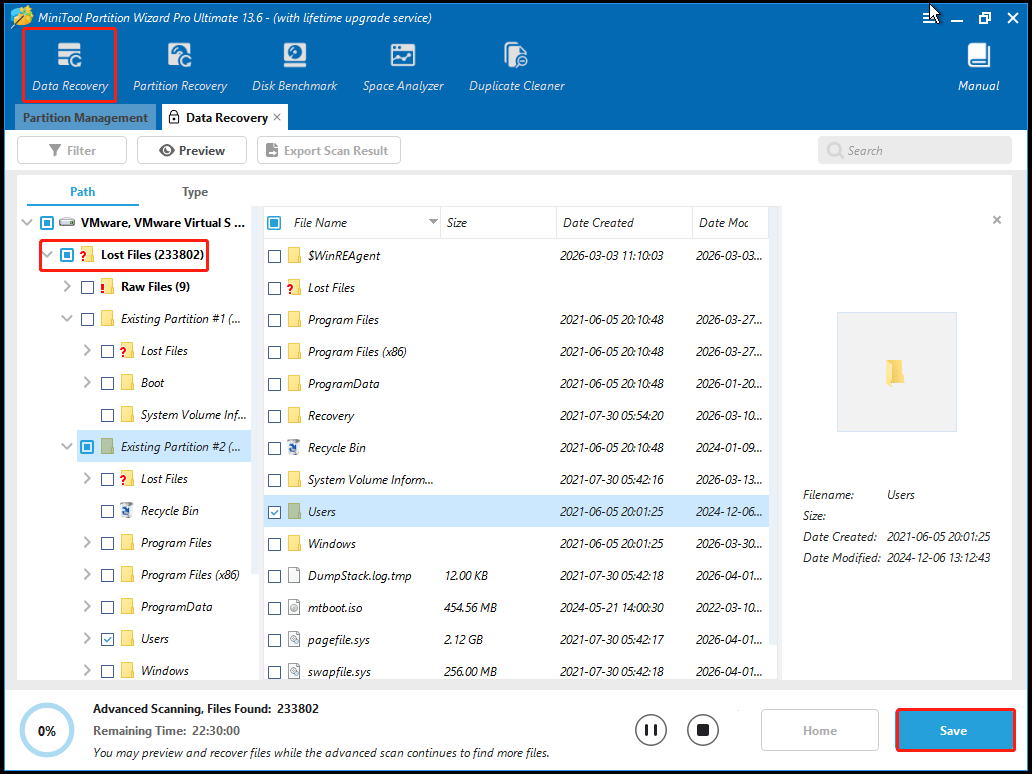
- On the software’s main interface, click Data Recovery on the top toolbar.
- Under the Devices section, select the system disk to Scan.
- After the scanning process is complete, expand Lost Files, and then locate the files you want to recover.
- Select the checkboxes next to the files you want to recover, and then click Save.
- In the pop-up window, select an external drive to save the recovered files.
Dell Laptop Black Screen FAQ
Common fixes include updating drivers, adjusting refresh rates, or checking for environmental light sensor issues.
1. Check if the laptop and power button LED turn on. If not, fix power issues.
2. Try connecting an external monitor to check if the issue is with the laptop screen.
3. Adjust the brightness.
Bottom Line
This post analyzes the causes of Dell laptop black screen and provides some effective methods to troubleshoot the error.
Additionally, it offers a powerful tool, MiniTool Partition Wizard, to help you recover lost data.
If you have any problems or suggestions when using MiniTool Partition Wizard, contact us at [email protected]. We’ll get back to you as soon as possible.
User Comments :