
The Black Screen of Death (BSOD) is one of the most common and frustrating problems encountered during the Windows operating system startup process.
Unlike the classic Blue Screen of Death, the black screen problem often appears immediately after the computer is turned on, without any warnings or error codes.
So, what causes this black screen on startup problem? Can it be easily fixed? The following sections will explore the common causes of the PC black screen on boot and provide effective solutions to these problems.
What Causes the Black Screen of Death When Booting Windows?
The Black Screen of Death during Windows boot can be caused by a variety of factors, ranging from hardware issues to software conflicts.
Below are some of the common reasons behind this frustrating problem.
- Hardware issues: Hardware problems are a common cause of computer black screens on startup, including damaged or poor-quality power supplies, faulty restart buttons, loose video cables, and monitor malfunctions.
- Dust accumulation in the computer case: Accumulated dust and dirt can also seriously affect the computer’s normal operation, leading to system startup failures or black screens.
- Computer overheating: When a computer runs under heavy load, the temperature of hardware components such as the GPU rises. If the cooling system cannot effectively dissipate heat, excessive temperatures can lead to hardware failure or damage, resulting in a black screen on startup.
- Driver issues: Outdated, corrupted, or incompatible graphics card drivers are a common cause of a black screen on startup.
- Corrupted system files: The Windows operating system relies on many core system files during startup. If these system files are missing or corrupted, the startup process will stop, leading to Windows booting to a black screen.
- Software conflicts: Software conflicts are a common cause of black screens and system crashes during Windows startup, especially when newly installed applications or problematic Windows updates conflict with system processes.
- Malware: Malware can tamper with system files or processes. This malware may include viruses, Trojans, ransomware, and adware.
- Bent CPU pins: Bent CPU pins are a relatively rare but potentially serious cause of Windows startup black screen problems, especially if the pins are accidentally bent or have poor contact during CPU installation or replacement.
Recover Data Before Repairing PC Black Screen on Boot
When your computer displays a black screen during startup and cannot boot into the system, perform data recovery before attempting to fix it. This can ensure that important files are not lost.
Fortunately, the Bootable Media feature of the MiniTool Partition Wizard can help you access disk data when you can’t access the system.
To recover data from a black screen computer using MiniTool Partition Wizard, follow the guide below:
MiniTool Partition Wizard DemoClick to Download100%Clean & Safe
Step 1. Create a USB bootable media on a working computer.
- Download and install MiniTool Partition Wizard on a working computer.
- Plug your USB flash drive into the computer.
- Launch MiniTool Partition Wizard and click the Bootable Media feature in the top right corner.
- Click Win-PE-based media with MiniTool plug-in.
- Select USB Flash Disk.
- Then click Yes to confirm.
- Wait for a while until the process ends and click Finish.
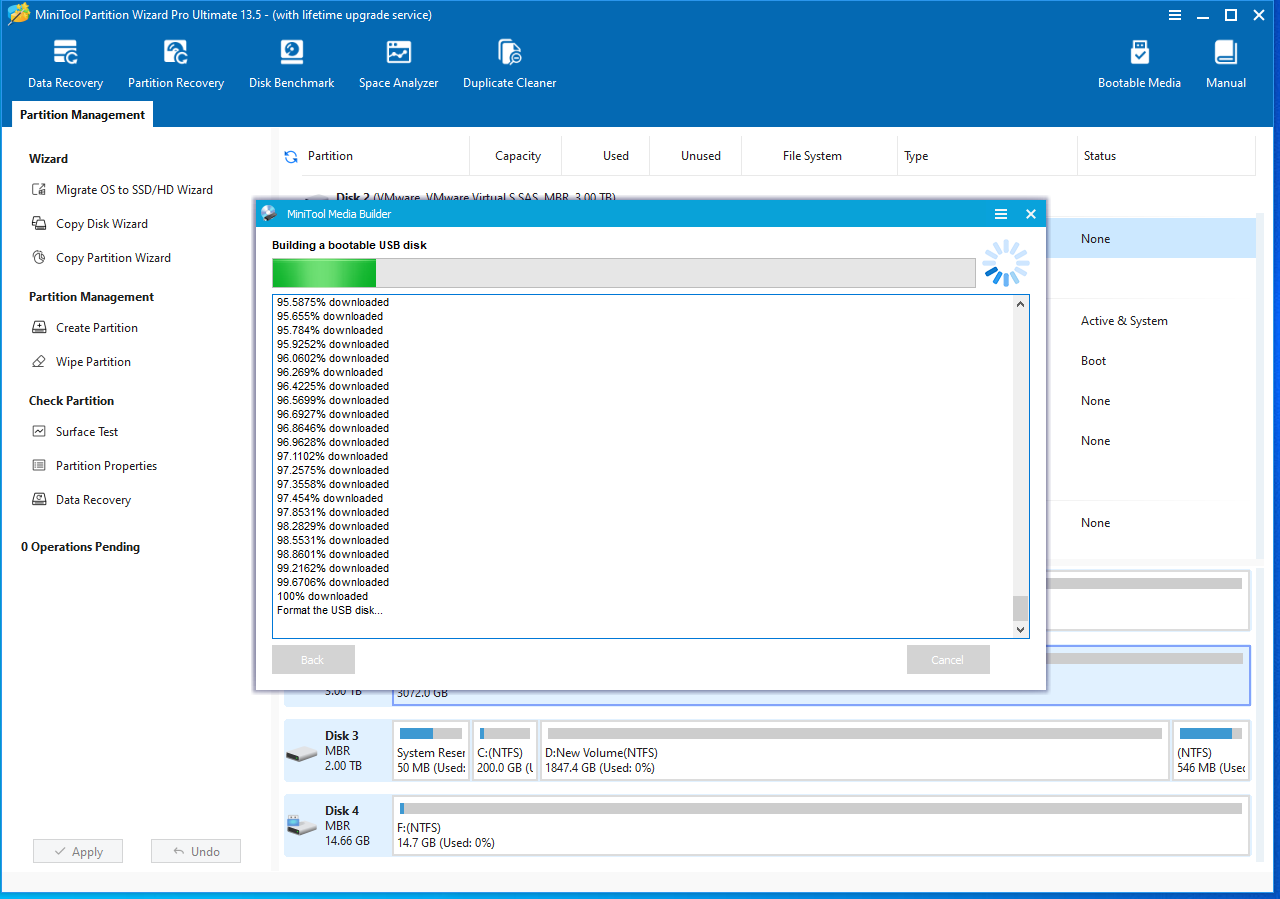
Step 2: Start the black screen computer from the USB boot media.
- Plug the bootable USB into the black screen computer.
- Restart your computer and repeatedly press a specific key (like F2, F10, F12, or Esc) to access the boot menu.
- Highlight the bootable USB drive, and then press Enter.
- Your computer will load from the USB drive and enter the main interface of MiniTool Partition Wizard.
Step 3: Click Data Recovery > Devices. Hover over the system hard drive and click Scan.
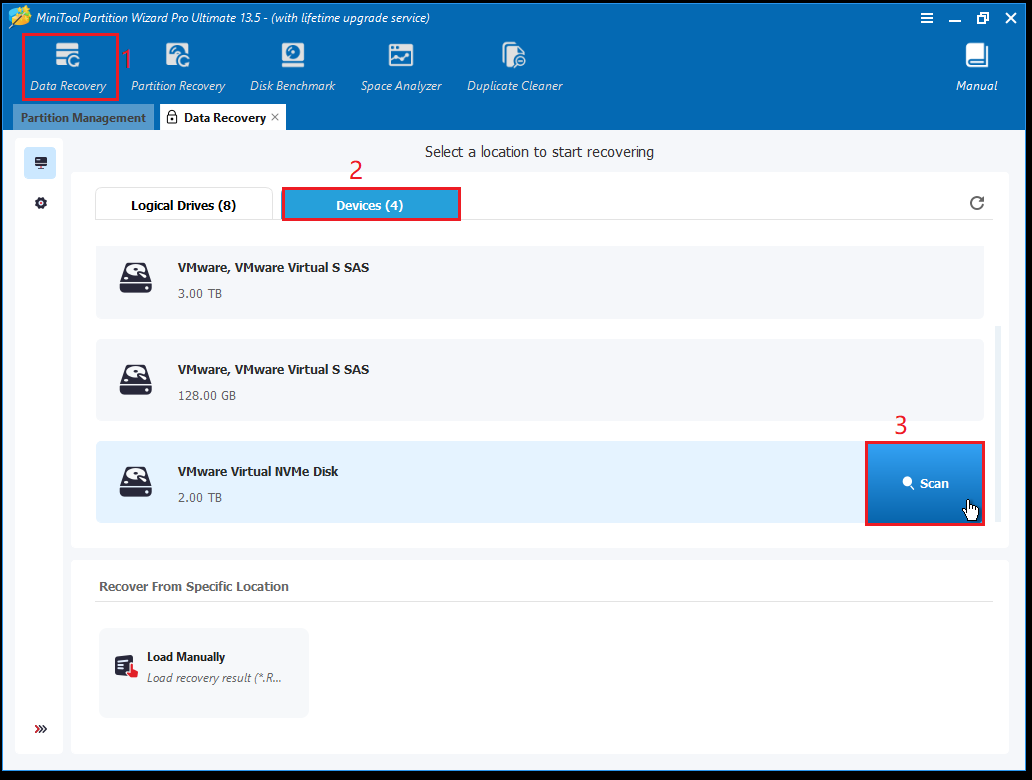
Step 4: Find files to be recovered using the Path.
- After a short while, stop the scanning process because you just need to recover existing files.
- Under Path, expand Lost Files and find the Existing Partition.
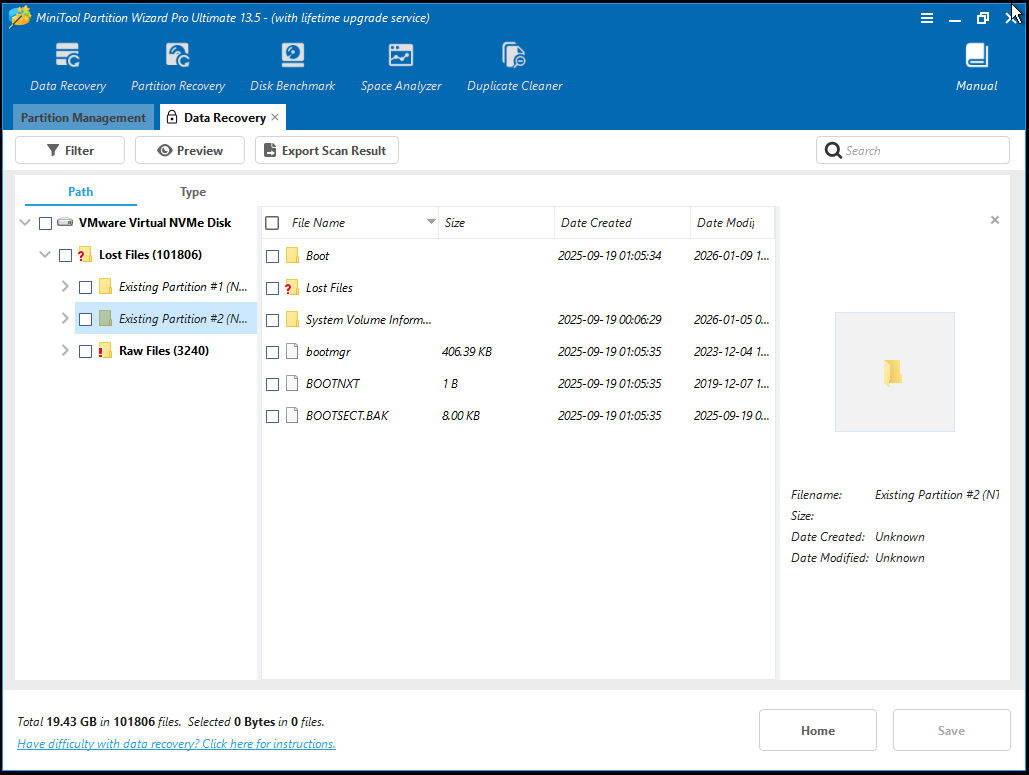
Step 5: Find the files you need and click on them. Click the Save > OK button to save the files.
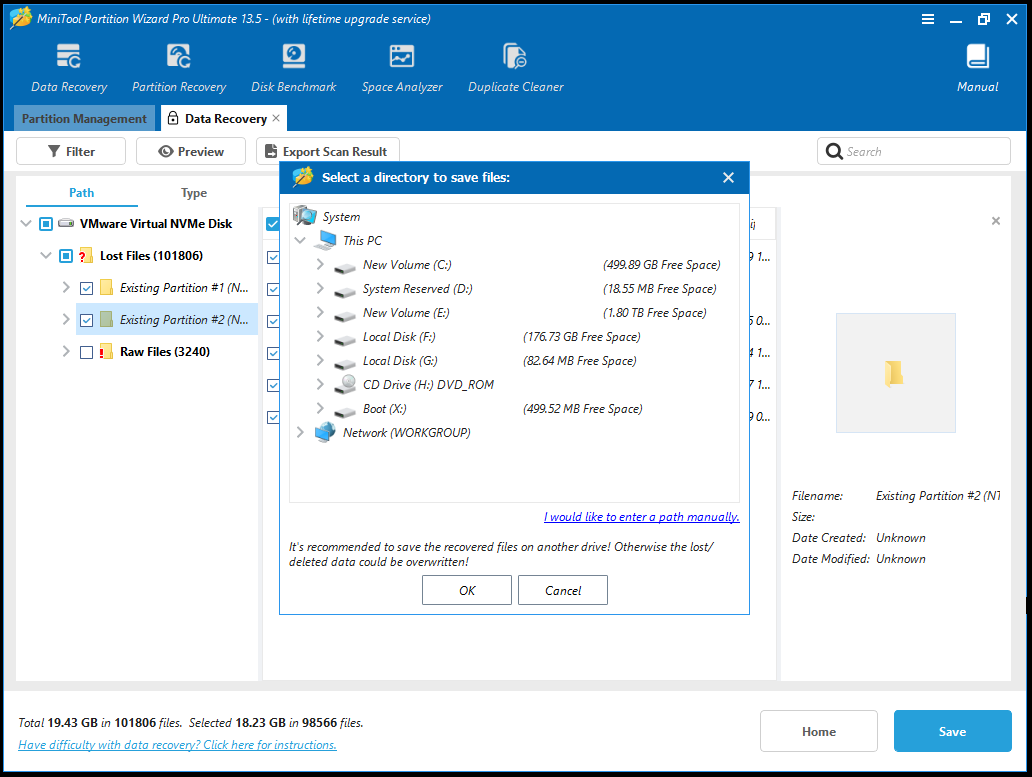
Next, the following section will outline several solutions to fix the “black screen of death when booting Windows” issue.
Solution 1: Quick Fixes
Some straightforward fixes might help resolve the issue without delving into more complex troubleshooting. For example:
- Resetting the graphics driver: A black screen on startup issue can occur when the graphics driver encounters an error during startup, preventing the display from rendering correctly. Pressing Windows + Ctrl + Shift + B can force Windows to refresh and reset the graphics driver.
- Remove or reseat RAM: If your computer has multiple memory modules installed, try removing one of them, or reseat the memory module 1-2 times, and see if the black screen during boot problem is resolved.
- Check cable and peripheral connections: Ensure that the monitor connection cable (such as HDMI, DP) is securely plugged in. You can try replacing the display cable or the monitor to test. Also, disconnect any unnecessary USB peripherals.
- Force restart/hard reset: Press and hold the power button for about 30 seconds to release any remaining battery power, then plug in the power and start the computer to see if the black screen problem is resolved.
- Cooling down your computer and cleaning out the dust: Check if the computer’s black screen is caused by overheating that triggers the protection mechanism. You can turn off the computer and let it cool down naturally, while cleaning the dust from the vents and fans.
- Straighten CPU pins: If using a pin-type CPU, check for bent pins causing poor contact, which could lead to a computer showing a black screen when turned on. This operation carries some risk. Improper handling could cause further damage to the CPU or motherboard.
Solution 2: Force Startup Repair
When Windows encounters a black screen during startup, you can try a forced startup repair.
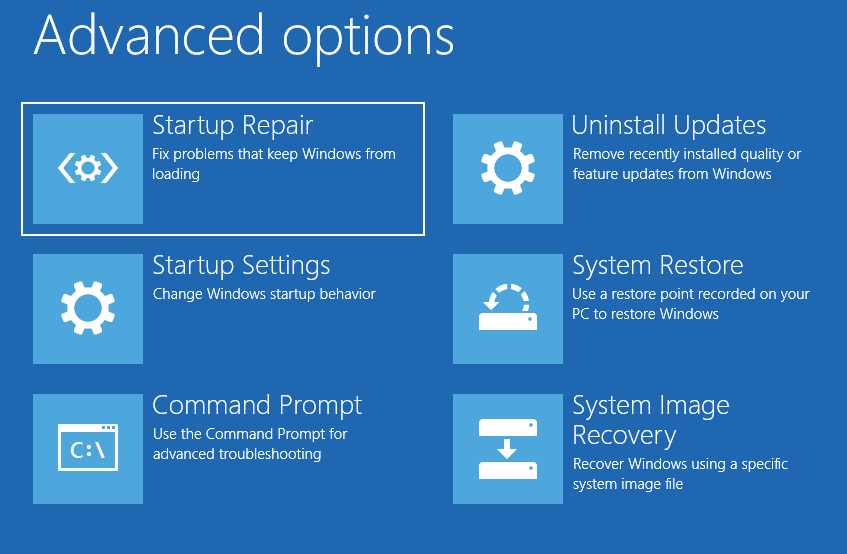
This method forces the system into the Windows recovery environment, automatically detecting and repairing startup-related issues, thereby resolving the black screen problem.
- Turn on the PC, then hold the power button to force a shutdown when the Windows logo appears. Repeat 2-3 times to enter WinRE.
- Go to Troubleshoot > Advanced options > Startup Repair.
- Choose your account and follow the on-screen instructions to let it scan and repair.
If you are able to enter Safe Mode, you can try methods 3 to 6 to troubleshoot and resolve the “Windows boots to black screen” issue.
Solution 3: Update/Rollback Drivers
In most cases, a black screen on startup is caused by the graphics card/display driver failing to load properly.
Updating or rolling back the driver can allow the system to reload the graphics card correctly, thus restoring the computer’s display.
Here is the guide:
- Press Windows + X and select Device Manager to open.
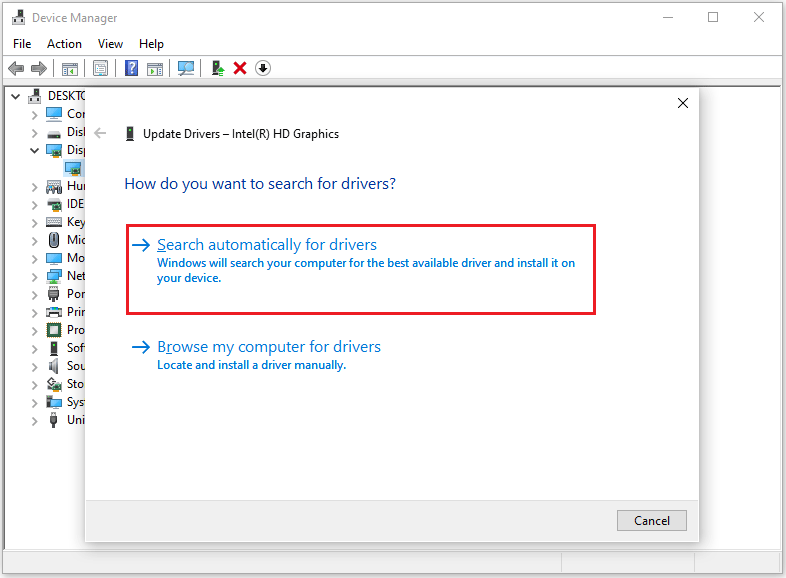
- Expand the Display adapters category and graphics card, and select Update driver.
- Choose the Search automatically for drivers option. Windows will start automatically checking, downloading, and installing the newer graphics driver for your computer.
Solution 4: Uninstall Recent Programs
If you encounter a black screen when starting your computer after updating certain software, it may be due to a compatibility issue caused by the update.
You can try uninstalling the most recent software update to see if the problem is resolved.
- Search for Control Panel in the taskbar search and open it.
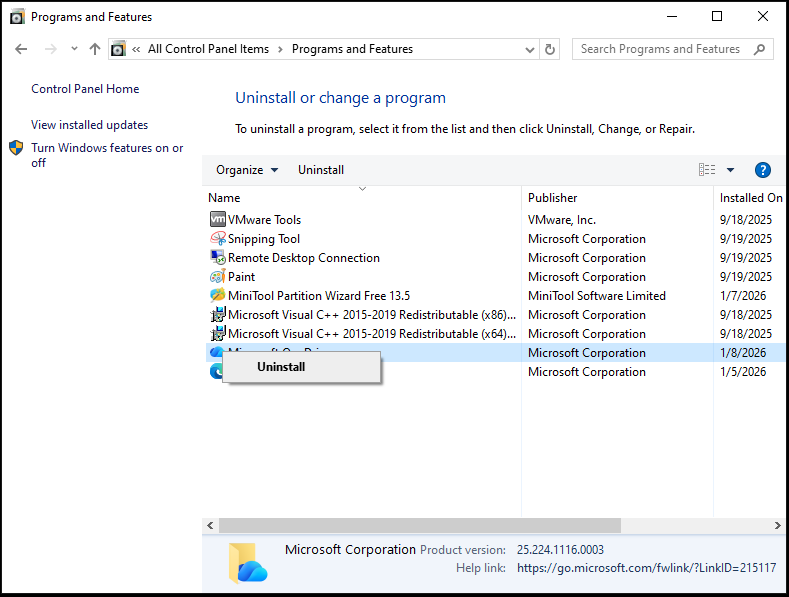
- Go to Programs and Features under the Programs section.
- Right-click the program and choose Uninstall, then follow the instructions.
Solution 5: Run SFC and DISM Scan
SFC (System File Checker) and DISM (Deployment Image Servicing and Management) are useful and powerful Windows command-line tools used to repair corrupted system files and the Windows image itself.
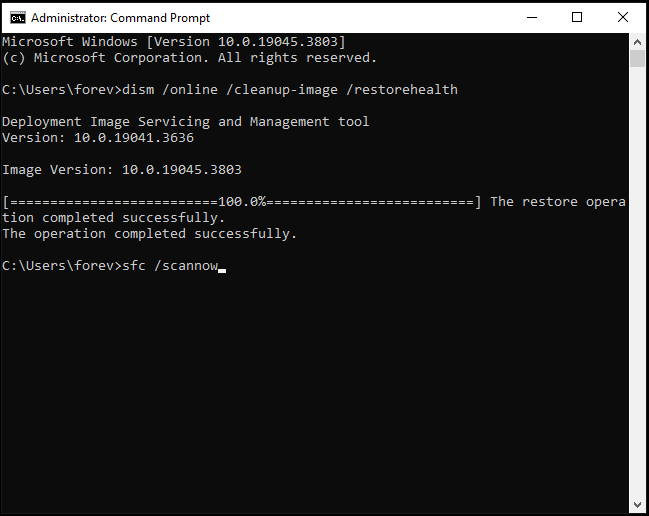
- Run Command Prompt as an Administrator.
- Type Dism /Online /Cleanup-Image /RestoreHealth and press Enter.
- Once the DISM command completed successfully, type sfc /scannow and press Enter.
Exit safe mode and restart your computer to see if the black screen when booting is resolved.
Solution 6: Run CHKDSK
Bad sectors can also lead to corrupted system files. In this case, you can use the CHKDSK command to check and repair disk problems, locate bad sectors, and attempt to recover readable data.
Note: Running this command may take a considerable amount of time. Do not stop the command during execution, as this may cause your computer to crash.
Here are the steps:
Step 1: Type cmd in the search box and choose Run as administrator from the right side.
Step 2: Type chkdsk <drive letter>: /f /r (e.g., chkdsk C: /f /r) and press Enter.
- /f: Fixes errors on the disk.
- /r: Locates bad sectors and recovers readable information (includes /f).
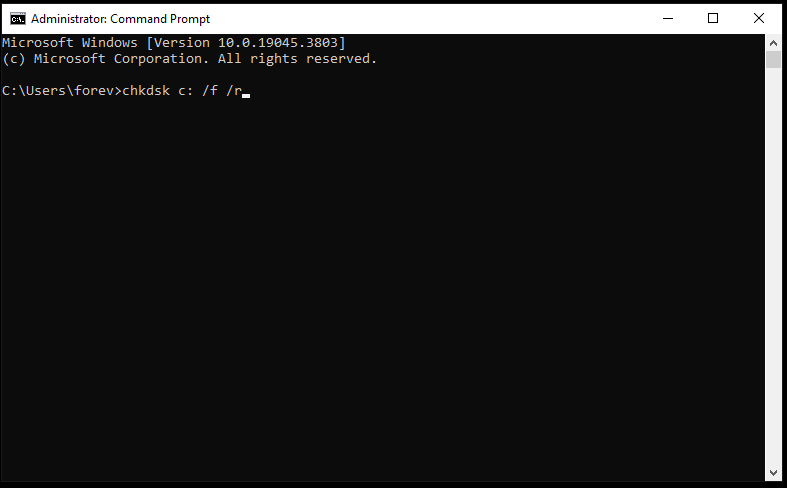
Step 3: Because the C drive is currently in use, Windows will prompt you to schedule the scan for the next system restart. Enter “Y” and press Enter to approve.
If the black screen appears before the login screen, you can try entering the Windows Recovery Environment (WinRE) to troubleshoot and resolve the black screen issue. Please refer to methods 7 and 8 below.
Solution 7: Uninstall Recent Windows Updates
Recent Windows updates may have corrupted graphics drivers, system files, or registry configurations, causing a Windows black screen on startup.
Uninstalling the Windows update restores the system to its stable state before the update, thus resolving the black screen issue.
Step 1: Enter Windows RE, select Troubleshoot > Advanced options > Uninstall Updates.
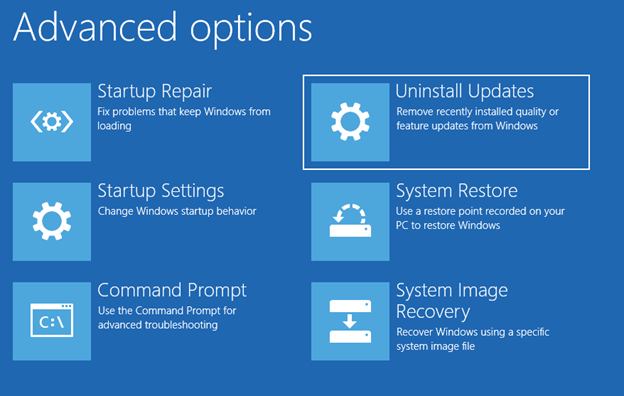
Step 2: Select either Uninstall latest quality update or Uninstall latest quality update.
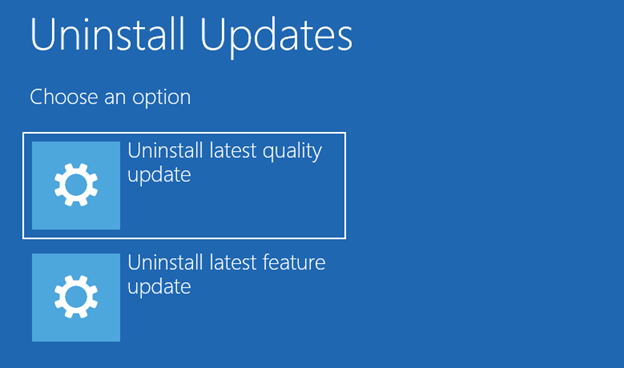
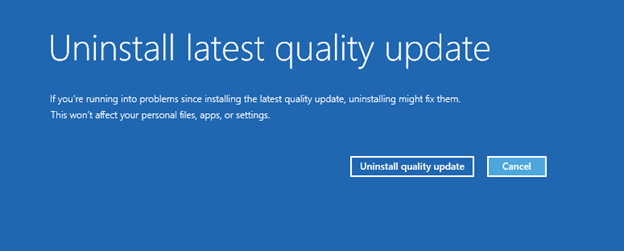
Step 3: Click on your account and enter your password, then select Uninstall quality update.
Solution 8: Perform System Restore
A black screen on startup is usually caused by an abnormal configuration of system files, drivers, etc.
Performing a system restore can restore the system to a previous normal working state, thus eliminating the black screen problem.
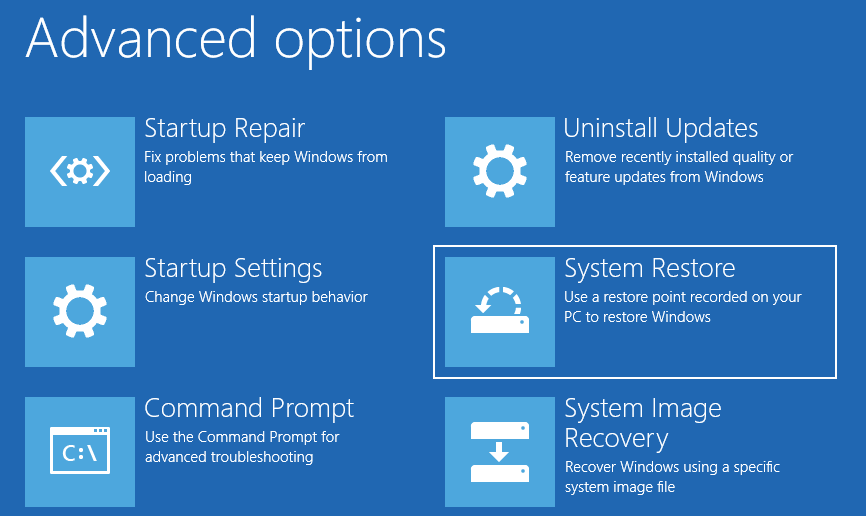
Step 1: Enter Windows RE, click Troubleshoot > Advanced options > System Restore.
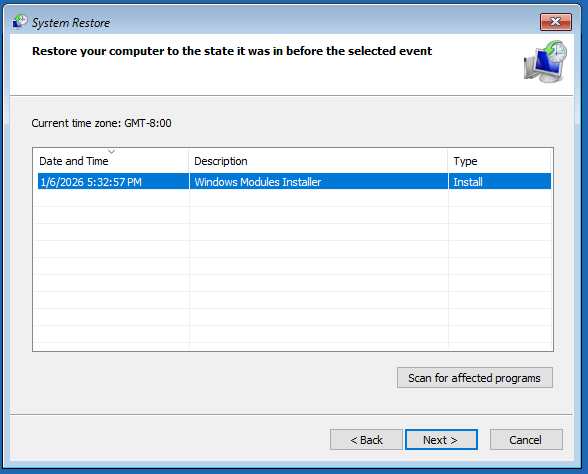
Step 2: Select your account, enter your password, and click Continue > Next. In the System Restore window, select a point from the list and click Next.
Step 3: Click Finish > Yes to start the restoration; your computer will restart.
Solution 9: Reinstall Windows
If none of the methods mentioned above can solve the black screen of death when booting Windows problem, then the last step is to reinstall Windows.
Step 1: Create a Windows installation media on a computer that works normally.
- Connect the USB drive without any data to a working computer.
- Download the Windows Media Creation Tool.
- Launch this tool and accept the applicable notices and license terms.
- Tick Create installation media (USB flash drive, DVD, or ISO file) for another PC. Choose a language, architecture, and edition.
- Choose a USB flash drive, select your inserted USB drive, and follow the prompts to create the installer.
Step 2: Reinstall Windows on the affected computer.
- Insert the bootable USB drive into the previously black-screened computer.
- Start your black-screened computer and repeatedly press the boot menu key to enter the boot menu.
- Select the USB drive as the boot drive and press Enter.
- Follow the on-screen prompts, and then click Install Now.
- Complete the region, account, and privacy settings to access the desktop.
- Click I don’t have a product key and click Next.
- Then, tick the checkbox next to the I accept the license terms option and then click Next.
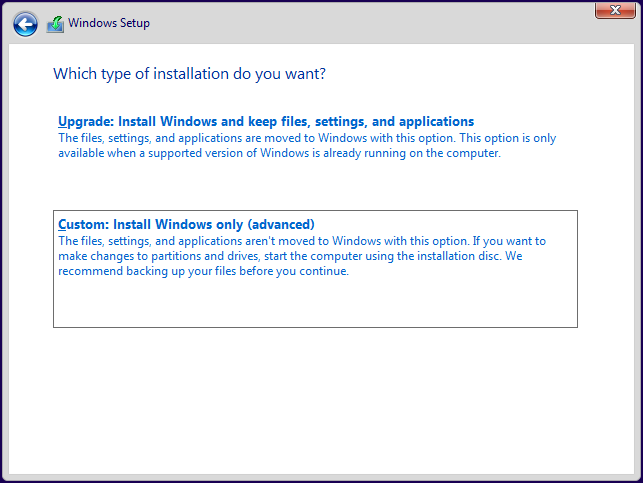
- Select Custom: Install Windows only (Advanced).
- Select each partition on your main drive and click Delete, then choose the Unallocated Space and click Next to install.
- Follow the on-screen instructions to finish the Windows setup.
Further Reading:
To prevent a black screen from appearing when Windows starts, you can take the following measures.
- Regularly update graphics card drivers from official sources, and avoid using third-party automatic update software.
- Enable Windows automatic updates, but back up important files before major updates.
- Regularly use CHKDSK to check for and repair disk errors, ensuring data and system integrity.
- Create system restore points periodically so that you can revert to a normal state if a black screen occurs.
- When starting your computer, try to disconnect unnecessary USB storage devices and peripherals such as printers.
- Also, regularly check and update your peripheral drivers to prevent startup delays or black screens caused by driver issues.
Bottom Line
This article explores the causes of a Windows black screen on startup, methods for recovering data from a black screen computer, and effective resolution techniques.
If you have any questions or suggestions while using MiniTool Partition Wizard, contact us via [email protected] for further assistance.
User Comments :