
This article explains the causes of SD card corruption and provides the best SD card repair tools to fix corrupted SD cards, including MiniTool Partition Wizard, CHKDSK, and DiskPart.
A corrupted or damaged SD card can become unreadable, inaccessible, or repeatedly ask you to format the card.
In most cases, you can repair an SD card caused by file system errors, bad sectors, or logical corruption using an SD card repair tool.
This article introduces the best SD card repair tools, including Windows built-in utilities and professional repair software.
We will also explain why SD cards become corrupted, how to repair them without losing data, and when you should recover your files before attempting repairs.
Common Causes of SD Card Corruption
SD cards can become damaged for various reasons. The following are some of the most common causes:
| Cause | Description |
| Improper removal or power loss | Removing the SD card during data transfer or sudden power loss can corrupt the file system |
| Virus or malware | Malware infections may damage files and cause logical corruption |
| Improper formatting | Incorrect formatting can make the SD card inaccessible or unreadable |
| Aging or excessive use | Long-term use can wear out flash memory and create bad blocks |
| Physical damage | Drops, water, or damaged connectors can affect the card hardware |
Recover Data Before Repairing the SD Card
Should I recover data before repairing the SD card?
Yes. If your SD card contains important files, it is recommended to recover the data before attempting any repair operations.
This is because certain repair methods may overwrite existing data, thereby reducing the chances of successful data recovery.
The data recovery feature of MiniTool Partition Wizard can help you effectively recover lost photos, videos, and other important files.
Here are the detailed steps:
MiniTool Partition Wizard DemoClick to Download100%Clean & Safe
Step 1: Connect your SD card to your PC.
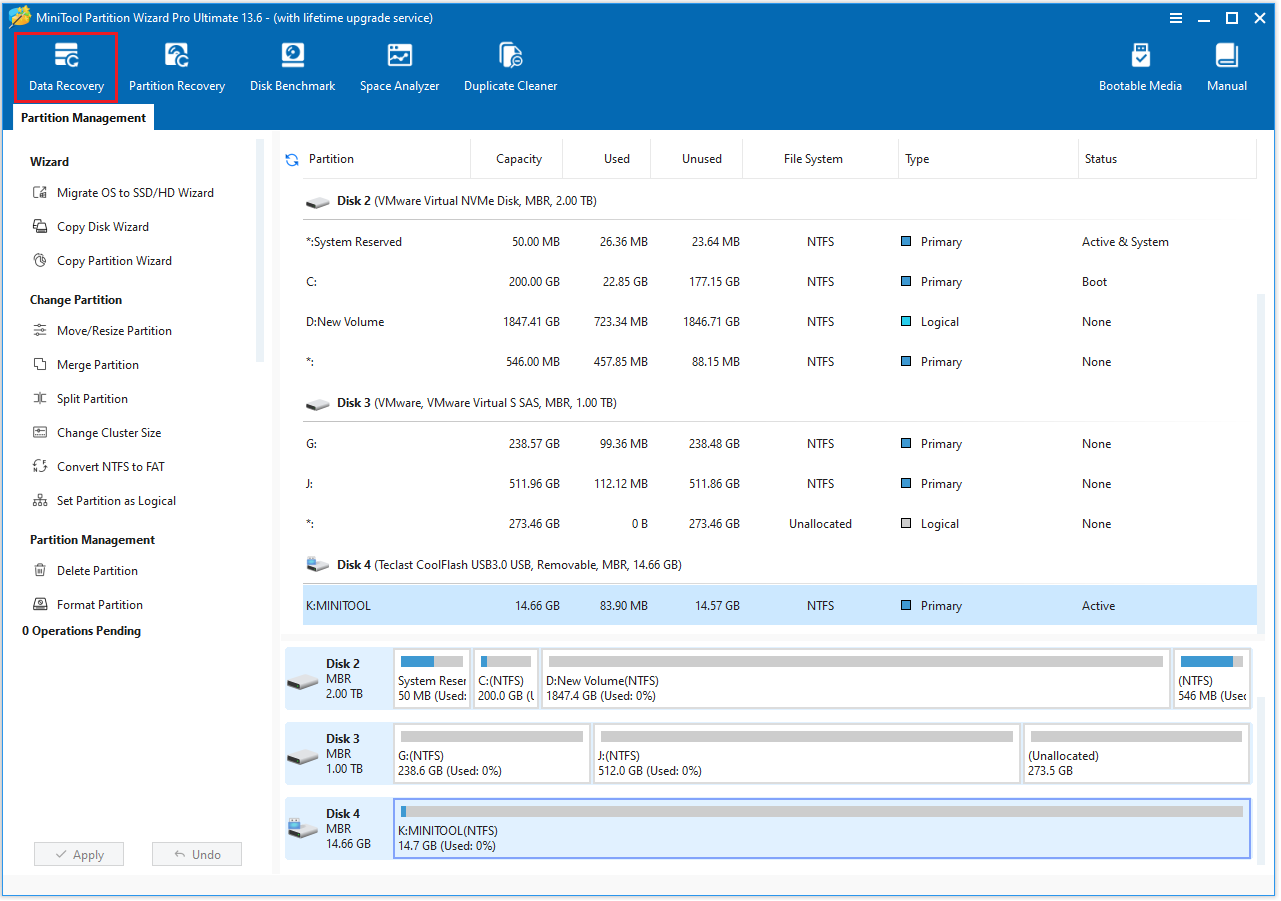
Step 2: Launch MiniTool Partition Wizard and enter its main interface, then click Data Recovery.
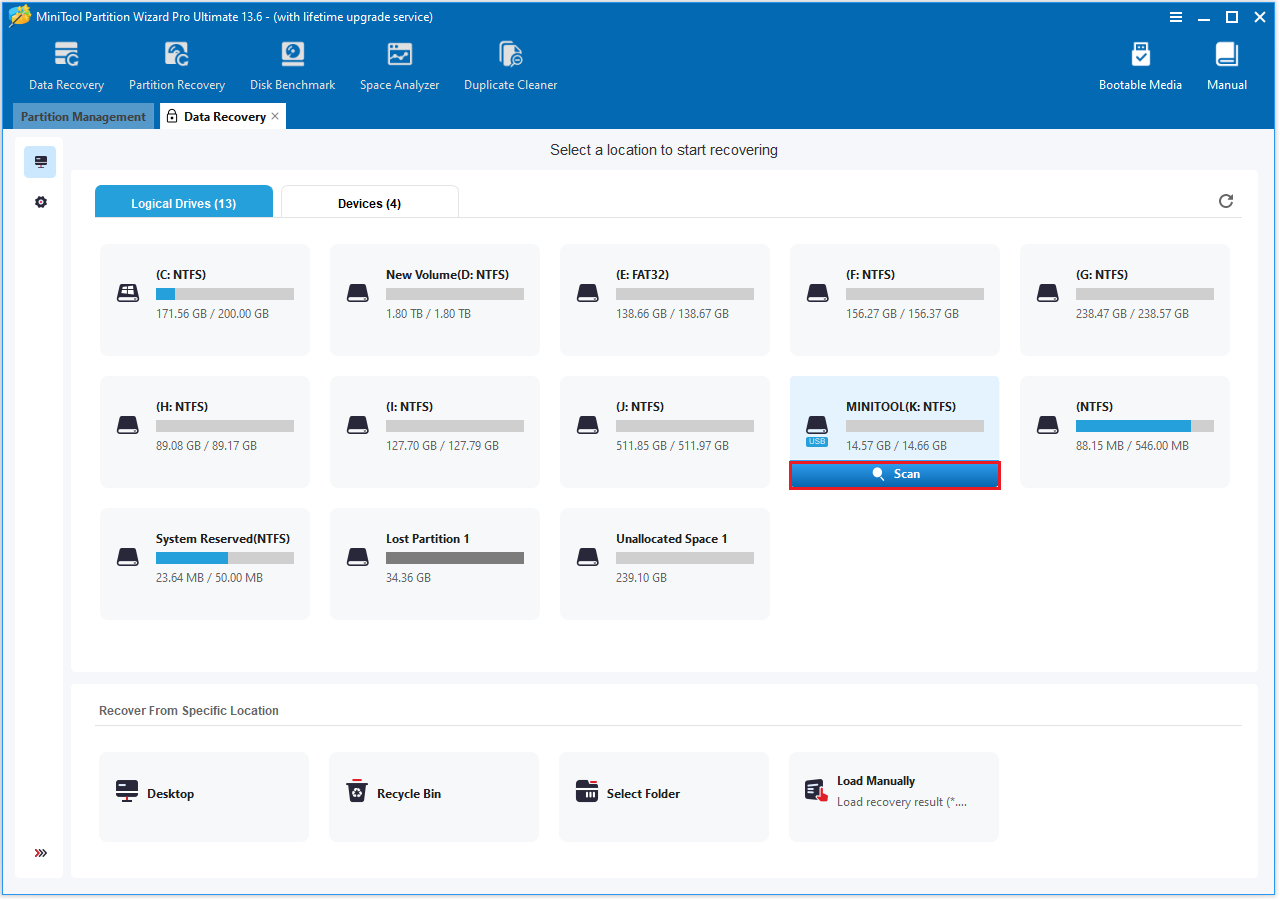
Step 3: In the Logical Drives section, locate the desired SD card partition, hover your cursor over it, and select Scan.
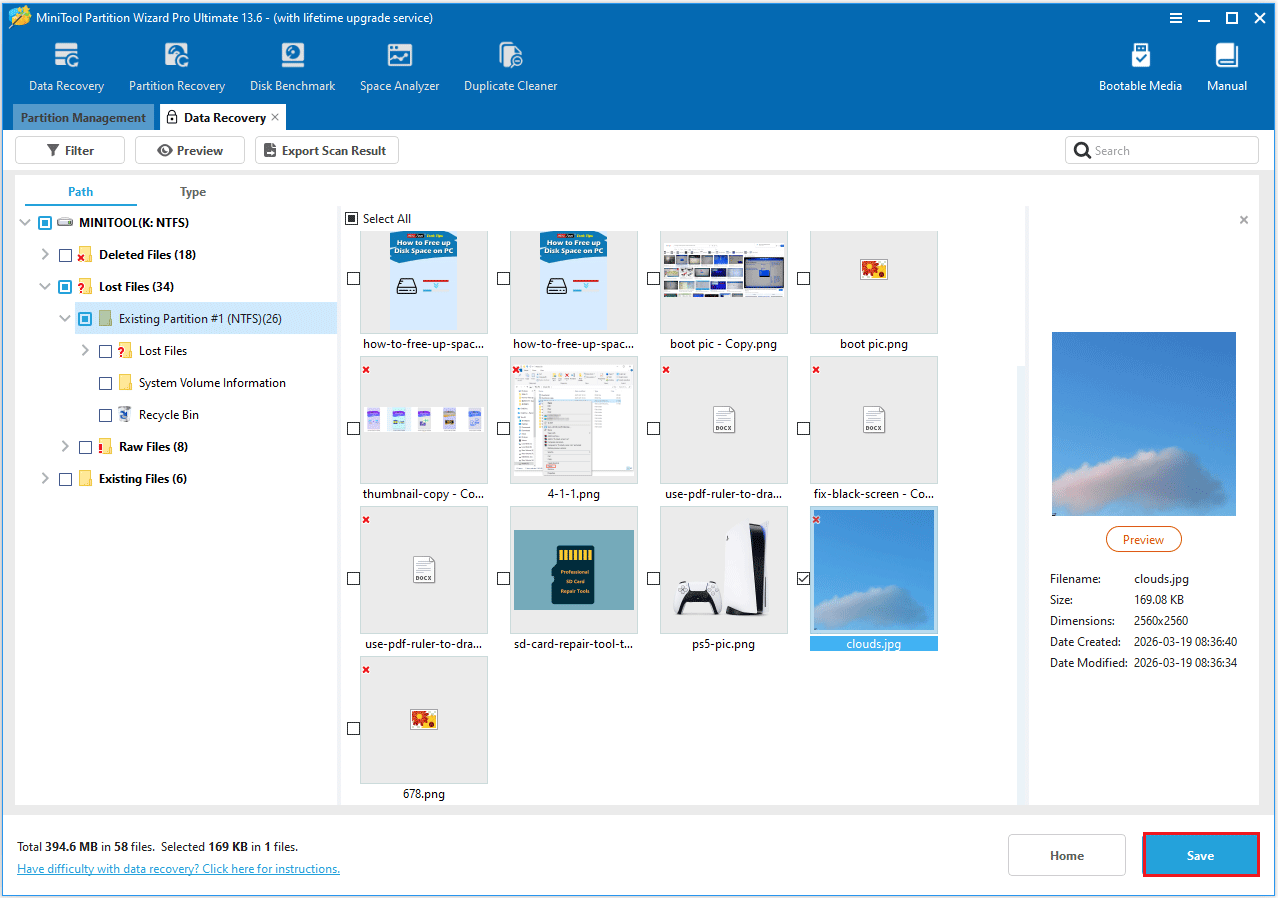
Step 4: Allow the scan to complete. Once the needed data is found, click the Pause or Stop icon to recover it instantly.
Step 5: The files will appear under the Path tab. Once you have found the file or image you need, click Save.
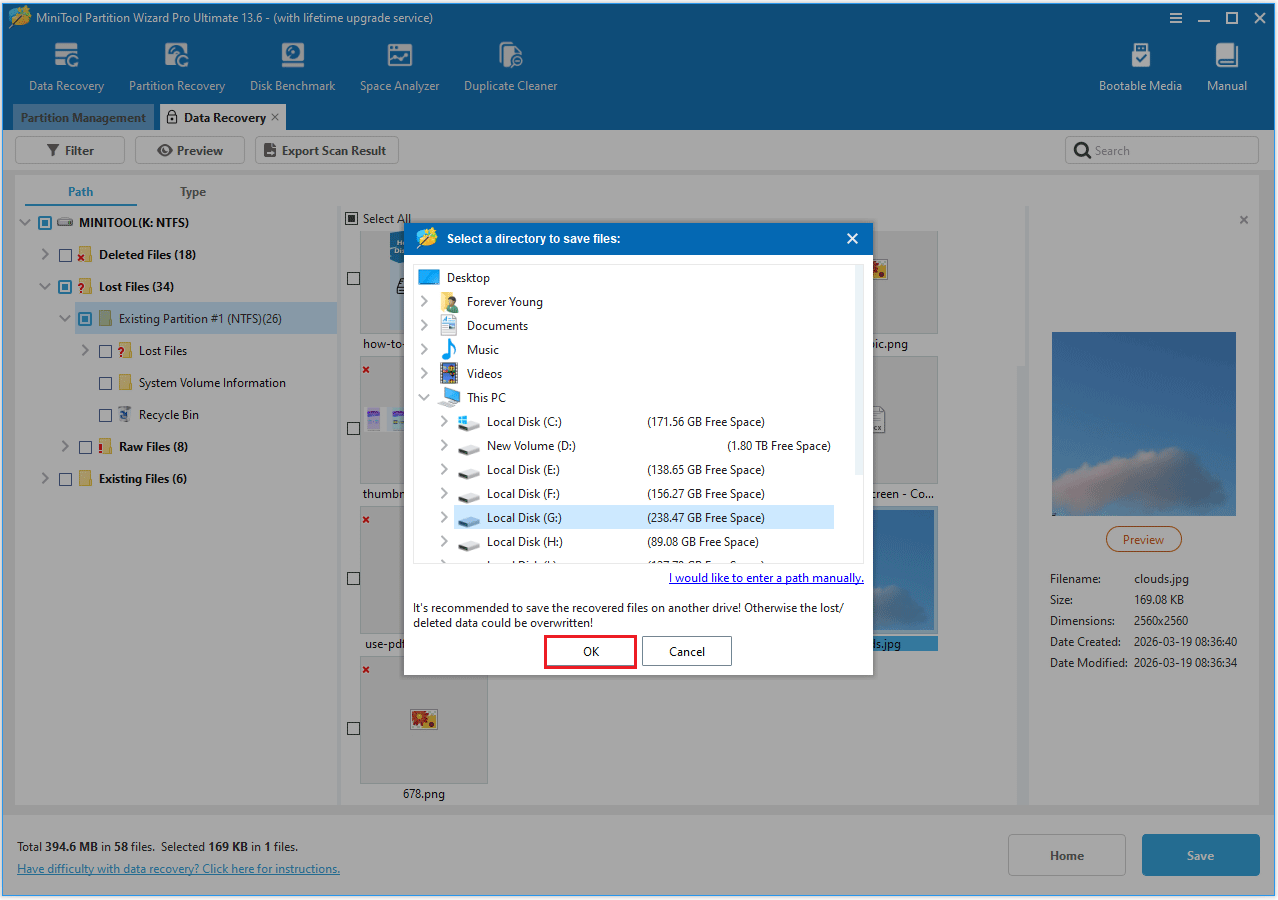
Step 6: Save the recovered files to another storage device instead of the affected SD card. Then, click OK to proceed.
After completing data recovery, the next step is to choose a suitable SD card repair tool.
Below, we compare and describe several commonly used SD card repair tools based on typical failure scenarios to help you make the right choice.
How to Choose the Right SD Card Repair Tool
An SD card repair tool is a software or utility used to fix corrupted, damaged, or unreadable SD cards and restore normal access to the data.
Most SD card issues can be repaired depending on the type of corruption. Before choosing a tool, it is important to understand what kind of problem your SD card is facing.
Different tools are designed for different levels of issues:
- CHKDSK: It is the most suitable tool for fixing basic file system errors on an SD card.
- DiskPart: It is commonly used when the SD card has formatting issues or requires deeper repair.
- MiniTool Partition Wizard: It is a recommended tool for corrupted SD cards with data loss, helping you recover lost files and repair the SD card.
CHKDSK is best for quick fixes, while data recovery tools are best for serious corruption.
Best SD Card Repair Tool
Below are some of the most commonly used SD card repair tools, which can be used to repair different types of SD card problems, including file system errors, formatting issues, and data corruption.
Each tool is suitable for different repair scenarios; the specific choice depends on the extent of the SD card damage and whether data recovery is required.
| Tool | Best for | Recover Data | Format SD Card | Beginner Friendly |
| MiniTool Partition Wizard | All-in-one | Yes | yes | 5-star |
| CHKDSK | File system repair | No | No | 3-star |
| DiskPart | Deep repair | No | Yes | 2-star |
#1. CHKDSK
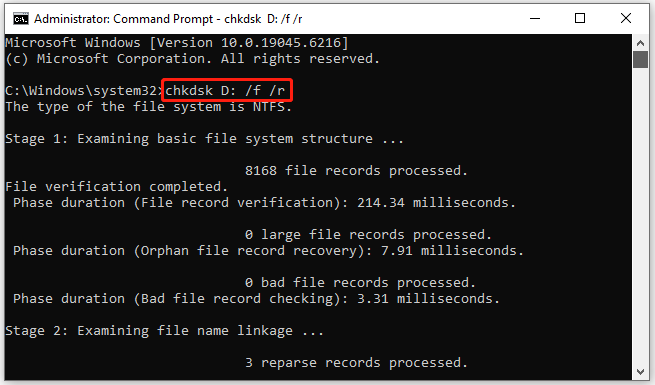
CHKDSK is a built-in disk check and repair tool in Windows that can be used to scan SD cards for file system errors, bad sectors, and other logical problems.
By using different command parameters, it can repair basic file system errors, locate bad sectors, and to some extent restore the structural integrity of a damaged SD card.
When a computer can recognize an SD card but displays error messages such as “cannot access” or “file or directory is corrupted”, CHKDSK is often the first repair tool worth trying.
One of its biggest advantages is that it is completely free and comes pre-installed on Windows systems.
Also read: What Is “CHKDSK Is Not Available for RAW Drives” & How to Fix.
#2. DiskPart
DiskPart is a built-in advanced command-line disk management tool in Windows, used to manage partitions, format storage devices, and repair some disk structure problems.
When an SD card becomes RAW format, cannot be formatted properly, or is unusable due to corrupted partition information, DiskPart can restore the SD card to a usable state by cleaning the disk and rebuilding the partition structure.
For users unfamiliar with the command line, entering incorrect commands may result in partition loss or data erasure. Therefore, DiskPart is more suitable for users with some experience.
#3. MiniTool Partition Wizard
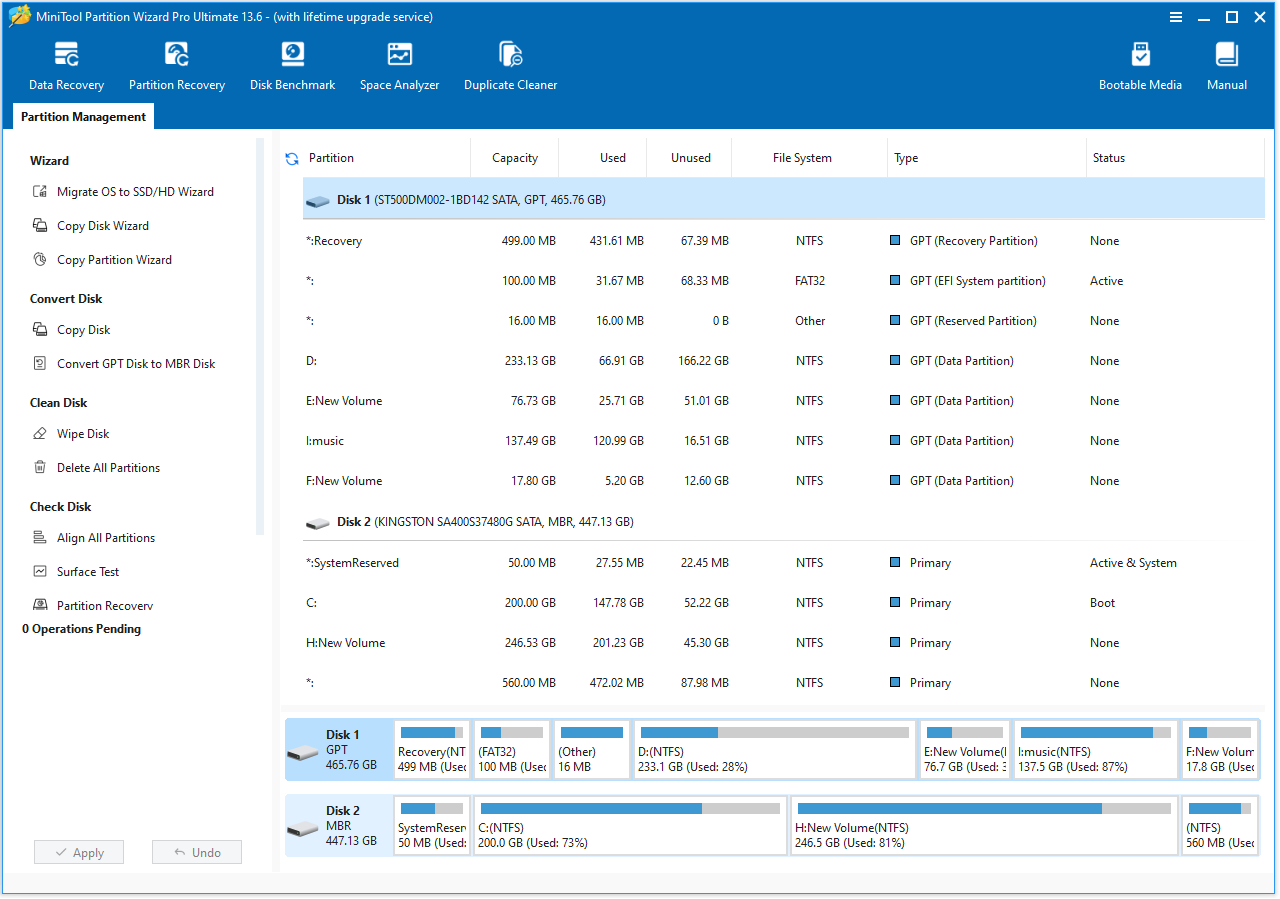
MiniTool Partition Wizard is an all-in-one solution for disk management and data recovery. It can not only repair SD card problems but also help you recover lost files.
Unlike built-in Windows tools, MiniTool Partition Wizard provides a graphical interface, making it easy for beginners to repair SD card problems.
In addition to repairing file system errors, it also helps you create/format/resize/delete partitions, clone a hard drive, convert MBR to GPT without data loss, external hard drive recovery, etc.
MiniTool Partition Wizard FreeClick to Download100%Clean & Safe
I recommend this tool to users who need both SD card repair and data recovery capabilities.
How to Repair a Corrupted SD Card
How to fix a corrupted SD card?
To repair SD card, you can follow these simple steps based on the severity of the issue.
Step 1: Try using CHKDSK first.
The preferred method is to use the built-in Windows CHKDSK tool, which can fix common file system errors and bad sectors. You can run the command chkdsk *: /f /r (replace “*” with your SD card’s drive letter).
Step 2: Use DiskPart if CHKDSK does not work.
If CHKDSK fails to resolve the issue, open Command Prompt, type diskpart, list disk, select disk *, clean all, and then carefully use the clean command to wipe existing partitions and reset the SD card.
Step 3: Format the card using the Format function in MiniTool Partition Wizard.
If your SD card is not recognized or appears in RAW format in Disk Management, you can use MiniTool Partition Wizard to format it and restore it to normal use.
Note: MiniTool Partition Wizard supports formatting SD cards to the FAT32, exFAT, or NTFS file systems. Even if an SD card has a capacity greater than 32GB, it can still be formatted to FAT32, which is typically not permitted within the Windows operating system.
Also read: SD Card Stops Working on Windows? 10 Methods to Fix.
![[7 Methods] How to Fix Corrupted Transcend SD Card?](https://images.minitool.com/partitionwizard.com/images/uploads/2023/11/fix-corrupted-transcend-sd-card-thumbnail.png)
Tips to Prevent SD Card Damage
To reduce the risk of SD card corruption and data loss, follow these simple but effective precautions.
1. Safely insert and remove the SD card.
Only insert or remove the SD card when the device is powered off or not actively reading/writing data to avoid corruption.
2. Keep the contacts clean.
Wipe the metal contacts gently with a dry cloth if they become dirty to ensure a stable connection.
3. Check for errors regularly.
Use built-in tools or repair utilities to scan and fix file system errors from time to time.
4. Back up your data.
Regularly copy important files to a computer or cloud storage to prevent data loss.
5. Use reliable SD card brands.
High-quality cards from trusted brands are more durable and less prone to failure.
6. Store properly.
Keep the SD card in a protective case to avoid dust, moisture, and physical damage.
SD Card Repair Tool FAQ
2. Capacity errors: The displayed storage capacity is incorrect after insertion.
3. Missing files or partitions: Files, photos, or videos disappear.
4. Formatting or access errors: The system prompts for formatting or displays an error message when attempting to access the card.
5. Inability to open, read, or write: You may see errors or failed operations when trying to open, copy, or use files on the SD card.
6. Write protection issues: The SD card cannot be written to, even if the physical lock switch is not enabled.
However, actions like formatting the SD card or using the DiskPart “clean” command will erase all data on the card.
Common causes include unsafe removal, power loss during read/write operations, and virus infections. In such cases, the system cannot access the data on the card and typically prompts the user to format it.
Bottom Line
From identifying the causes of SD card corruption to recovering data and selecting the right SD card repair tool, this guide provides a complete solution to fix corrupted SD card and restore normal use.
If you have any questions or feedback about MiniTool Partition Wizard, feel free to contact our support team at [email protected] for additional help.
User Comments :