
What Is an exFAT Partition
exFAT (Extensible File Allocation Table) is a file system optimized for flash memory, such as SD cards and USB flash drives. It is designed as a successor to FAT32, but it breaks through the maximum file size of FAT32, supporting maximum file and partition sizes of up to 128 PB in theory.
Additionally, exFAT adopts a file record and metadata management mechanism similar to NTFS. At the same time, it offers broad cross-platform compatibility and can be used on Windows, macOS, and Linux systems.
Although exFAT is a Microsoft file system, it is widely used on removable storage devices such as USB flash drives and SD cards, which are commonly supported by smart TVs, media centers, and mobile devices.
The main advantages and disadvantages of exFAT are as follows:
Pros:
- Supports very large file and partition sizes, with a theoretical maximum of up to 128 PB.
- Provides good cross-platform compatibility across major operating systems.
- Reduces wear from frequent read and write operations on flash memory devices.
- Supports a large number of files within a single directory.
Cons:
It lacks the support of the journaling feature, which allows the file system to keep records of the changes made to the files. So, the possibility of data corruption is higher than NTFS due to system crashes or power outages, increasing the difficulty of recovering data.
When Do You Need to Resize exFAT Partition?
Extending a partition involves allocating unallocated space or free space from other partitions on the same disk to increase the size of the exFAT partition. You may want to extend an exFAT partition when it is running out of space for storing additional data.
Shrinking a volume creates unallocated space on the disk. One common reason to shrink an exFAT partition is to use the resulting unallocated space to create a new partition. Another reason to shrink an exFAT partition is to create unallocated space that can later be used to extend an adjacent partition using Windows built-in tools. If the unallocated space is not contiguous with the target partition, a third-party partition manager is required to move or extend partitions.
Why Can’t You Resize exFAT Partition
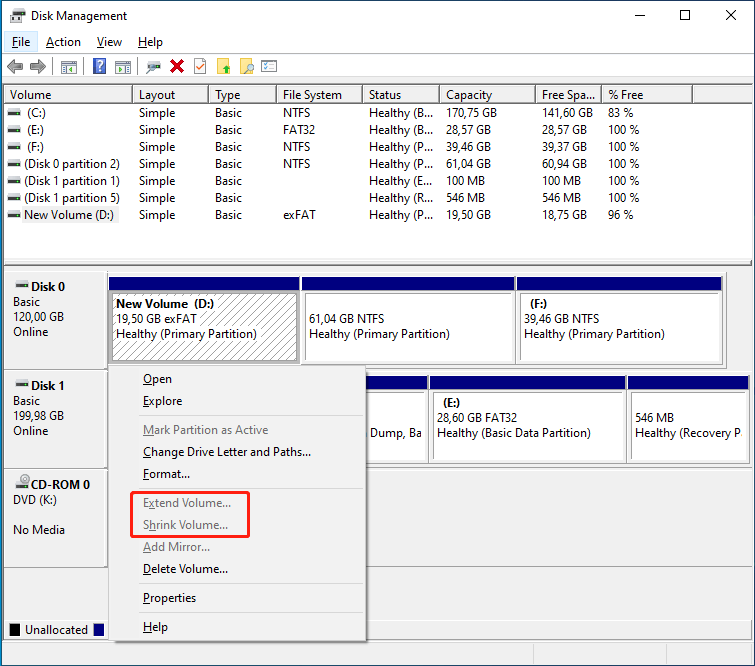
The main reason you can’t resize an exFAT partition is that Windows built-in utilities, including Disk Management and DiskPart, do not support resizing exFAT volumes.
When you right-click an exFAT partition in Disk Management, the Shrink Volume and Extend Volume options are unavailable.
Similarly, if you attempt to shrink an exFAT partition using DiskPart, you will receive the error message: The volume cannot be shrunk because the file system does not support it.
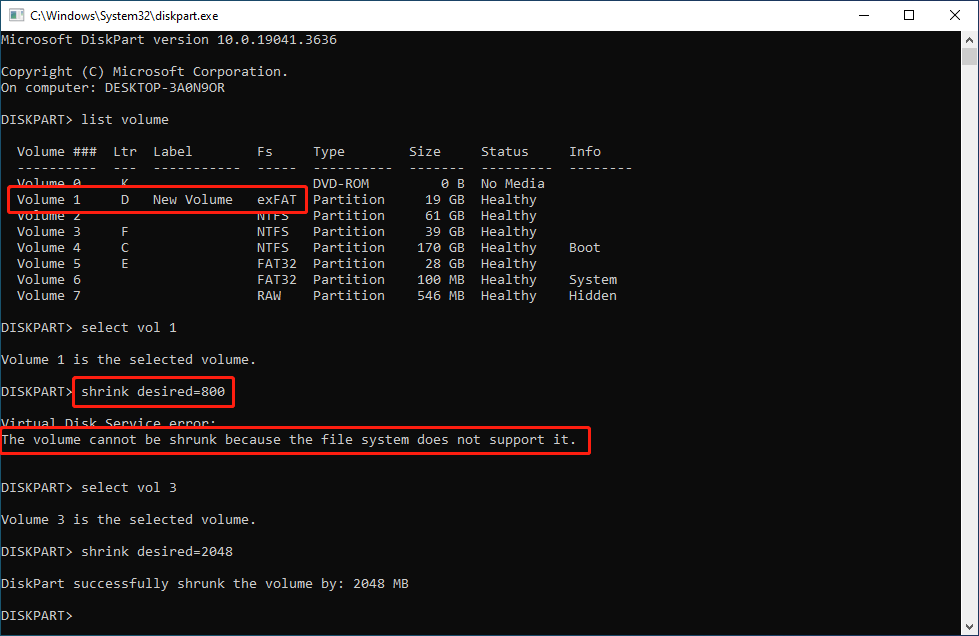
Essentially, Windows built-in tools only support extending or shrinking NTFS partitions. In addition, these tools require contiguous unallocated space to perform resizing operations.
How to Resize exFAT Partition Without Losing Data
To resize an exFAT partition without data loss, you need to complete the following 4 steps on a Windows PC.
- Back up all data on the exFAT partition to another drive.
- Format the exFAT partition as NTFS.
- Resize the NTFS partition and reformat it as exFAT.
- Restore the backup to the exFAT partition.
Stage 1. Back up the exFAT Partition to Another Location
Formatting the partition will delete all data. So, back up all files to a safe location before processing the exFAT partition.
You can manually copy files to another drive if the data size is small; however, for larger partitions, using a professional backup tool is recommended to save time and reduce the risk of errors.
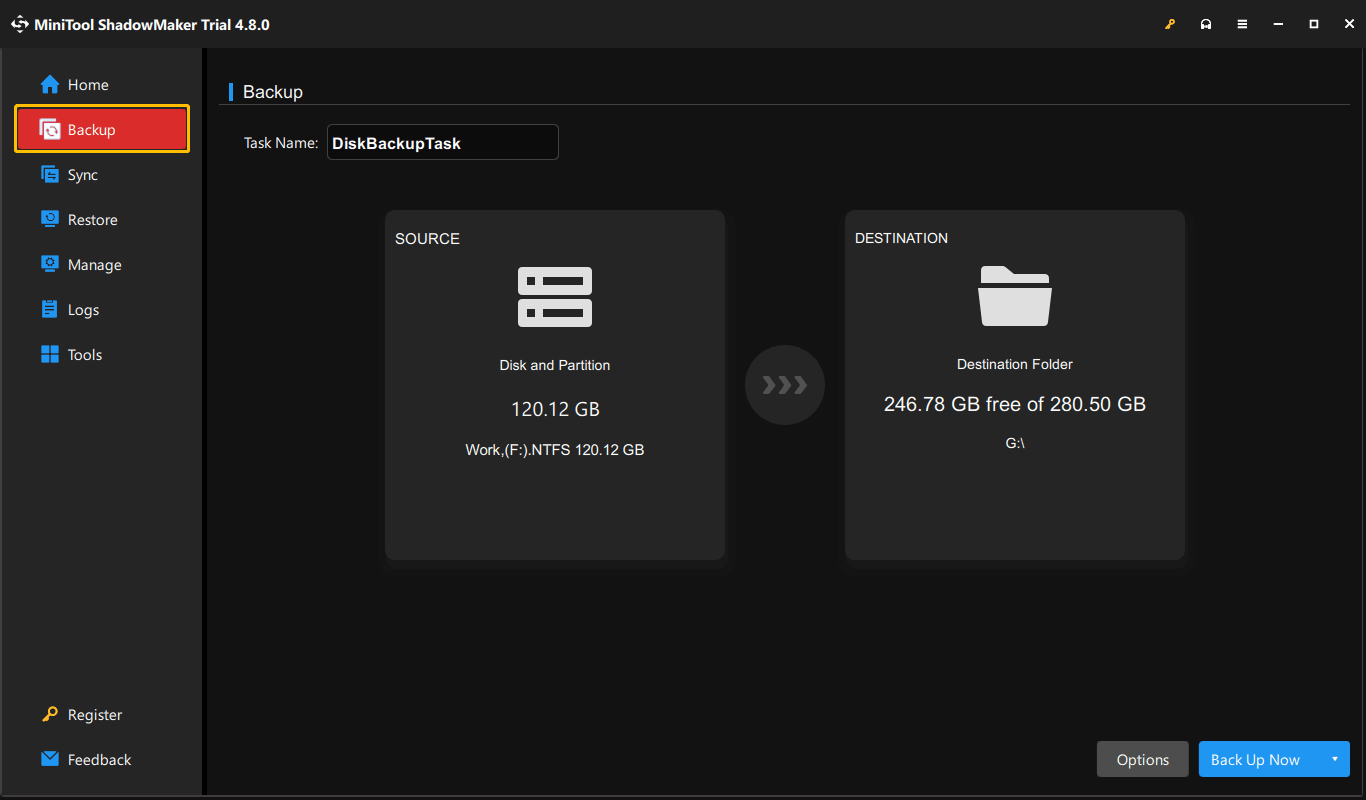
MiniTool ShadowMaker is such a tool, which can easily back up the partition to another drive and restore it later. What’s more, it allows you to back up files/operating system, clone hard drives, and create a system image so that you can restore the system to an earlier state.
MiniTool System Booster TrialClick to Download100%Clean & Safe
In addition, you can copy exFAT partition to another drive using MiniTool Partition Wizard. It is a comprehensive disk partition manager that can copy partitions/disks, partition a hard drive, migrate Windows OS to SSD/HD, convert MBR to GPT without data loss, rebuild MBR, etc.
MiniTool Partition Wizard FreeClick to Download100%Clean & Safe
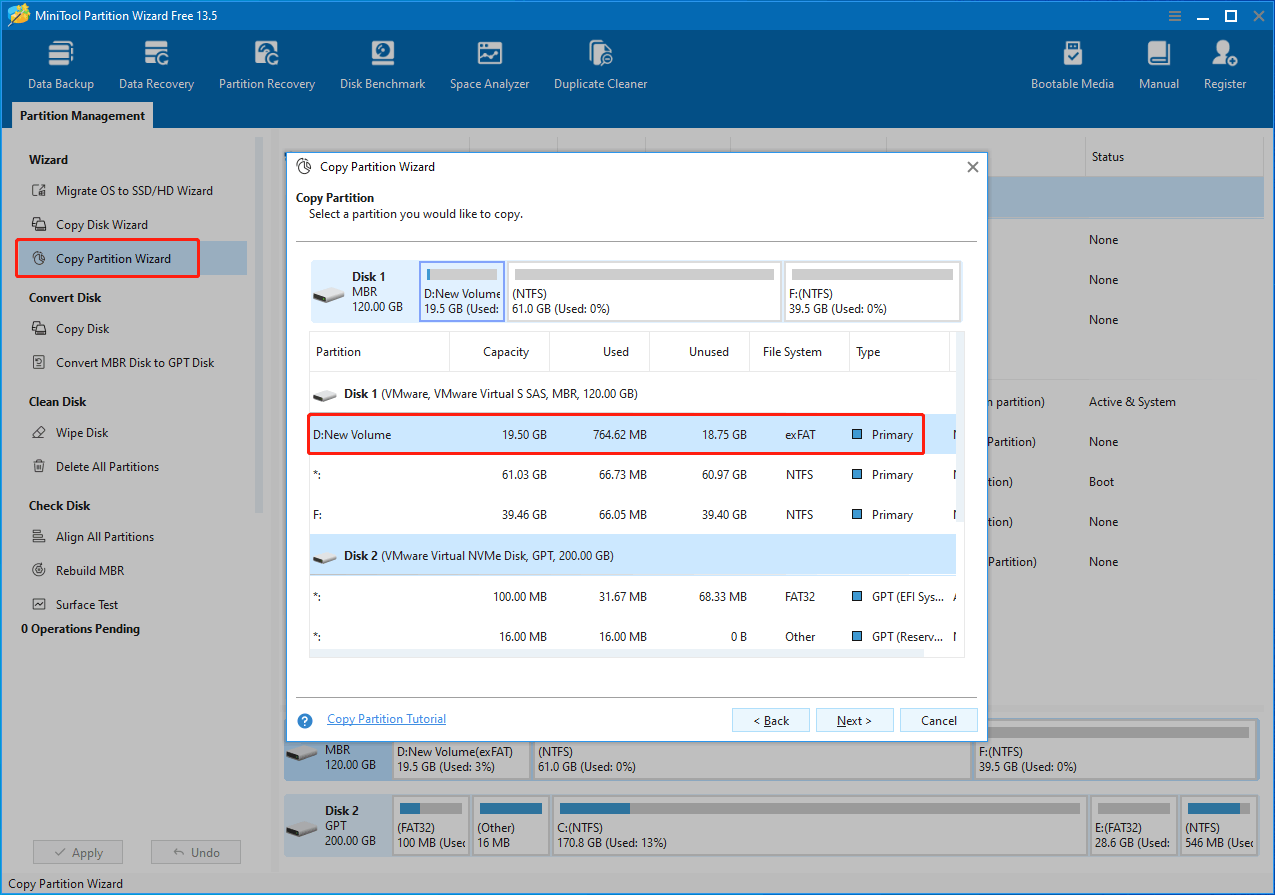
Once the backup is complete, verify that you can access the data. If so, you can proceed to resize the exFAT partition without data loss using the next steps.
Stage 2. Format the exFAT Partition to NTFS
At this stage, you need to format the exFAT partition to NTFS so that it can be resized on Windows. Windows built-in tools only support extending or shrinking NTFS partitions.
You can use Disk Management, the built-in disk partition utility in Windows, to format the partition to NTFS.
Follow the steps below:
Step 1. Right-click the Start icon and select Disk Management.
Step 2. Right-click the exFAT partition and select Format.
Step 3. Select NTFS from the file system drop-down menu and click OK. Then confirm the operation.
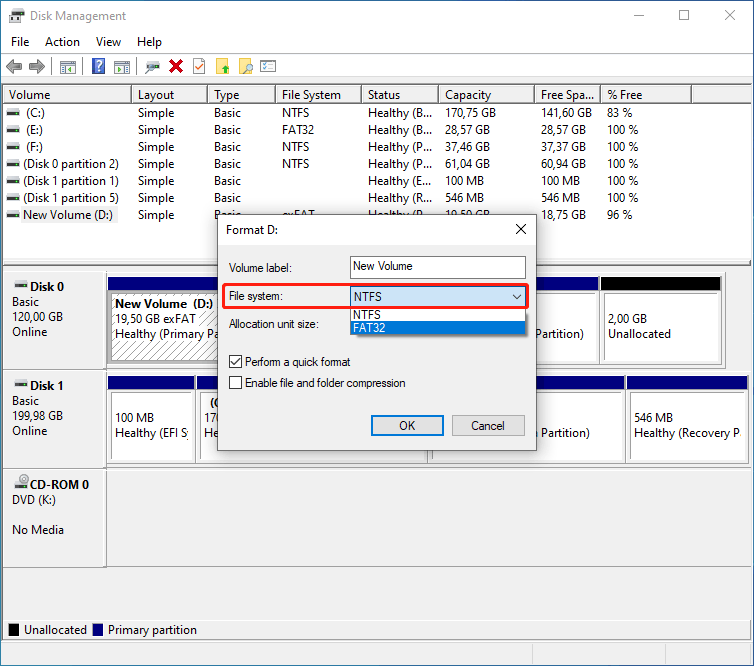
Alternatively, you can use the free partition manager – MiniTool Partition Wizard to format the partition to NTFS on Windows.
It supports formatting and creating partitions with FAT16, FAT32, exFAT, NTFS, and Ext2/3/4 file systems. In addition, it allows you to convert FAT to NTFS without data loss, which can be useful in certain scenarios.
Step 1. Open the software to get its main interface, highlight the exFAT partition from the disk map, and click Format Partition from the left action panel.
Step 2. In the pop-up window, choose NTFS as the file system, and click OK to save the change. Additionally, you can set up NTFS cluster size and partition label from here.
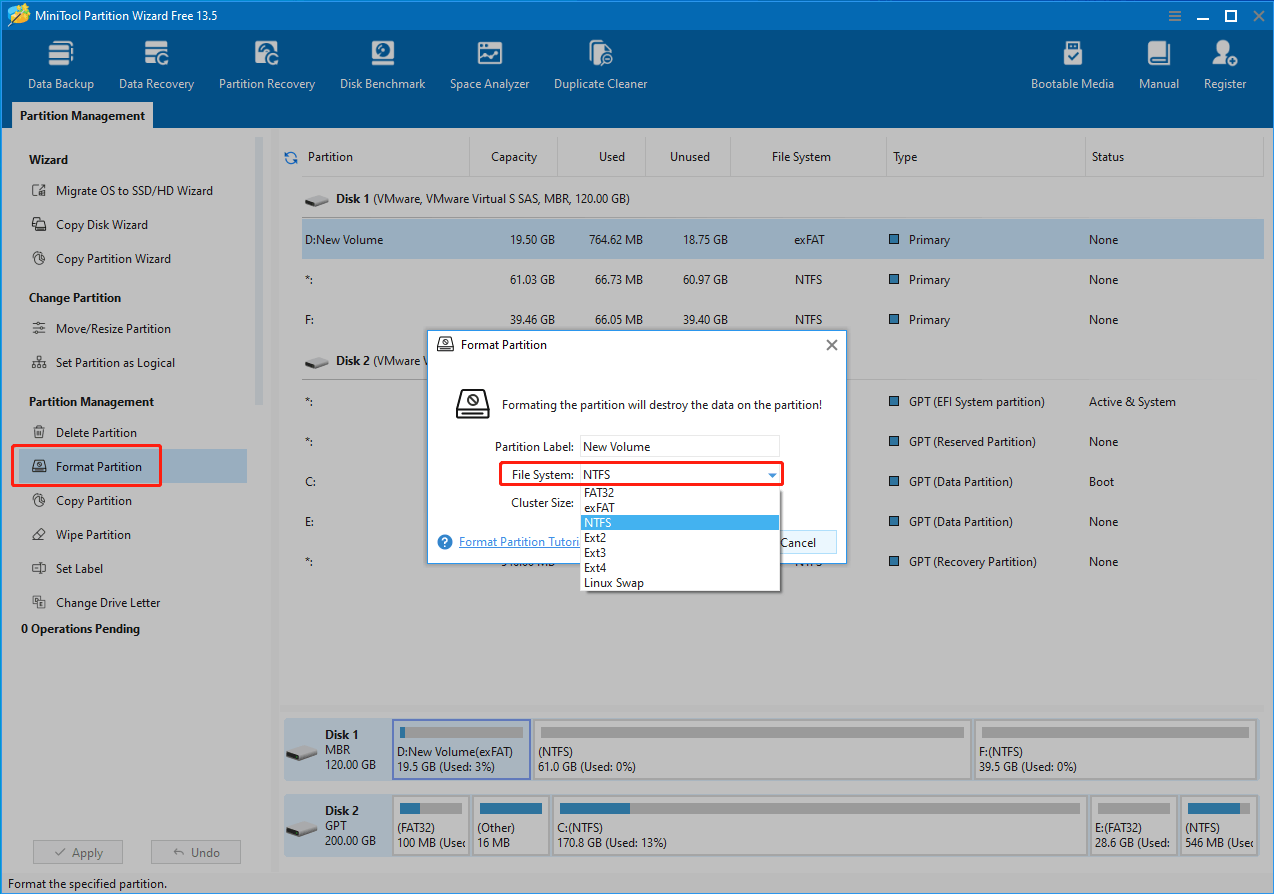
Step 3. Click Apply to execute the formatting process. Then proceed to the next stage.
Stage 3. Resize the NTFS Partition
After formatting the exFAT partition to NTFS, you can resize it using Windows Disk Management or a third-party partition manager, depending on the disk layout.
In Disk Management, you can shrink an NTFS partition without requiring adjacent unallocated space. However, to extend a partition, there must be contiguous unallocated space directly next to it.
When the unallocated space is non-adjacent, Windows built-in tools cannot extend the partition, and a third-party solution is needed.
Method 1. Use Disk Management
Step 1. Open Disk Management.
Step 2. Right-click the NTFS partition you just formatted and select Shrink Volume.
Step 3. Enter the amount of space you want to shrink in MB and click Shrink to execute the operation. After shrinking, you can use the unallocated space to create a new partition or extend an adjacent partition.
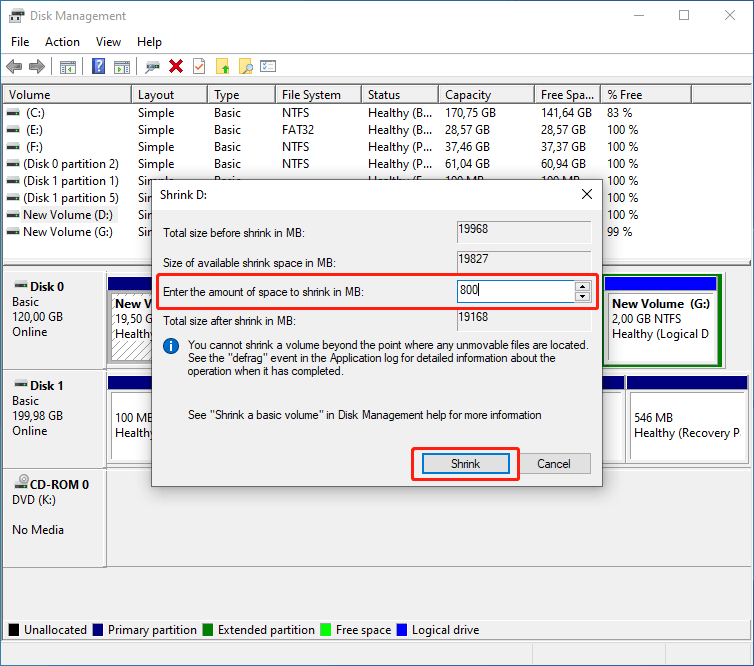
Step 4. After resizing, format the NTFS partition back to exFAT if needed. Right-click the partition, select Format, choose exFAT as the file system, and click OK.
On some Windows versions, Disk Management may not provide the exFAT formatting option. If exFAT is unavailable, use a third-party tool instead.
Method 2. Use MiniTool Partition Wizard
If Disk Management cannot meet your requirements, you can use MiniTool Partition Wizard to resize the partition more flexibly.
Step 1. Open MiniTool Partition Wizard, select the NTFS partition, and choose Move/Resize Partition from the left wizard.
Step 2. In the pop-up window, keep Using Enhanced Data Protecting Mode enabled, then drag the slider left or right to adjust the partition size. Click OK to confirm.
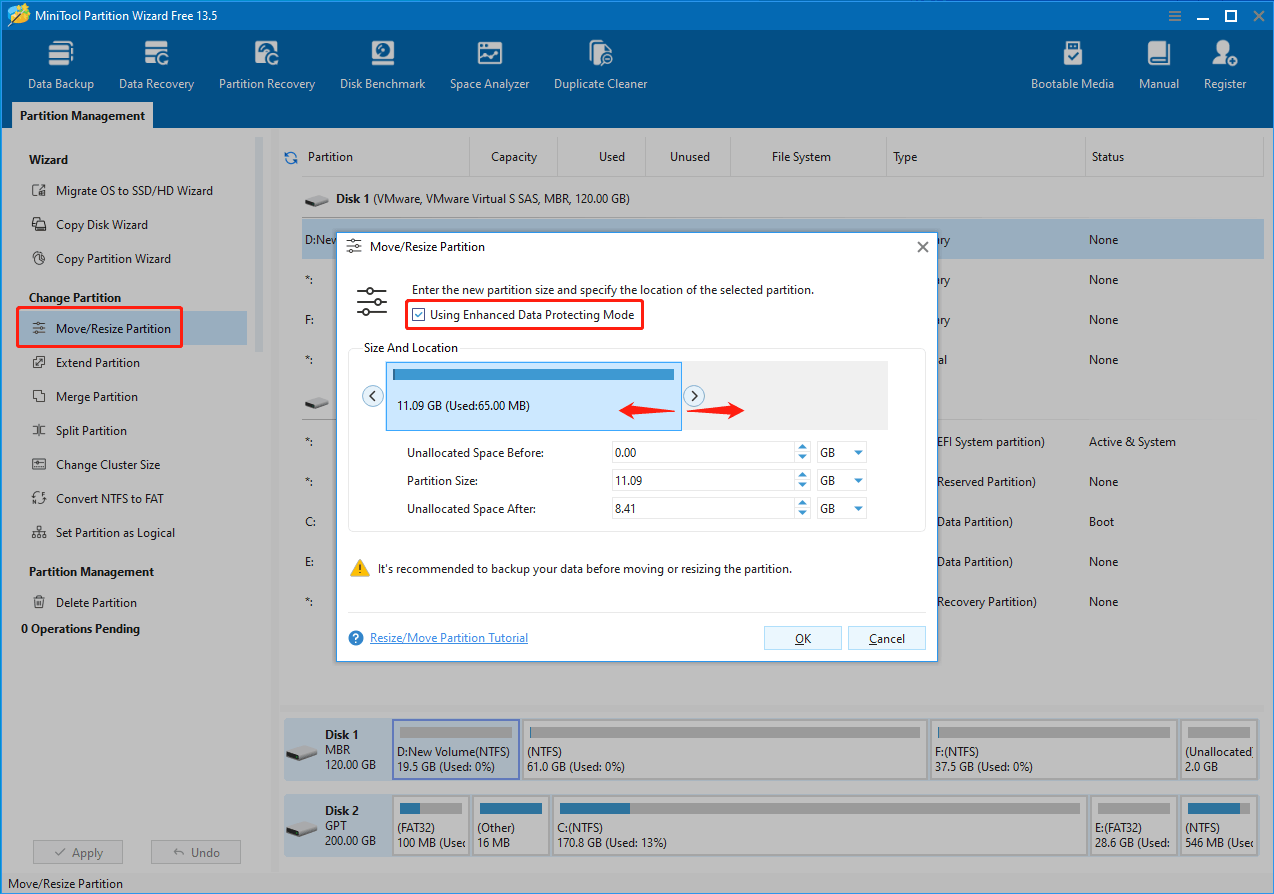
Step 3. Preview the shrink result and click Apply to perform the operation. After that, you can format the partition to exFAT by referring to the procedure in Stage 2.
If you want to take free space from any other existing partitions or non-contiguous unallocated space on the same disk, use the Extend Partition feature.
Step 1. Right-click the partition and select Extend.
Step 2. Select the unallocated space or partition that you want to take free space from and drag the blue slider bar to occupy the space. Then click OK to confirm it.
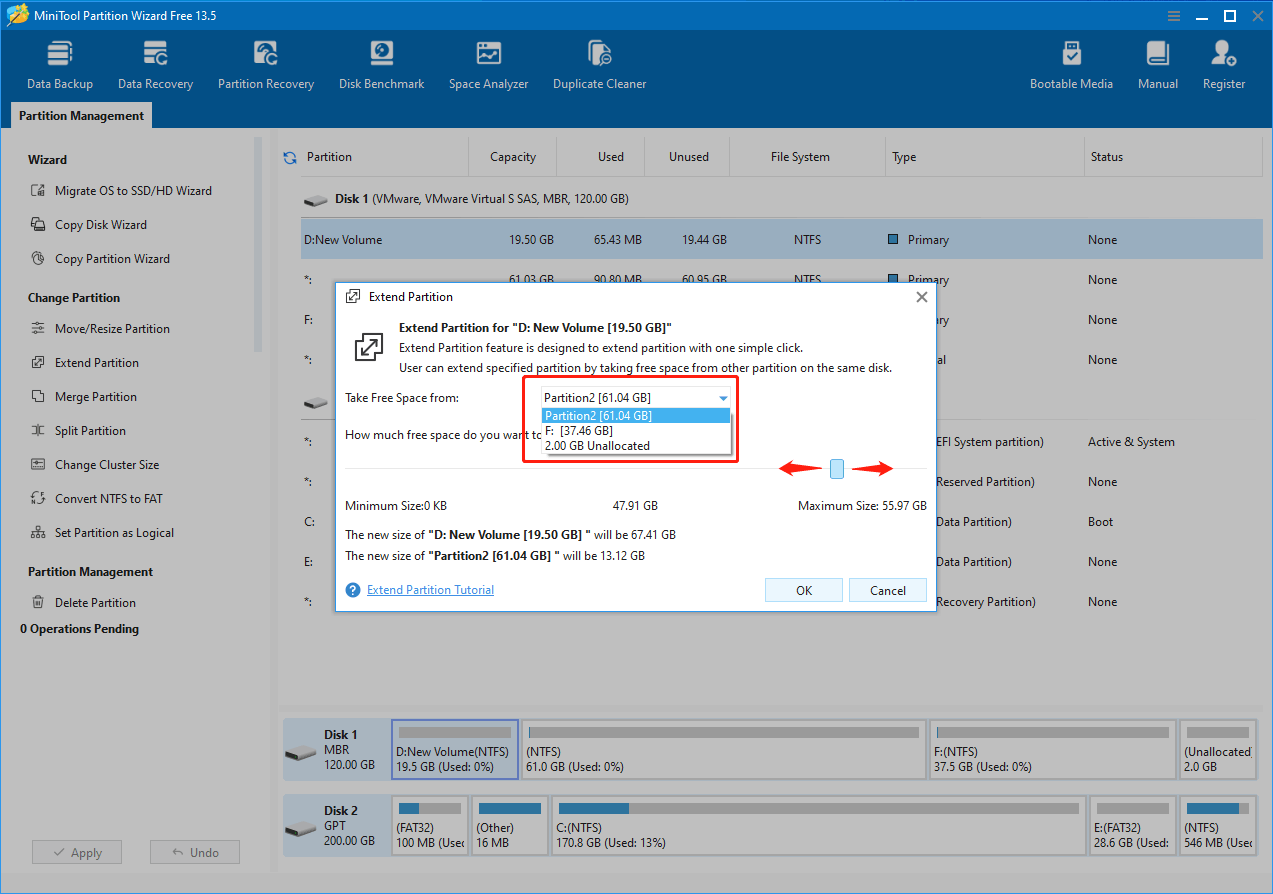
Step 3. Click Apply to execute the pending operation.
Stage 4. Restore the Backup to Your Partition
At this stage, the exFAT partition has already been resized. If necessary, you can now restore the previously backed-up data to the resized partition.
For a small amount of data, you can manually copy and paste the files from the backup location to the partition using File Explorer.
If the backup contains a large number of files or an entire partition image, using a dedicated backup or partition management tool can make the restoration process more efficient.
Resize exFAT Partition FAQ
1. The Format option in Disk Management may restrict creating exFAT partitions smaller than 32 MB or larger than 32 GB in some cases.
2. Windows Command Prompt (diskpart) can create exFAT partitions, but certain older Windows versions may not recognize partitions smaller than 32 MB.
3. Some system tools may not allow exFAT as a format option if the partition is on a system drive or certain types of removable drives.
To avoid these restrictions and gain more flexibility in creating and managing exFAT partitions, a third-party partition manager such as MiniTool Partition Wizard provides the capability to create and manage exFAT partitions.
In Conclusion
This article explains why exFAT partitions cannot be resized directly using Windows built-in tools and provides a practical workaround to shrink or extend an exFAT partition without data loss. By backing up the data, temporarily converting the partition to NTFS, resizing it, and formatting it back to exFAT, the task can be completed safely.
Depending on the disk layout and specific requirements, you can use Disk Management or a third-party partition manager to complete the process.
If you have questions or feedback regarding MiniTool software, you can contact the support team at [email protected].
User Comments :