
Windows 10 reset stuck at any percentage or black screen? This guide from MiniTool Partition Wizard provides effective fixes, including disconnecting devices, force restarting, and using Startup Repair.
The issue is often caused by corrupted system files, disk errors, or driver problems, but it can usually be fixed with the right troubleshooting steps.
This guide explains the possible causes and provides effective solutions to help you complete the reset.
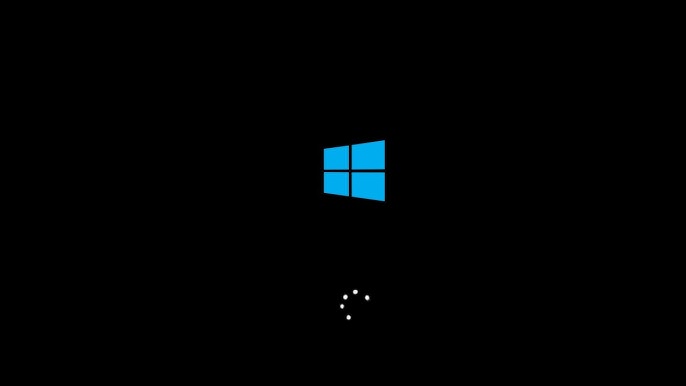
Why Does Windows 10 Reset Get Stuck?
If Windows 10 gets stuck during a reset, it’s usually caused by software or disk-related problems. The table below lists the most common causes.
| Cause | Description |
| Corrupted system files | Damaged system files can prevent the reset from completing |
| Outdated Hardware | If the computer uses an HDD, the reset process will be slower and may get stuck at a certain stage |
| Corrupt recovery image | A corrupted or missing recovery image causes Windows Reset to get stuck or fail |
| Driver compatibility issues | Incompatible hardware drivers |
| Disk errors | File system errors or bad sectors can cause the reset to freeze |
Knowing why Windows 10 reset gets stuck is only the first step. The next step is identifying how the issue appears on your PC, because different symptoms often require different solutions.
How to Fix Windows 10 Reset Stuck Black Screen
If Windows 10 gets stuck on a black screen during a reset, the correct solution depends on whether the PC is still working in the background or has completely frozen.
Before forcing a restart, check for signs of system activity such as a blinking disk light, spinning indicator, or fan noise.
Once you determine the type of black screen, follow the appropriate troubleshooting steps below.
| What You See | What It Usually Means | Next Step |
| Black screen with spinning dots | Reset is still running | Wait longer |
| Black screen with cursor | Explorer or graphics issue | Restart graphics driver or reboot |
| Black screen, no cursor, disk activity continues | Windows is processing files | Wait 1-3 hours |
| Black screen, no cursor, no disk activity | Reset may be frozen | Force restart and repair Windows |
After identifying your situation, apply the troubleshooting method below.
Solution 1. Wait Patiently
The reset process may sometimes appear to be “stuck”, but it could actually still be running. This is typically because the system is performing complex operations, such as processing files or applying configurations.
Therefore, even if the progress bar remains unchanged, background processes may still be continuing to run.
It is recommended to wait patiently for a while to see if any progress is made. If there is still no change after a several hours, then consider attempting other troubleshooting methods.
Solution 2: Disconnect Peripheral Devices
Before restarting or performing a reset, it is recommended that you disconnect all non-essential external devices, such as printers, USB drives, and external hard drives.
These devices can sometimes conflict with the system or be repeatedly detected during the startup and reset processes, potentially causing the operation to slow down or even freeze.
Solution 3: Force Restart the PC
If your computer screen remains unresponsive for an extended period and the progress bar shows no signs of movement, you can attempt a force restart.
Press and hold the power button for approximately 5–10 seconds until the device shuts down completely; then, wait a few seconds before turning it back on.
Solution 4: Run Startup Repair
If you are still unable to complete the reset after performing a forced restart, you can use the Windows Recovery Environment to run Startup Repair to fix it.
The detailed steps are as follows:
Step 1: Download the Windows installation file from the internet and create a bootable USB drive. Write the installation file to the boot device for system booting.
Step 2: Restart your computer using this USB drive. Enter the BIOS settings and use the arrow keys to set the USB drive as the first boot option.
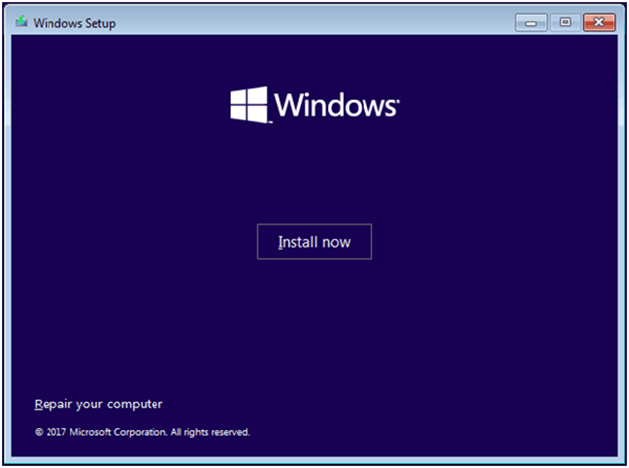
Step 3: Once the computer enters the Windows installation interface, click Repair your computer to enter the Windows recovery environment.
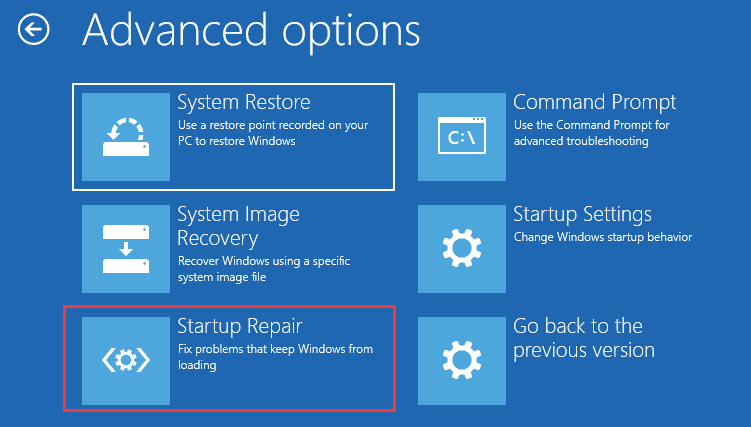
Step 4: Go to Troubleshoot > Advanced Options > Startup Repair.
Also read: How to Create Bootable USB from ISO Win10.
Solution 5: Restore from an Image Backup
Restoring the system to its state before a reset or using a previously created system image can effectively repair damaged or missing system components.
This method restores the operating system, system files, and configuration to a stable state, thus eliminating problems that might cause “Reset this PC” to get stuck.
The following are the steps to restore from an image backup using Windows Backup and Restore (Windows 7).
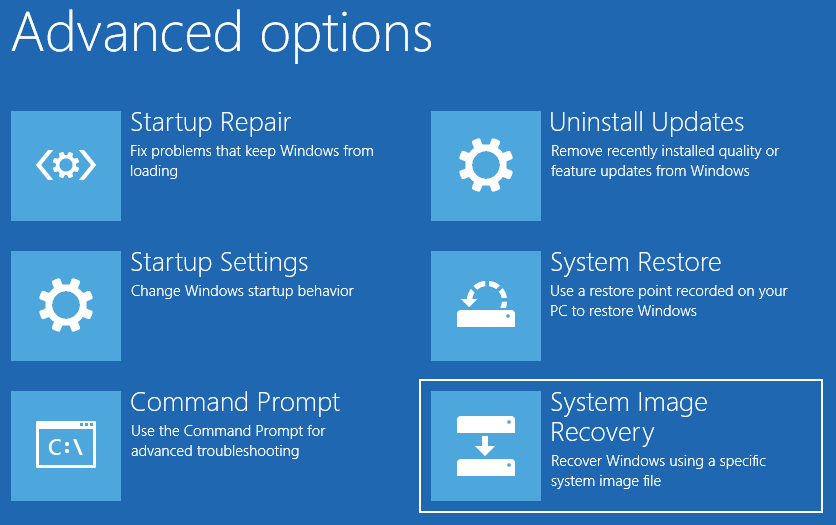
Step 1: Once you’ve entered the WinRE, click Troubleshoot > Advanced options > System Image Recovery.
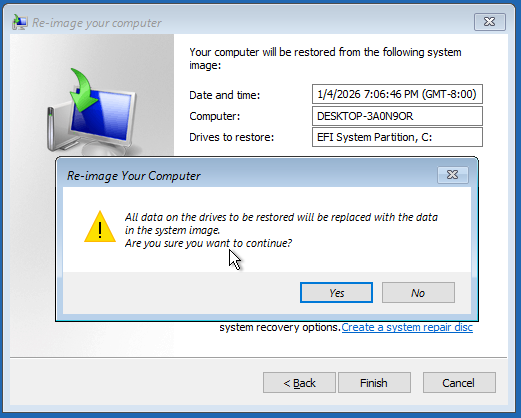
Step 2: Select your account and type your password to enter the Re-image your computer interface.
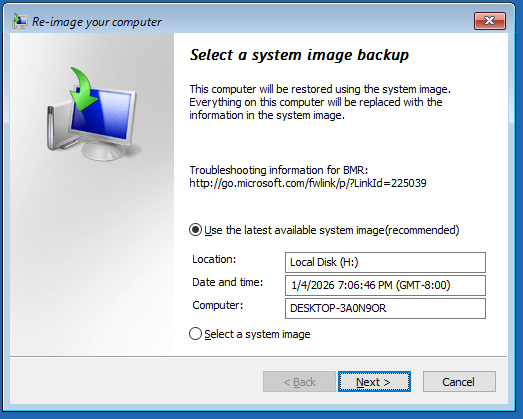
Step 3: Follow the instructions to restore your PC. A warning about formatting might appear, then click Yes to continue.
![How to Create a System Image Windows 11 [2 Ways]](https://images.minitool.com/partitionwizard.com/images/uploads/2021/09/system-image-windows-11-thumbnail.jpg)
Solution 6: Clean Install Windows 10
If the above methods do not resolve the issue, you can consider performing a clean install of Windows on your computer.
A clean install will completely reset your system, erasing your current operating system, all programs, and personal data.
Therefore, be sure to back up important files and data before performing this operation.
Here are the steps:
Step 1: Download the Windows 10 media creation tool from Microsoft’s official website and prepare an 8GB USB or larger flash drive.
Step 2: Insert the bootable USB drive into the computer.
Step 3: Start your computer and repeatedly press the boot menu key (usually F12, F2, or Esc) to enter the boot menu.
Step 4: Select the USB drive as the boot drive and press Enter.
Step 5: Follow the on-screen prompts (language, time), and then click Install Now. Complete the region, account, and privacy settings to access the desktop.
Step 6: Click I don’t have a product key and click Next. Then, tick the checkbox next to the I accept the license terms option and then click Next.
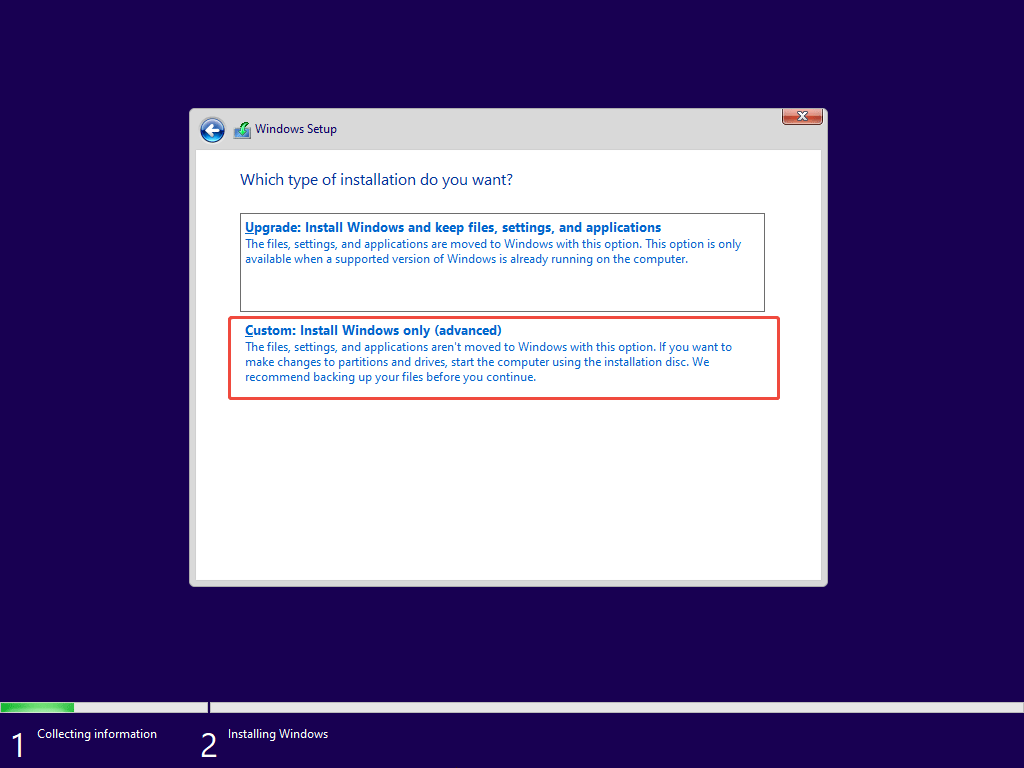
Step 7: Select Custom: Install Windows only (Advanced).
Step 8: Select each partition on your main drive and click Delete, then choose the Unallocated Space and click Next to install.
Step 9: After that, finish Windows setup (region, account, privacy), and it will install a fresh Windows on your computer.
Once it’s done, simply log in with your account.
Bonus Tip: How to Prepare Your PC Before Resetting Windows
Before resetting Windows, it is recommended to back up important files, create a system image, connect to a stable power source, and check the disk for errors.
These preparatory steps help minimize the risk of data loss and provide a safeguard for recovery should the reset fail.
Restoring a previously created system image is generally faster than reinstalling Windows, as it eliminates the need to reinstall applications or reconfigure system settings.
You can use MiniTool ShadowMaker to create a system image beforehand.
It supports features such as full system image backups and automated backups.
If the Windows reset fails or the system refuses to boot, simply restoring the previously created system image will return the computer to a working state.
MiniTool ShadowMaker TrialClick to Download100%Clean & Safe
Step 1: Enter the main interface.
Step 2: Navigate to the Backup page, and then you see MiniTool ShadowMaker has checked the system-related partitions in the current OS. And you need to choose the backup destination, for instance, an external hard drive.
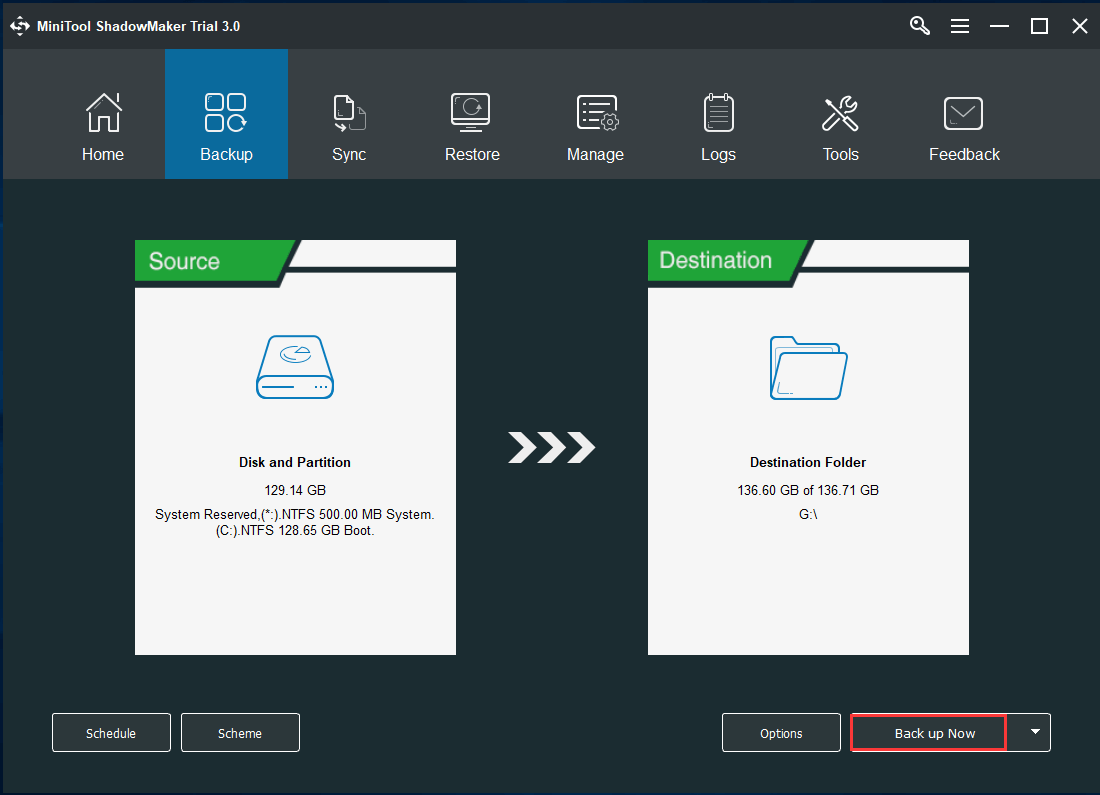
Step 3: Click Back up Now to perform the backup operation.
By means of a system backup, you can restore your computer to a previous working state, no matter which issue occurs, such as Windows 10 reset getting stuck at 1%, 8%, 12%, 33%, 66%, or 99%.
In some cases, however, system backup alone may not be enough, especially if the system drive is severely damaged or needs to be replaced.
In such situations, migrating the operating system to another hard drive can provide a more stable long-term solution.
MiniTool Partition Wizard offers an OS migration feature that allows you to transfer the Windows system to another HDD or SSD without reinstalling the operating system.
After migration, you can boot the computer from the new system drive even if the original disk fails or the Windows reset becomes stuck.
Windows 10 Reset Stuck FAQ
Bottom Line
A stuck Windows 10 reset is often not a permanent failure. Most cases can be resolved with Startup Repair, system file repair, or a simple restart. If the problem persists, reinstalling Windows is usually the final solution.
If you have any questions or feedback about MiniTool ShadowMaker, feel free to contact our support team at [email protected] for additional help.
User Comments :