
This guide from MiniTool Partition Wizard shows you how to perform a System Restore from Command Prompt in Windows 10/11, whether your PC can boot normally or only access WinRE.
System Restore is a built-in Windows recovery feature that allows you to revert system settings and files to a previous, functional state.
The standard command used to execute System Restore is rstrui.exe.
This article explains how to perform a System Restore via the Command Prompt, covering scenarios where Windows boots normally as well as those where it fails to boot.
Also read: What’s Windows 11/10 System Restore & How to Enable/Create/Use.
When Should You Use CMD to Perform a System Restore
You can use the command line to perform a System Restore in the following situations:
- Windows fails to start normally.
- The computer displays a black screen or gets stuck in a boot loop.
- The system crashes after installing drivers or Windows updates.
- You are unable to access the desktop graphical interface normally.
The following sections describe how to perform System Restore from Command Prompt Windows 11/10, whether the system boots normally or fails to boot.
How to Perform a System Restore from Command Prompt in Normal State
When your computer boots up normally but the system is sluggish, the start menu fails to open, or you need to quickly launch System Restore, you can directly access the system restore Windows 11/10 interface using the “rstrui.exe” command.
The following are the detailed steps for performing a System Restore from Command Prompt Windows 10, assuming Windows starts normally:
Step 1: Type cmd in the Search box, and choose Run as administrator form right side.
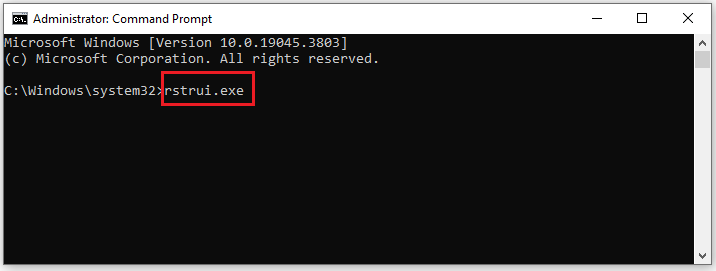
Step 2: Type rstrui.exe and press Enter.
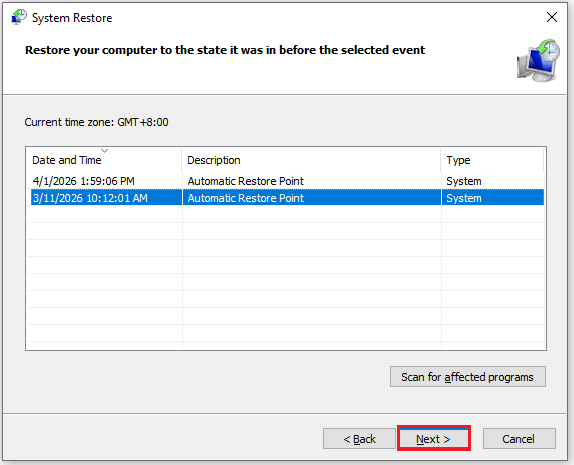
Step 3: The system restore window will pop up, and click Next to continue.
Step 4: In the list of all system restore points, select a Restore point, and click the Next button.
Step 5: Then, confirm your restore point by clicking the Finish button.
Step 6: After that, restart your computer.
How to Perform a System Restore from Command Prompt in WinRE
If your PC fails to boot normally, you can open Command Prompt to perform a system restore through the Windows Recovery Environment (WinRE).
Step 1: To enter WinRE, just interrupt the Windows startup process 3 times. Power on the PC and then power it off immediately when you see the PC logo screen.
Step 2: Repeat this process 3 times, and the WinRE will open automatically.
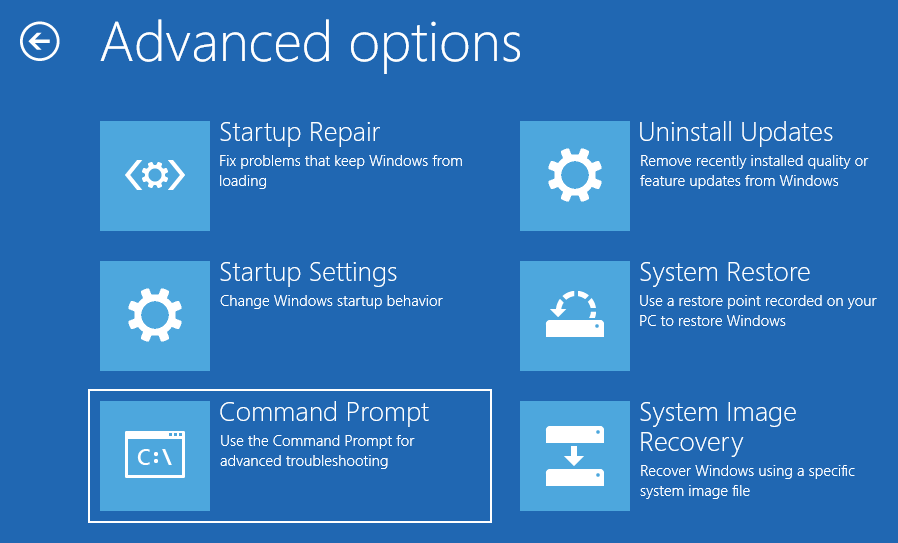
Step 3: Click Troubleshoot > Advanced options > Command Prompt.
Step 4: Wait a moment, then select your account and enter your password.
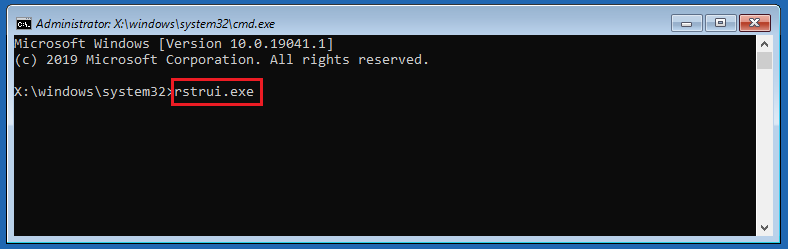
Step 5: In the new pop-up window, type rstrui.exe, and hit Enter.
Step 6: Select one of the restore points and follow the on-screen instructions.
![How to Fix System Restore Failed to Extract the File? [8 Ways]](https://images.minitool.com/partitionwizard.com/images/uploads/2023/09/system-restore-failed-to-extract-the-file-thumbnail-1.jpg)
System Restore from Command Prompt FAQ
1. Enter WinRE and then run the command.
2. Use Safe Mode.
3. Perform a Startup Repair.
Bottom Line
If updating the system or installing software causes issues with your computer, you may need to restore the system to a more stable state. Performing a System Restore can help you do this.
Even if the system fails to boot normally, you can still perform a System Restore via the Command Prompt within the WinRE.
User Comments :