
With the right SSD cloning software, you can upgrade to a larger or faster SSD without reinstalling Windows, applications, and personal files from scratch. In this article, we compare some of the best SSD cloning software, including their key features, pros and cons, and supported cloning scenarios.
Best SSD Cloning Software at a Glance
Not all SSD cloning software supports the same cloning methods, SSD brands, or Windows migration features. The table below compares popular SSD cloning tools based on their main features and use cases.
| SSD Cloning Software | Free Option | Clone System SSD | Clone SSD to Smaller SSD | SSD Brand Restriction |
| MiniTool Partition Wizard | Yes, with limitations | Yes | Yes | No |
| Paragon Hard Disk Manager | No full free version | Yes | Yes | No |
| Macrium Reflect | Check current edition | Yes | Depends on cloning method | No |
| O&O DiskImage | Trial available | Yes | Depends on configuration | No |
| Samsung Data Migration | Yes | Yes | Depends on supported Samsung SSD | Yes |
| Clonezilla | Yes | Yes | Yes, depending on disk layout | No |
How to Choose SSD Cloning Software
Before choosing SSD clone software, check the following features.
#1. Check What You Want to Clone
Determine whether you need to clone an entire disk, a specific partition, or only the Windows operating system.
#2. Check SSD and OS Supports
Some cloning SSD software may only support a certain type of SSD or certain type of OS.
#3. Check Support for Cloning to a Smaller SSD
A larger-capacity source SSD does not necessarily require a larger destination SSD. If the data stored on the source drive can fit on the destination drive, some cloning tools can clone the drive to a smaller SSD by resizing or adjusting partitions.
#4. Look for Partition Resizing Options
Partition resizing can be important when the source and destination SSDs have different capacities.
A useful cloning tool should allow you to adjust the partition layout during cloning or resize partitions afterward. This helps you use the full capacity of a larger SSD instead of leaving the additional space unallocated.
#5. Check MBR and GPT Support
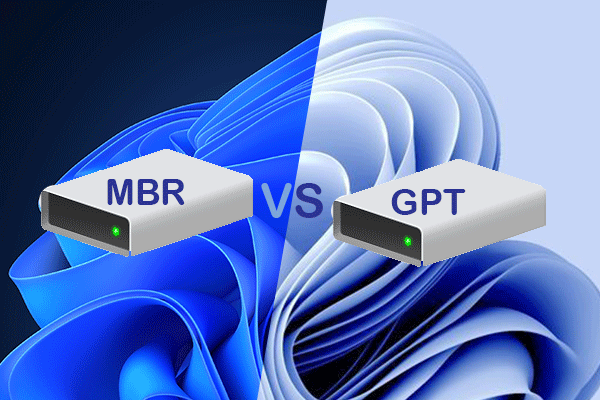
Modern Windows PCs commonly use GPT with UEFI, while older systems may use MBR with Legacy BIOS. A reliable cloning tool supports both MBR and GPT disks, helping to minimize boot issues after migration.
An excellent cloning tool will allow you to convert the disk from MBR to GPT during the cloning, ensuring compatibility with newer systems.
#6. Check Whether the Free Version Meets Your Needs
“Free SSD cloning software” does not always mean that every cloning feature is free. Some programs provide free disk or partition cloning but restrict system-disk cloning, OS migration, or advanced features to paid editions.
Before starting, check whether the free version supports the exact operation you need, especially if you are cloning a Windows system SSD.
#7. Consider Ease of Use
If you are new to disk cloning, choose software with a clear interface and a straightforward cloning wizard. The tool should clearly identify the source disk and destination disk and provide warnings before an operation that may overwrite data.
6 Best SSD Cloning Software: Pros & Cons
In this section, I will elaborate on the pros and cons of these six software programs.
#1. MiniTool Partition Wizard
MiniTool Partition Wizard is a comprehensive partition manager with dozens of features included.
MiniTool Partition Wizard DemoClick to Download100%Clean & Safe

Pros:
- Supports both full-disk cloning and partition copying.
- Can migrate Windows to a new SSD or HDD without reinstalling Windows.
- Supports Windows 11 and Windows 10, as well as older Windows versions.
- Provides partition resizing and disk-layout options during cloning.
- Supports SSD alignment to help optimize SSD performance.
- Includes extensive partition-management tools in addition to cloning.
- Supports MBR and GPT disks and provides options for converting disk partition styles.
- Offers bootable media for managing disks when Windows cannot start.
- Supports HDDs, SSDs, external drives, USB drives, and other storage devices.
- Supports Windows 11 and Windows 10, as well as older Windows versions.
Cons:
- The Free edition does not support system-disk cloning or OS migration. These features require a paid edition.
#2. Paragon Hard Disk Manager
Paragon Hard Disk Manager is not free cloning software for SSD. It does not offer a free version. Its main features are as follows.
- Allows you to clone an entire disk, a specific partition, or even specific files to another drive.
- Allows you to resize the partition during the cloning process or copy a hard drive to another with a different sector size.
- You are allowed to schedule backups and automate the process. After the operation ends, this SSD clone software will send completion notifications via email.
- Can create a virtual clone of your PC to a USB drive and then run it portably from another PC.
- Supports Windows 10 and Windows 11.
#3. Macrium Reflect
Macrium Reflect is another popular disk cloning software.
Pros:
- Supports full-disk and partition cloning.
- Supports cloning Windows to a new SSD or HDD.
- Supports partition resizing when cloning to a different-sized drive.
- Includes SSD TRIM optimization during cloning.
- Offers advanced backup, disk imaging, and recovery features in addition to cloning.
- Supports both MBR and GPT disks.
Cons:
- Macrium Reflect Free is discontinued and is no longer available for download.
- Reflect 8 reached end of life on February 27, 2026, so older versions should not be presented as the current product.
- The current Reflect X product is not a permanently free cloning solution for general home use. Macrium offers a free trial.
#4. O&O Disk Image
O&O DiskImage is professional software for disk imaging, data backup, and restoration.
Pros:
- Supports cloning entire disks and individual drives.
- Can be used to migrate an existing system to a new SSD.
- Supports modern SSD, UEFI, and GPT configurations.
- Includes full, incremental, and differential backup capabilities.
- Supports restoring a system to different hardware through Machine Independent Restoration (M.I.R.).
- Includes additional features such as image mounting, drive analysis, and automated backups.
- Supports Windows 10 and Windows 11.
Cons:
- It is primarily a paid backup and disk-imaging solution rather than a dedicated free SSD cloning tool.
- The current trial version has limitations. Features such as drive duplication and boot-media creation require the full version.
#5. Samsung Data Migration
Samsung Data Migration is an official, dedicated data migration tool developed by Samsung Electronics, designed to help users quickly, safely, and seamlessly clone and transfer their existing operating system, applications, and all files from an old hard drive (HDD or SSD) to a new Samsung SSD.
Pros:
- SSD cloning software free for Samsung SSD users to migrate Windows, applications, and user data to a new Samsung SSD.
- Supports common Windows storage configurations, including NTFS and FAT.
Cons:
- Supports only compatible Samsung SSDs listed by Samsung. It is not a general-purpose cloning tool for all SSD brands.
- The source drive must contain an operating system. It cannot clone a data-only drive without an OS.
- The source drive must be smaller than the target drive for the standard Data Migration process.
- Cannot clone encrypted drives according to Samsung’s current installation documentation.
- OEM partitions may not be cloned in some configurations.
#6. Clonezilla
Clonezilla is a free, open-source tool for disaster recovery, disk cloning, and system backup and restoration.
Pros:
- Free and open-source disk imaging and cloning software.
- Supports full-disk and partition cloning.
- Supports Windows, Linux, macOS, and other operating systems with supported filesystems.
- Supports both MBR and GPT partition tables, as well as BIOS and UEFI systems.
- Supports cloning to larger drives and provides advanced options for expanding partitions on the destination drive.
- Supports encryption for disk images.
Cons:
- The interface is less beginner-friendly than Windows-based cloning tools and requires booting into Clonezilla.
- The source partition generally needs to be unmounted because online cloning is not supported.
- By default, the destination partition must be equal to or larger than the source partition.
- Cloning to a smaller drive requires advanced options and careful verification that the data will fit.
How to Clone an SSD by Using MiniTool Partition Wizard
The foloowing steps show you how to clone an SSD via MiniTool Partition Wizard.
Step 1: Get MiniTool Partition Wizard installed on your computer. To do that, click the button below to download the setup file and then install the program by following the on-screen instructions.
MiniTool Partition Wizard DemoClick to Download100%Clean & Safe
Step 2: Launch MiniTool Partition Wizard to access its main interface.
Step 3: Click on Copy Disk Wizard in the left panel and tap Next in the pop-up window.

Step 4: In the next window, select the disk to clone and click the Next button to continue.

Step 5: Click on the destination disk in the prompted window and click Next. Then a warning window will prompt, stating that all the data on the disk will be destroyed during the cloning process. After ensuring that there are no important data on it, click the Yes button to confirm the operation.

Step 6: Then choose copy options from the list and click the Next button. For instance, you can fit partitions to the entire disk or copy partitions without resizing. If the destination disk is an SSD, it is recommended to check the “Align partitions to 1 MB” option. You’d better choose the option “Use GUID Partition Table for the target disk” when the disk is in GPT partition style.

Step 7: After reading the note, click Finish to end the configuration.
Step 8: Tap Apply and follow the prompted instructions to carry out the operation.

When you receive cloning hard drive SSD taking forever issue, fix it with the provided methods in the post.
Bottom Line
This post summarizes some factors for selecting suitable SSD cloning software and then lists several trustworthy options. After that, it illustrates how to clone an SSD via MiniTool Partition Wizard. Simply put, this is a complete SSD cloning guide.
You can clone your hard drive, partition, or file with any SSD clone software introduced in this post. It’s your turn to have a try! For any issues or questions about MiniTool Partition Wizard, please feel free to contact us by sending an email to [email protected]. We will help you solve them as soon as possible.
About The Author

Position: Columnist
Linda has been an editor at MiniTool for seven years. She continuously learns about computers and puts her knowledge into practice. Moreover, she is particularly knowledgeable in disk management, data recovery, system installation, and PDF editing. Her articles typically reference multiple examples or are based on her own experience, providing users with the most suitable solutions.
User Comments :