
As the amount of data continues to grow, more and more users are beginning to face the problem of insufficient storage space on their PCs.
This article will introduce the common types of PC storage, the capacity to consider when choosing storage, methods to expand PC storage space, and recommended computer storage devices to help you easily solve storage problems.
Types of PC Storage Devices
There are various types of computer storage devices available on the market today, including internal storage devices and external storage devices. These will be described in detail below.
Types of Internal Storage Devices
- Hard Disk Drive (HDD): A traditional hard drive that uses rotating disks for data storage. It has a low unit storage cost and is suitable for storing large amounts of data.
- Solid State Drive (SSD): A storage device based on flash memory technology that contains no mechanical parts. Compared to HDDs, SSDs have faster read and write speeds.
- Hybrid Drive: Using both SSDs and HDDs in the same system, combining the high-speed performance of SSDs with the large capacity advantage of HDDs.
Other Storage Device Types
- External hard drives: Including portable HDDs and SSDs, used for backup, file transfer, or expanding storage space.
- USB flash drives: Small and portable, suitable for quickly transferring files between different devices.
- Memory cards: Commonly used in portable devices such as cameras and mobile phones. They can also be used with computers via card readers.
- Network Attached Storage (NAS): A centralized storage device primarily used for data sharing and management in home or office environments. On a computer, a NAS acts like a personal cloud that you can access over your home or office network. It allows you to store and share large amounts of data.
Best Storage Capacities for PC
Different types of computer users have different storage capacity needs. You can refer to the following information to make your choice:
- Regular users: 256GB to 500GB SSDs are usually sufficient. This amount of storage space can easily accommodate your operating system, multiple applications, and a considerable number of personal files.
- Gamers: At least 1TB, ideally 2TB or more. A 1TB SSD can hold approximately 10-20 games (depending on the game size), while a 2TB SSD can accommodate more games.
- Creative professionals: 2TB or larger capacity is recommended for storing materials. This capacity is sufficient to hold large project files, such as high-resolution images and 4K videos.
- Data hoarders/archivers: Large-capacity HDDs are recommended, with 4TB or more being more suitable. This storage capacity is ideal for users who need to store massive amounts of data. It can store hundreds of thousands of photos, hours of 4K video footage, or large file databases.
How to Add More Storage to PC
Many computer users encounter the problem of insufficient storage space, which not only affects the computer’s running speed but also limits daily use. How to get more space on PC?
Here are 3 methods.
- Clean up useless data: Free up space by deleting unnecessary files or uninstalling redundant programs.
- Reduce file size: Compress files or reduce the resolution of images and videos to reduce their file size.
- Increase storage capacity: Expand your computer’s storage capacity by upgrading your hard drive or using external storage devices.
#1. Clean up Useless Data
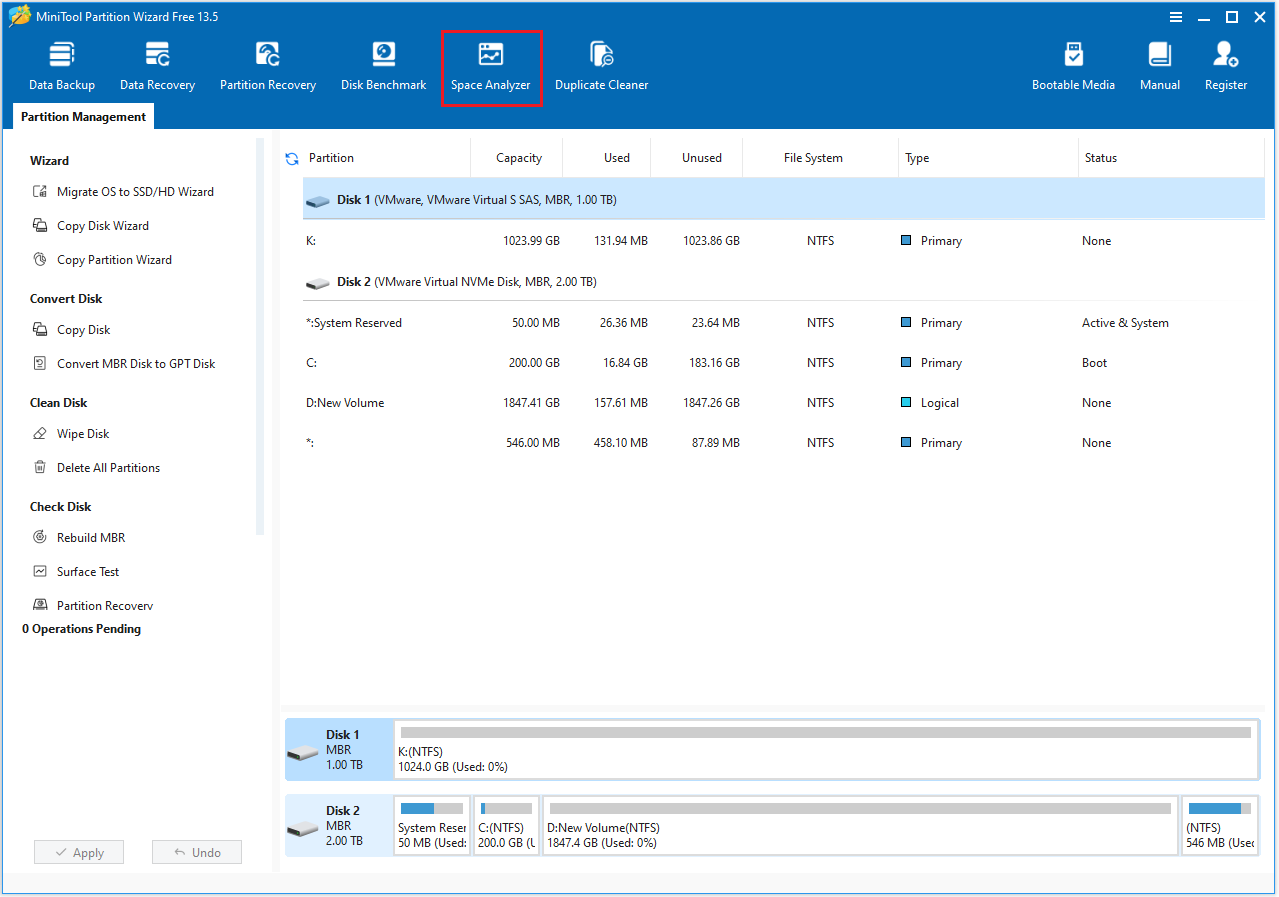
To clean up useless data, you can directly delete some files. The Space Analyzer function of MiniTool Partition Wizard can help you find these files and delete them.
Tip: If only your C drive is full, while other drives have plenty of free space, you can easily solve this problem by expanding your C drive.
Here are the steps:
MiniTool Partition Wizard FreeClick to Download100%Clean & Safe
Step 1: Launch MiniTool Partition Wizard to its main interface. Then, click Space Analyzer from the toolbar.
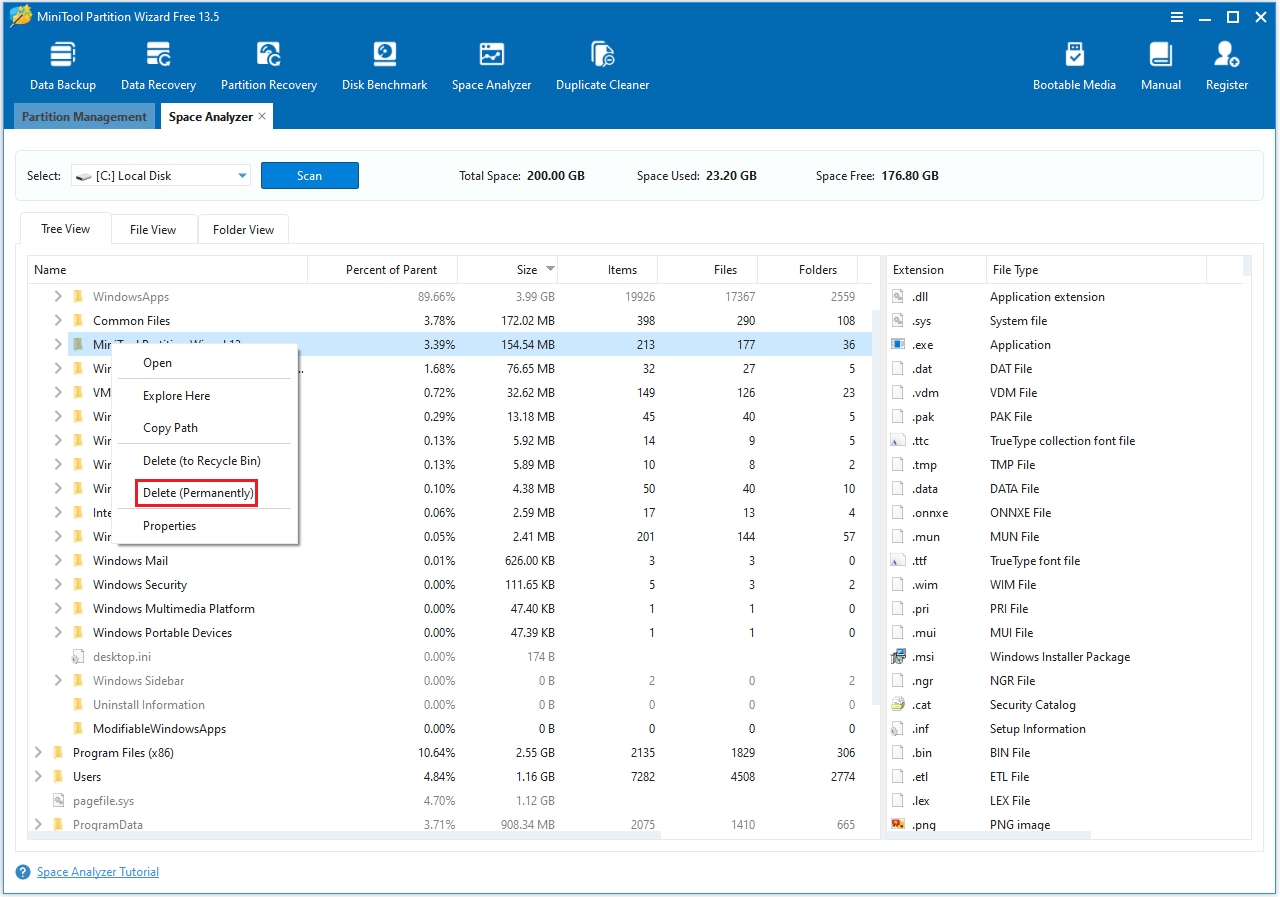
Step 2: Select your hard drive and click the Scan button. You can view all your files by switching between Tree View, File View, and Folder View. By default, the files that take up the most space appear at the top of the list.
Step 3: Right-click a file or folder and choose Delete (Permanently).
Further Reading:
If you want to free up your computer’s storage space by uninstalling redundant programs, here are the specific steps.
Step 1: Click the Start icon and choose Settings.
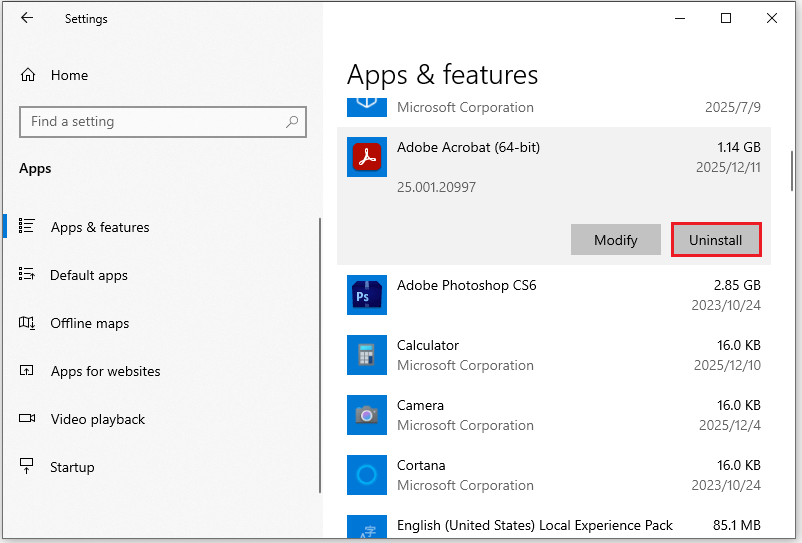
Step 2: Select Apps > Apps & features, then scroll down the right side of the page to find the programs that you would like to uninstall.
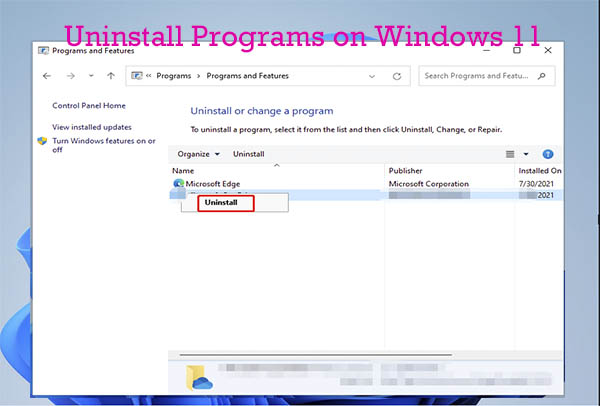
Step 3: Right-click the target programs and click on the Uninstall button.
#2. Reduce File Size
As mentioned earlier, you can expand your PC’s storage space by compressing individual files, folders, or even drives.
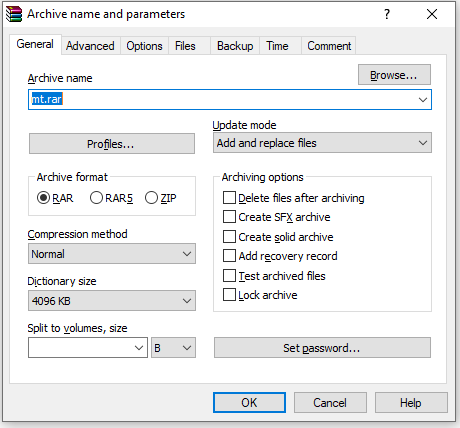
Here is how to compress files and folders, taking WinRAR as an example:
- Right-click the file and choose Add to archive.
- In a new window pops up, click OK to continue.
#3. Increase PC Storage Capacity
In general, there are three main ways to expand computer storage space:
1. Expanding storage space via external storage.
You can use a USB flash drive, SD card, or external hard drive to expand your computer’s storage. Desktop and laptop computers have USB ports, which can be plugged in directly. Some laptops also have SD card slots.
Note that these external storage devices are usually slower than local hard drives.
2. Adding a second hard drive.
If your computer has an extra hard drive bay, you can directly add a second hard drive to expand storage. Simply confirm the hard drive bay and interface type, purchase a compatible hard drive, and install it.
After adding a second hard drive to your computer, you will usually need to perform initialization settings, including initializing the hard drive, creating partitions, and formatting the hard drive.
Only after completing these operations can the system properly recognize and use the new hard drive for data storage, just like the original hard drive.
3. Replacing the hard drive.
If your computer only has one hard drive bay, replace it with a larger-capacity hard drive.
First, open File Explorer, right-click on the local disk, and select Properties, then check the hard drive model in the Hardware tab.
Confirm the interface type based on the hard drive model (if unsure, you can search for it on the official website), and then purchase a larger capacity hard drive with the same interface.
Before installing the new hard drive into your computer, migrate the data and operating system from the old hard drive to the new one with MiniTool Partition Wizard. Its Migrate OS to SSD/HD feature can migrate the OS only or copy the entire disk.
MiniTool Partition Wizard DemoClick to Download100%Clean & Safe
Step 1: Connect the new hard drive to your PC via NVMe to USB adapter or SATA to USB adapter. Then launch MiniTool Partition Wizard to its main interface.
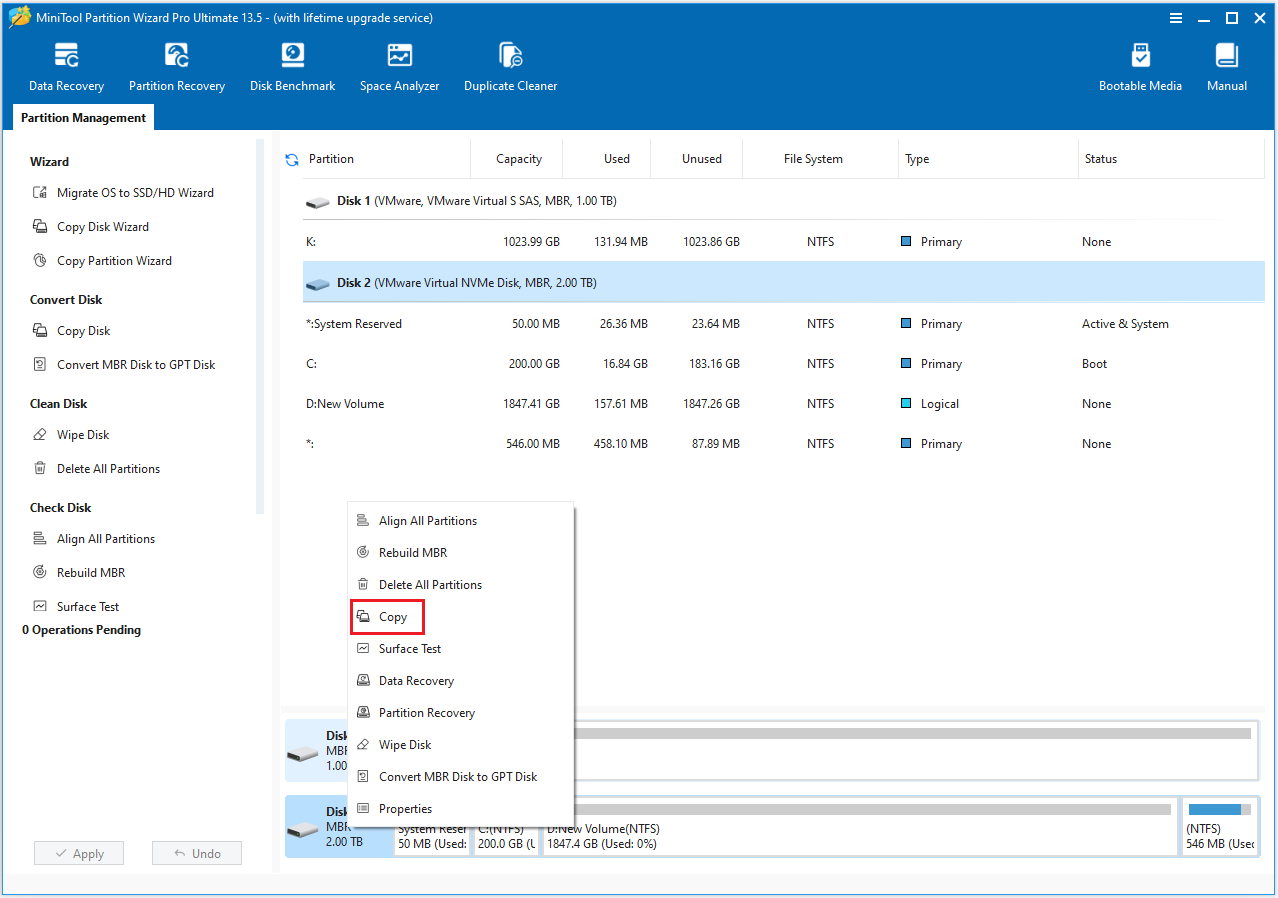
Step 2: Right-click the system disk and then select Copy from the menu.
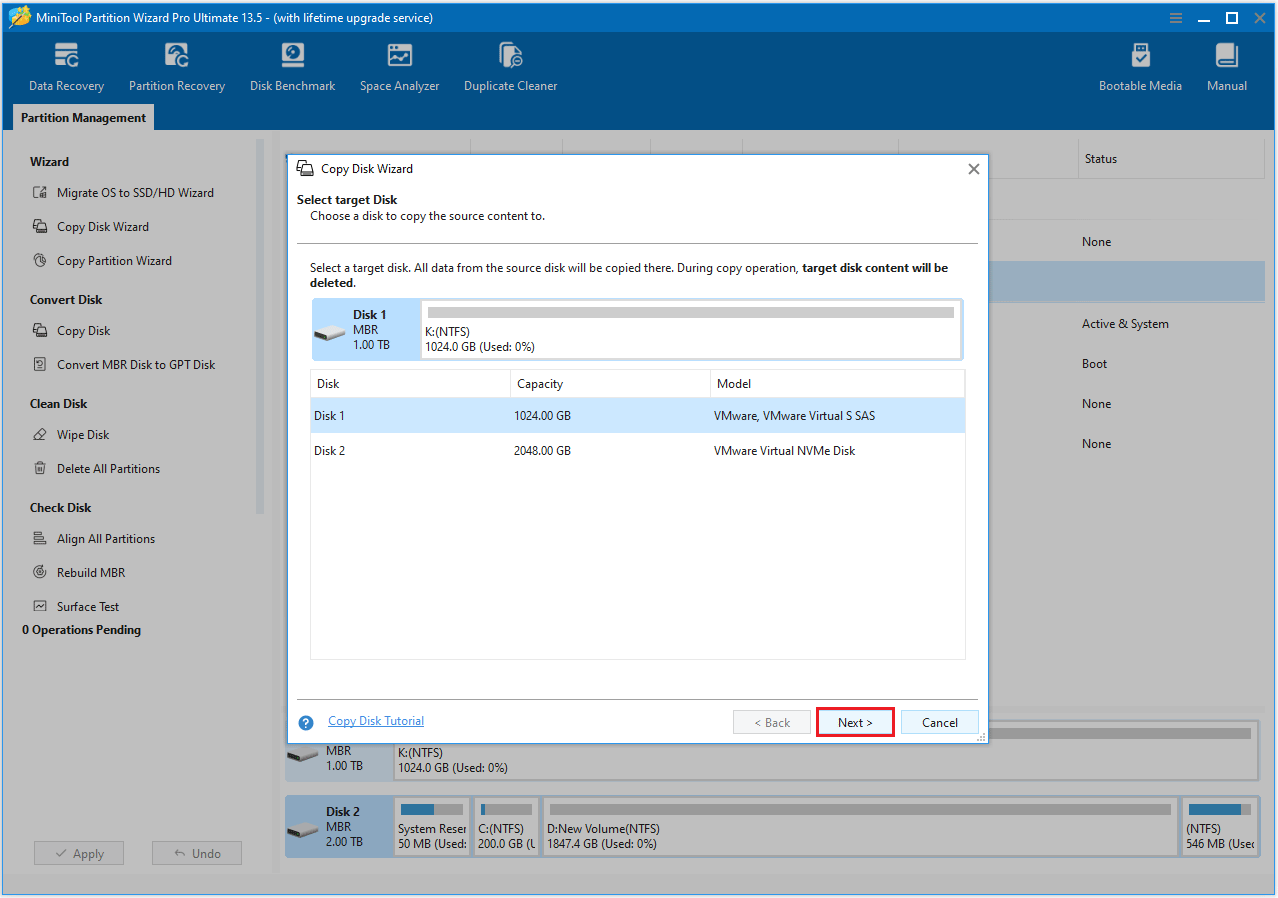
Step 3: In the pop-up window, choose the new hard drive as the target disk, then click Next > OK to proceed.
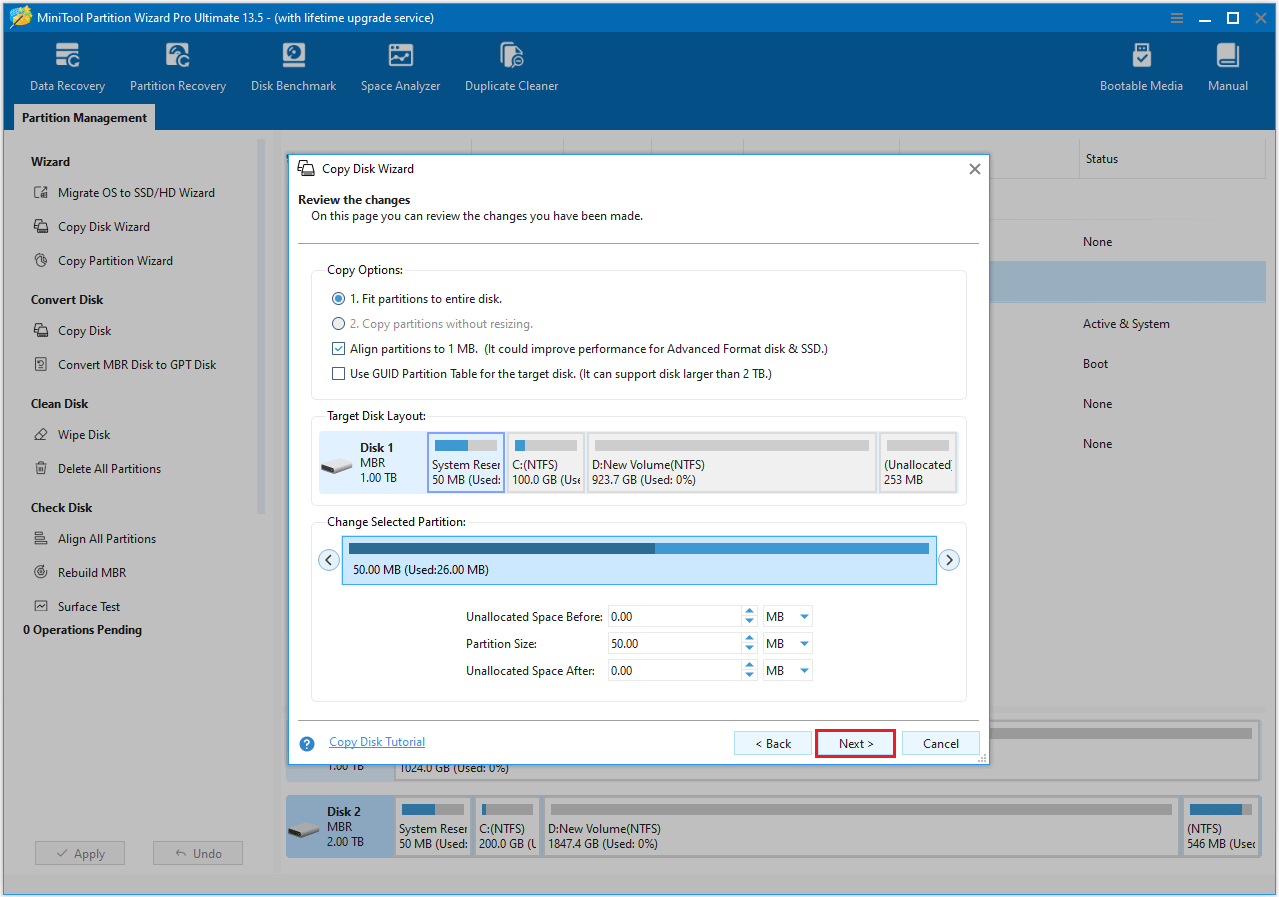
Step 4: On the next window, set Copy Options and adjust Target Disk Layout. Then click Next to proceed.
- Fit partitions to entire disk: This option will enlarge or shrink partitions proportionally to fit the new disk.
- Copy partitions without resizing: This option is unavailable if the new disk is smaller than the original one. It will not change the size of partitions, leaving unallocated space on the new disk.
- Align partitions to 1MB: This option is selected by default. It applies 4K alignment to the disk, improving the disk’s performance.
- Use GUID Partition Table for the target disk: If the original disk is an MBR disk, this option will appear. Selecting it will apply the GPT style to the new disk during the cloning.
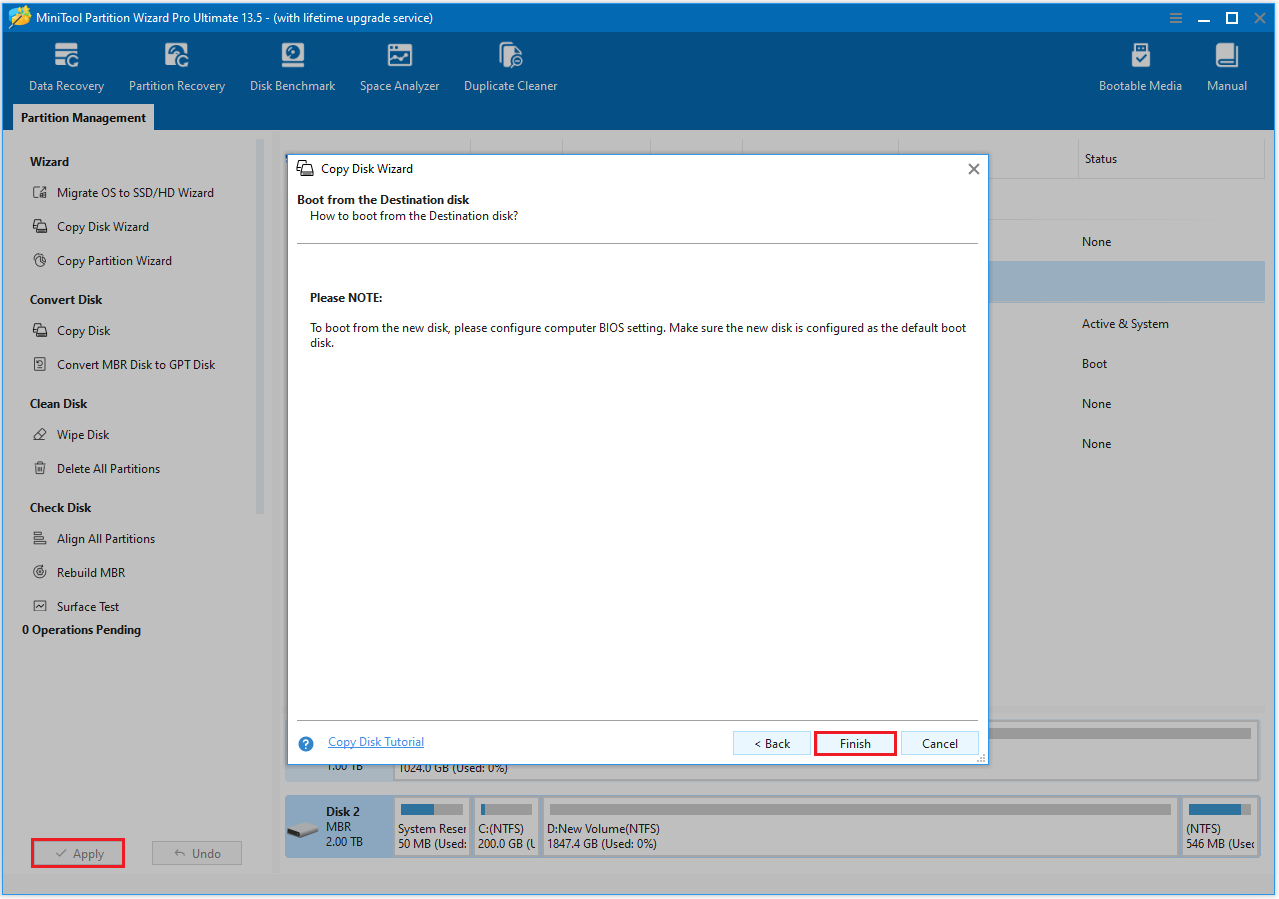
Step 5: A warning message will pop up, and click Finish > Apply to carry out the pending operation.
Best Storage Devices for PC
After knowing how to expand storage space for your computer, you may next need to choose a storage device that is suitable for your computer.
This section will recommend several storage options worth considering.
1. WD Black SN8100
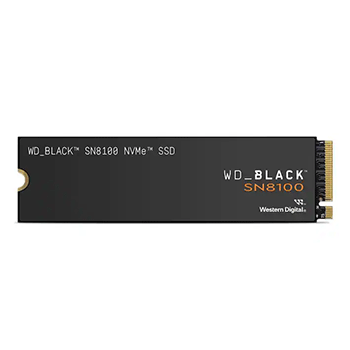
The WD BLACK SN8100 NVMe SSD is a high-performance solid-state drive based on the PCIe 5.0 x4 interface, designed for high-load tasks such as gaming and video editing.
It uses the M.2 2280 form factor and boasts read speeds of up to 14,900 MB/s, significantly improving loading and data transfer efficiency.
Furthermore, this drive is equipped with intelligent algorithms and efficient cooling technology to ensure stable performance during extended use, making it an ideal choice for users seeking ultimate performance.
2. Samsung 870 EVO
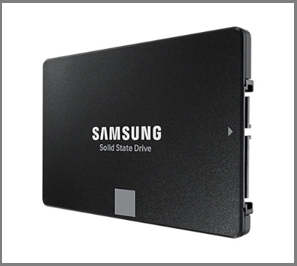
The Samsung 870 EVO is a high-performance 2.5-inch SATA solid-state drive (SSD) utilizing Samsung’s proprietary V-NAND technology, widely favored by users for its exceptional reliability and durability.
It offers a variety of capacity options, including 250GB, 500GB, 1TB, 2TB, and 4TB, to meet diverse storage needs.
Its design is sleek and modern, combining a black metal casing with classic Samsung styling.
In terms of performance, the 870 EVO delivers sequential read speeds of up to 560 MB/s and sequential write speeds of up to 530 MB/s, ideal for everyday use, gaming, and small to medium workloads.
It also boasts broad compatibility, supporting a wide range of devices, including laptops, desktops, and gaming consoles.
Furthermore, the 870 EVO supports TRIM and AES 256-bit hardware encryption to ensure data security. This drive excels in both performance and security, making it an ideal choice for storage upgrades.
3. Seagate IronWolf
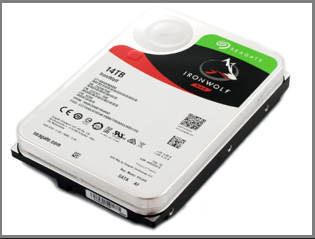
The Seagate IronWolf is a hard drive designed specifically for NAS systems, offering exceptional durability and reliability, suitable for 24/7 continuous operation.
It features a sleek design with a black metal casing and a red IronWolf logo. And it offers a variety of capacities, ranging from 1TB to 18TB, to meet the storage needs of different users.
In terms of performance, the IronWolf is equipped with a 7200 RPM rotational speed and up to 256MB of cache, providing fast data read and write speeds, making it particularly suitable for multi-user access and large-scale storage tasks.
For compatibility, the IronWolf supports multiple NAS operating systems, ensuring efficient and stable operation in various NAS environments.
Overall, the Seagate IronWolf is a high-efficiency, reliable, and stable NAS hard drive, suitable for users who need large-capacity storage.
4. WD My Passport
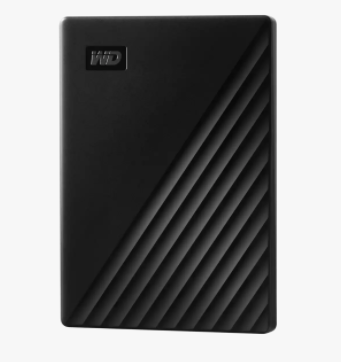
The WD My Passport boasts a maximum capacity of 6TB, making it one of the largest-capacity portable hard drives currently available.
Although called a “portable hard drive,” it uses a USB Micro-B interface and comes with a USB Micro-B to USB-A cable. For easy connection to computers with USB-C ports, it also includes a USB-A to USB-C adapter.
However, this drive is better suited for everyday storage needs such as file backups. For tasks requiring high-speed read/write operations, its performance is significantly inferior to portable SSDs.
Storage for PC FAQ
If you need a large amount of storage space for files, games, or media content, an HDD offers a more cost-effective option.
The ideal combination is to use an SSD as the system drive, installing the operating system and frequently used programs, and using an HDD to store large files and infrequently accessed data.
PCIe Gen 4 is the fourth generation of the PCIe interface, providing greater bandwidth and faster read and write speeds, suitable for high-end users and professional applications requiring higher storage performance.
Local storage, on the other hand, stores data on a computer, hard drive, or solid-state drive. It offers faster access speeds and does not rely on a network connection, but it may be subject to the risk of storage device failure.
Generally, modern SSDs can last for several years under normal use.
Bottom Line
This article introduces methods to gain more storage space on your computer, including cleaning up useless data, reducing file size, and increasing storage capacity. It also recommends the best storage devices for your computer.
If you have any questions or suggestions about MiniTool Partition Wizard, do not hesitate to contact us via [email protected].
User Comments :