
Accidentally formatting a hard drive on a Windows PC is a nightmare for countless users. Whether it’s an internal or external storage drive, an SD card, or a USB flash drive, it stores your important personal data.
Many people think that formatting a hard drive means permanent data loss. Actually, in most cases, if you act quickly and follow the correct steps, it’s entirely possible to unformat hard drive and recover the lost data.
When you find you formatted a hard drive by mistake, the first thing you should do is stop using the drive.
This is the most important step. Do not save new files, install software, download updates, or perform any write operations on the formatted drive. Any new data written to the drive will overwrite existing lost data, making it unrecoverable.
Can You Unformat a Hard Drive?
Unformatting a hard drive is the process of reversing a format to recover data from a storage device after it has been formatted.
While there is no actual “undo” button in Windows to revert a format, the term is used to describe using a specialized tool to find and restore files deleted by the format.
Is it possible to unformat a hard drive? This largely depends on the formatting method and hard drive type:
Quick Format vs Full Format
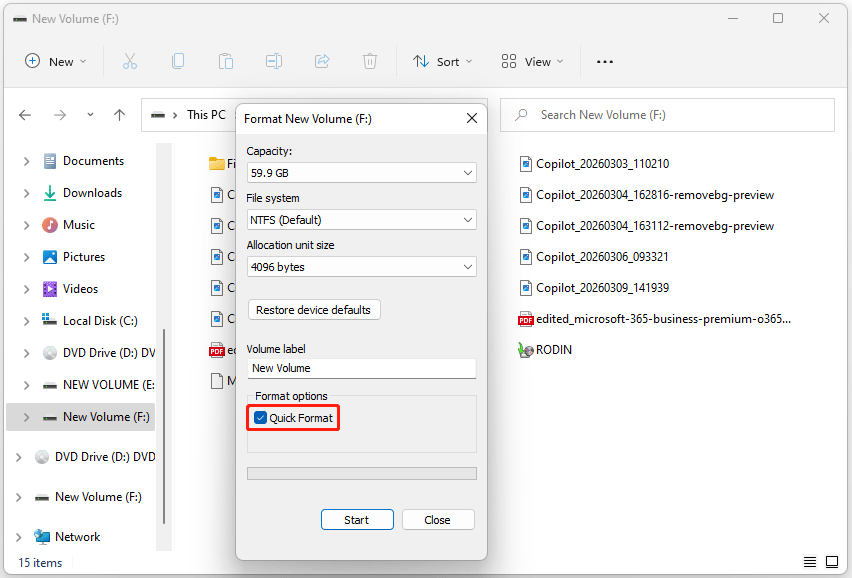
Windows offers two primary formatting options. When you format a drive, quick format is checked by default. If you uncheck quick format, full format mode will be performed.
- Quick Format: Highly recoverable because quick format only removes file system metadata and marks the hard drive space as available for storing new data. This is the default option in Windows File Explorer and Disk Management. So, it is the most common case of accidental formatting, and unformatting usually succeeds.
- Full Format: Usually unrecoverable because a full format scans the drive for bad sectors and overwrites each sector with zeros, physically erasing the original data. Typically, a full format is used to destroy sensitive data.
Hard Disk Drives (HDDs) vs Solid State Drives (SSDs)
- HDDs: Data is stored on magnetic platters until overwritten by new files.
- SSDs: Data recovery is more difficult due to their TRIM feature. This feature automatically erases data blocks immediately after formatting to maintain performance.
To quickly check if your drive is an SSD or HDD in Windows, open Task Manager (Ctrl + Shift + Esc), go to the Performance tab, and select the disk to see SSD or HDD listed.
How to Unformat Hard Drive?
To unformat a drive, here are 2 tools:
- MiniTool Partition Wizard: It is a piece of professional data recovery software to recover formatted hard drive, even if you don’t back up.
- Windows built-in tools: File History and Backup and Restore are Windows built-in backup tools to restore data from a backup. This assumes you’ve enabled this feature.
Now, pick one to unformat according to your situation.
Method 1. Use MiniTool Partition Wizard
MiniTool Partition Wizard is a feature-rich partition manager as well as professional disk recovery software.
Its Data Recovery feature can help you recover mistakenly deleted files, recover data from dead hard drive, and retrieve files from hard drive that is inaccessible. You can use it to unformat SD card/SSD//HDD/USB drive.
Besides, it provides a Partition Recovery feature to help you recover lost partitions caused by various reasons like accidental deletion, virus attack, file system corruption, incorrect partitioning, and so on.
Now, it’s time to unformat hard drive with this data recovery software. Note that don’t install this software onto the formatted drive itself, as this can overwrite the data.
MiniTool Partition Wizard DemoClick to Download100%Clean & Safe
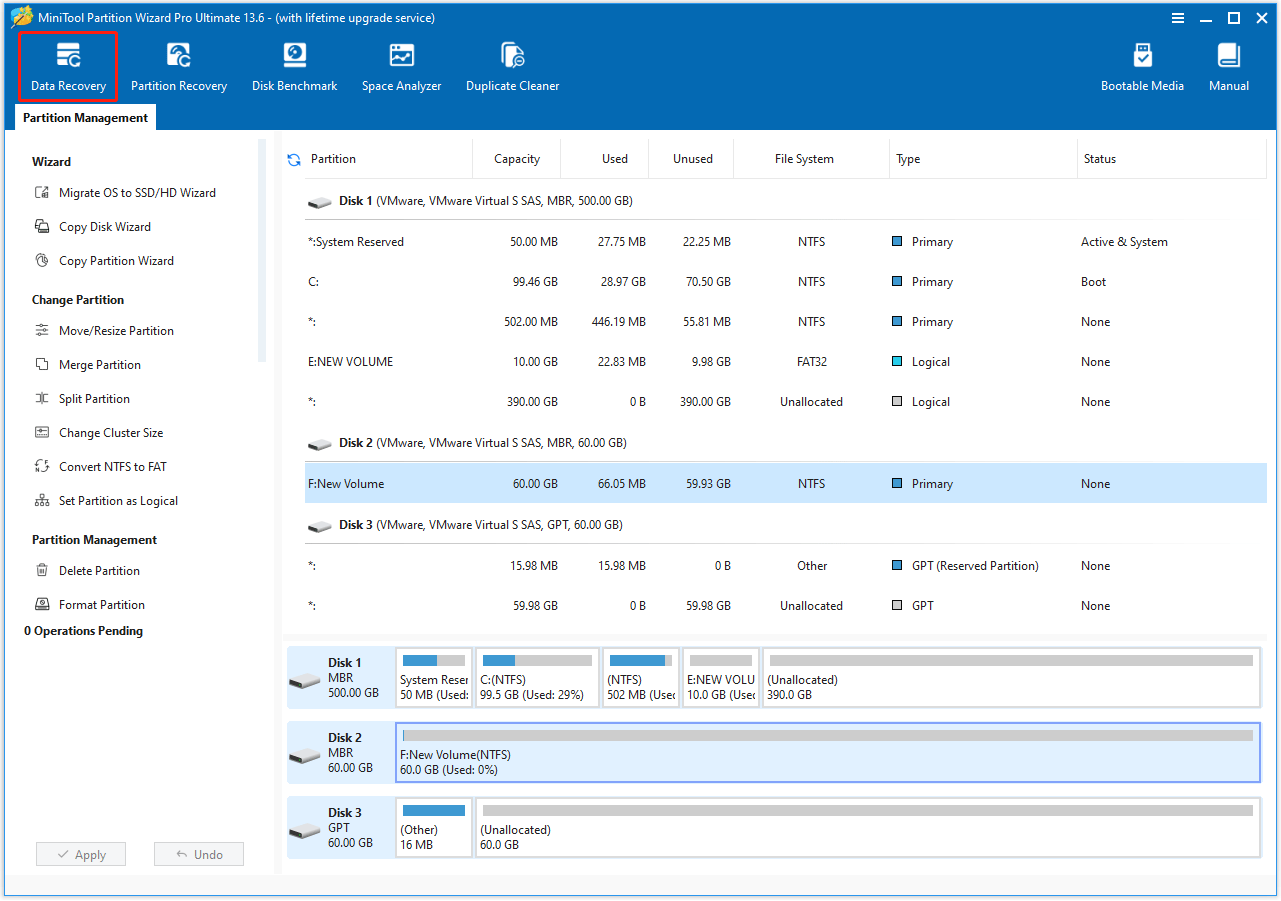
Step 1. Download and install MiniTool Partition Wizard on an unformatted drive. Then launch it and click the Data Recovery feature on the top toolbar.
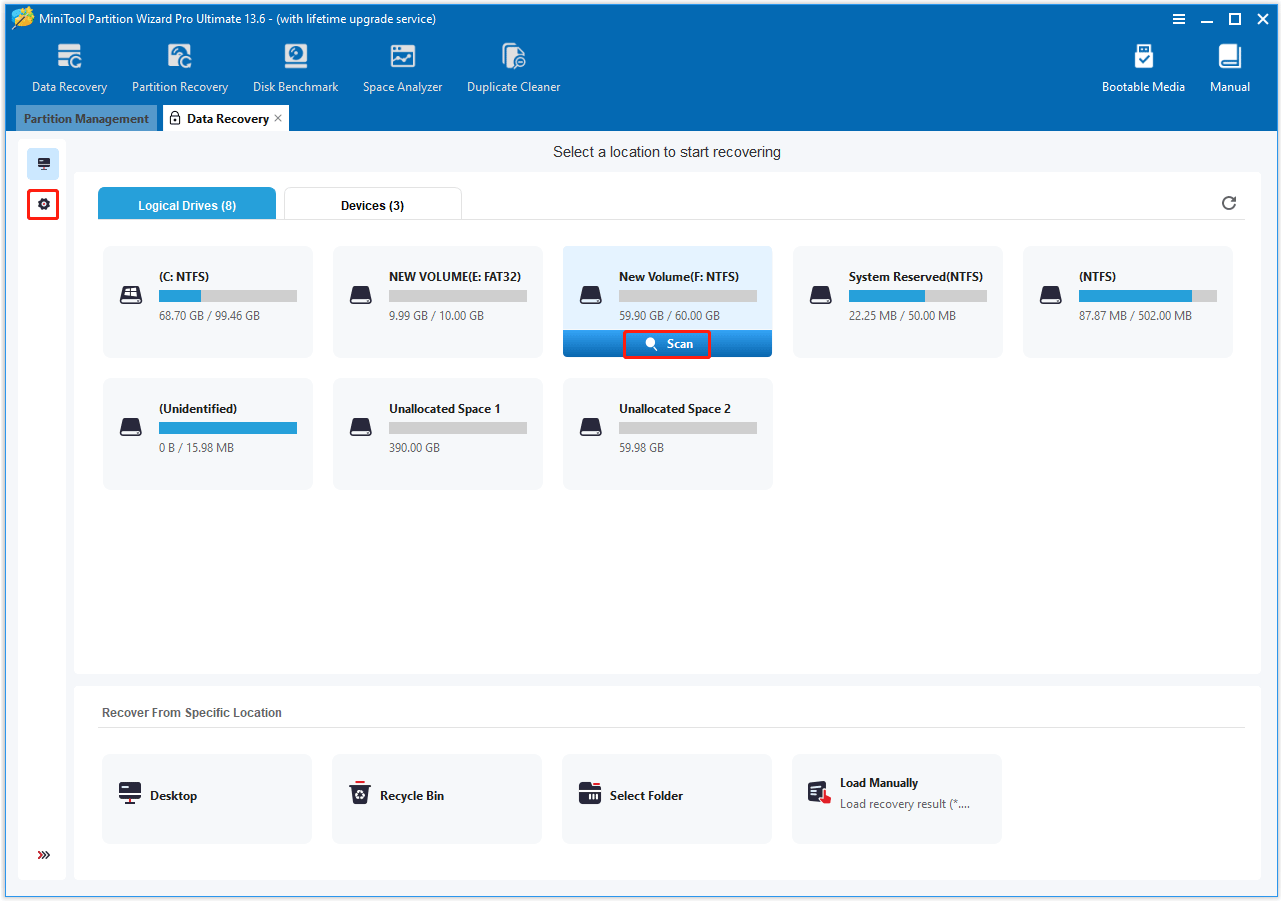
Step 2. In the pop-up Data Recovery window, all the detected partitions with a drive letter are displayed. Then, move your cursor to the formatted drive and click Scan.
If you want to recover some specified file types and file systems on the formatted hard drive, you can click the gear-shaped icon to set the file types to unformat specific files.
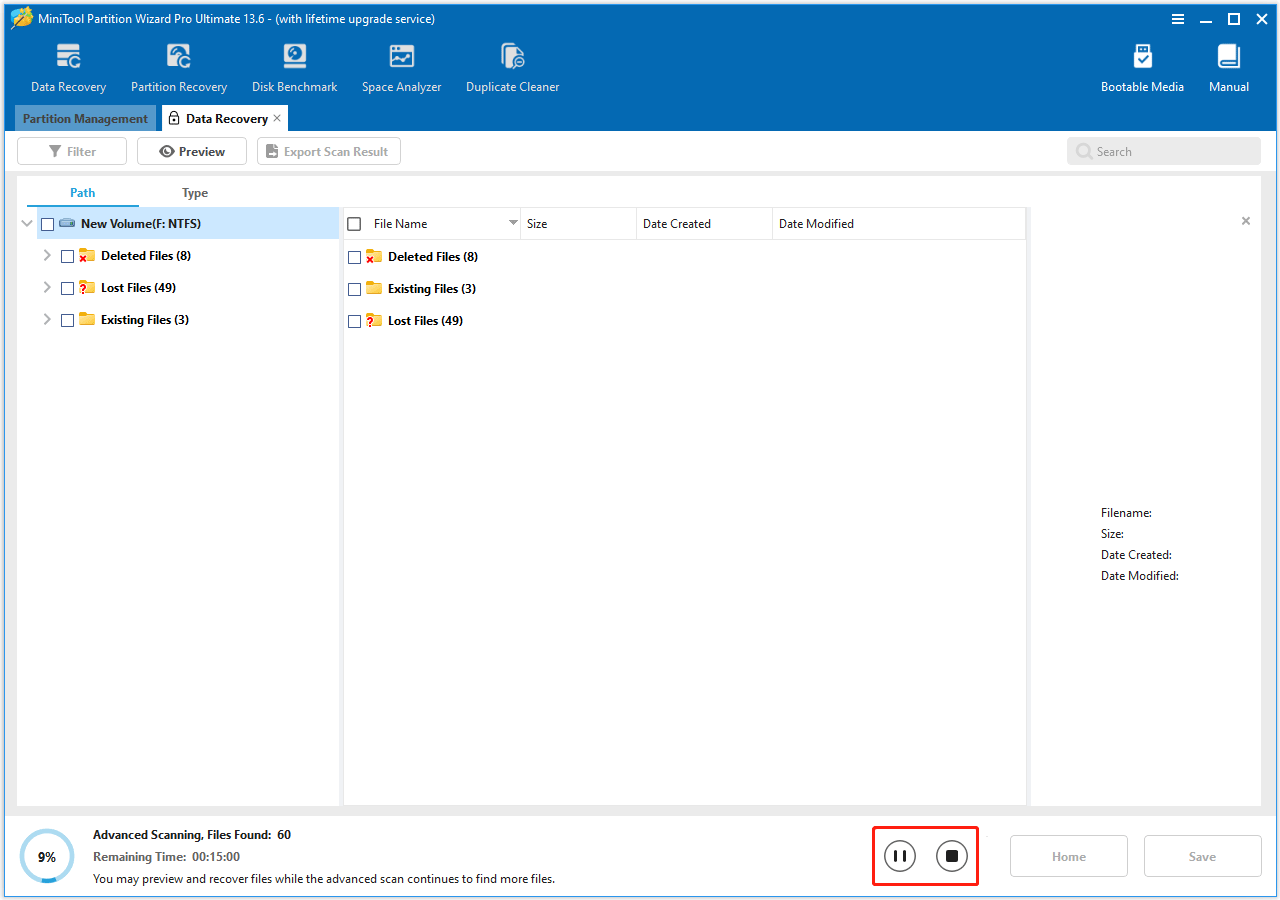
Step 3. Wait for the scan to complete. If the desired data is found, you can click the Pause or Stop icon to get instant data recovery.
Step 4. After completing the scan, double-check the Delete Files and Lost Files folder to view content. You can click Preview to see the files. If you find the needed files, tick the checkboxes of the folders/files you want to recover and click Save.
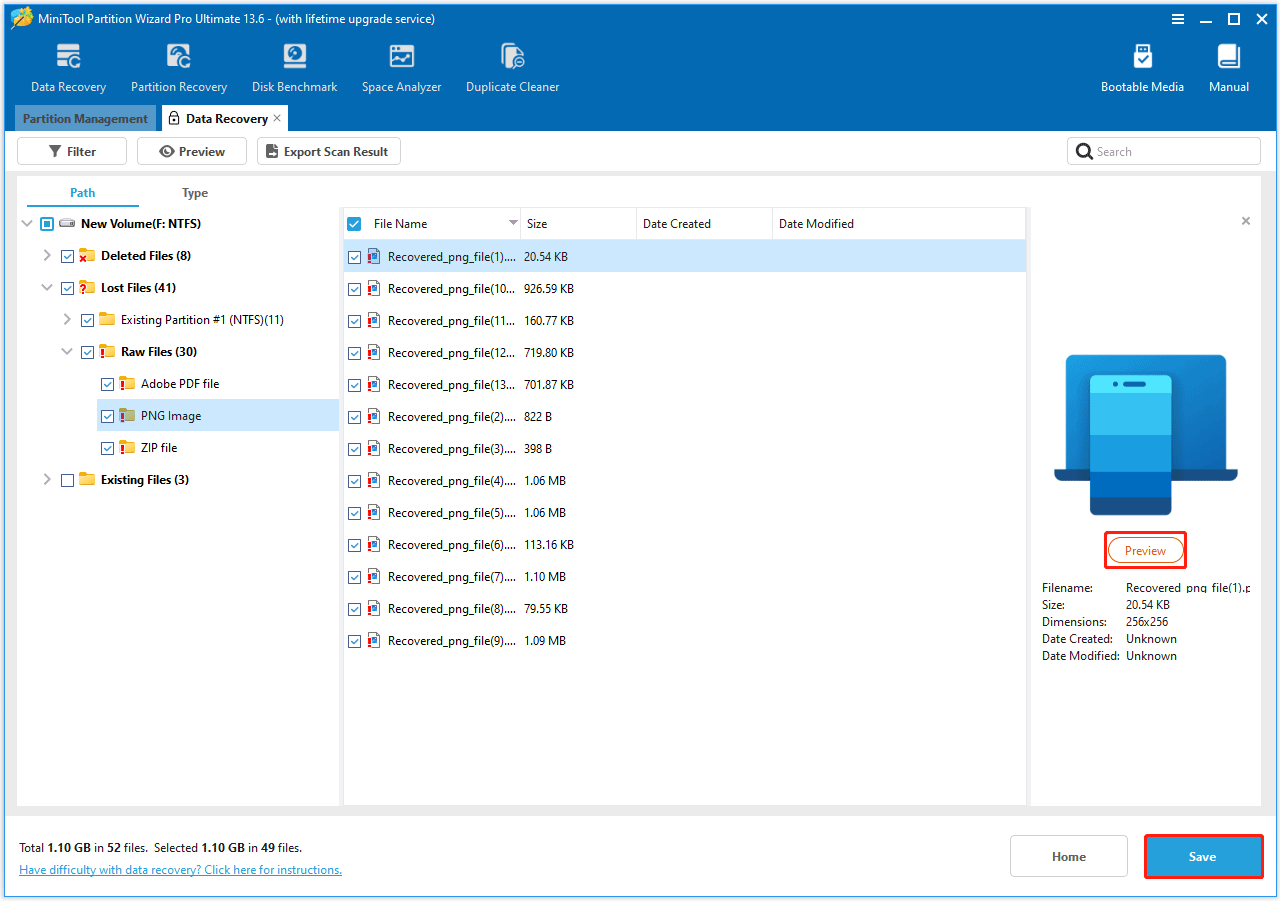
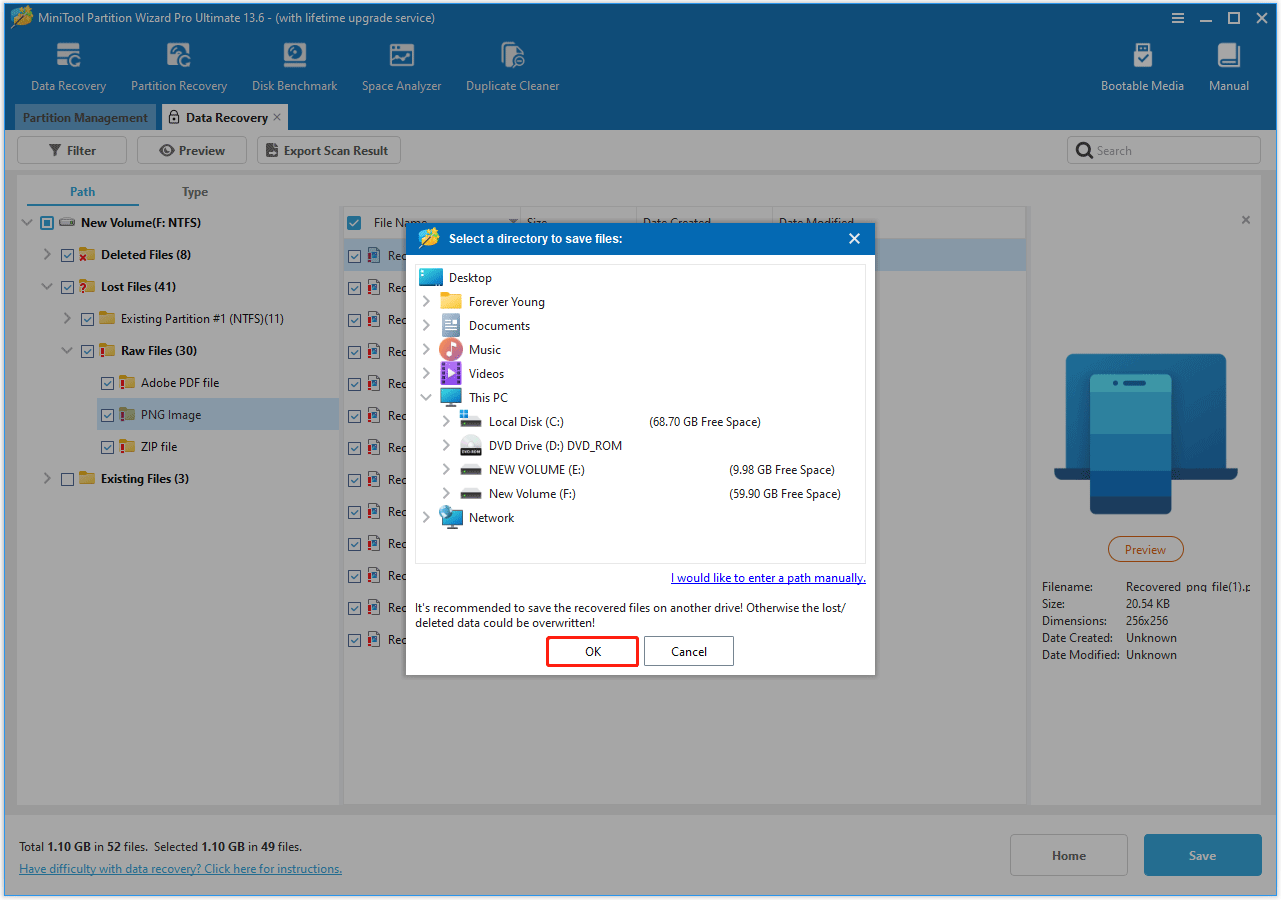
Step 5. In the pop-up window, select the location to save the selected files/folders and click OK to confirm this action. It is highly recommended that you save the recovered files on another drive. Otherwise, the lost/deleted data may be overwritten.
Method 2. Use Windows Built-in Backup Tools
Windows provides two built-in backup tools to help you create a backup to an external drive.
If you have a pre-existing backup on an external drive, unformatting and restoring data is straightforward.
Option 1. Restore from File History
File History is Windows’ primary backup tool for personal files, automatically backing up documents, photos, videos, and desktop files to an external drive.
To unformat SSD using File History, here are the steps:
- Connect the backup drive used for File History to your computer.
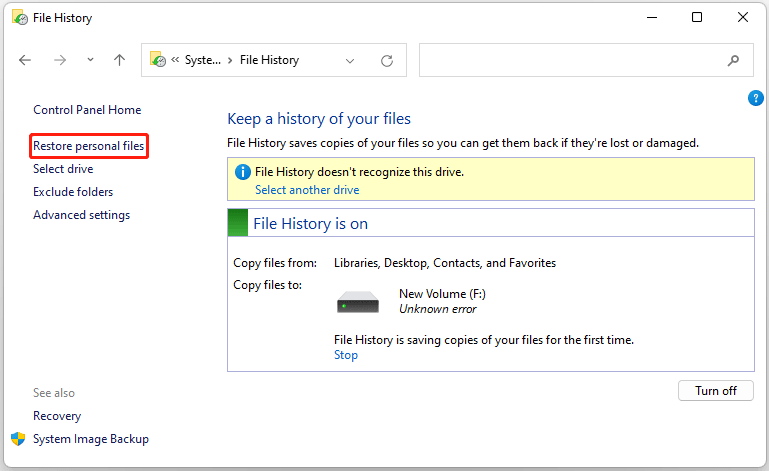
- Type control panel in the Windows Search bar to open it. Then go to System and Security > File History.
- Click Restore personal files on the left-hand menu.
- Use the left/right arrows at the bottom to find and select the file or folder you want to restore.
- Then right-click and choose Restore to save them to their original location. To save them to a new location instead of their original one, click the Gear icon and choose Restore to.
Option 2. Restore from Backup and Restore
To unformat HDD from the legacy backup tool (Backup and Restore (Windows 7) for data recovery, the steps are as follows:
- Open Control Panel > System and Security > Back up and Restore (Windows 7).
- Click Restore my files at the bottom of the window.
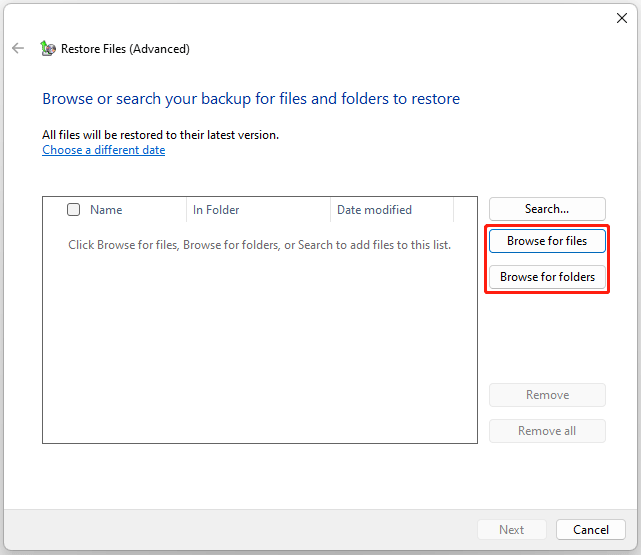
- Select Browse for files or Browse for folders to locate the specific files to restore.
- Choose a destination for the restored files (avoid the formatted drive) and click Restore to complete the process.
In some cases, unformatting methods are not enough. Consider professional data recovery services if:
- The formatted drive has physical damage (clicking noises, not powering on, water damage).
- The drive was fully formatted, and the data is unrecoverable with software.
Prevention Tips for Accidental Data Loss
Once you’ve successfully unformatted your hard drive and recovered your data, take these steps to prevent accidental formatting and data loss in the future.
#1. Back Up Your Data Regularly
The best defense against data loss is a consistent backup strategy. To set a scheduled backup, a third-party program like MiniTool ShadowMaker might streamline the backup process for you. Once a backup schedule is created, it will start the backup task automatically at the specific time you set.
MiniTool ShadowMaker is a piece of all-in-one PC backup software that supports backing up your important files, Windows operating system, selected partitions, and the whole disk in Windows 11/10/8.1/8/7. This free tool is also capable of backing up files even when they are in use.
Now, let’s see how to schedule backups for files with this freeware:
Step 1. Download and install MiniTool ShadowMaker on your computer. Then, launch it to enter the main interface.
MiniTool ShadowMaker TrialClick to Download100%Clean & Safe
Step 2. Select Backup from the left panel, click SOURCE > Folders and Files to choose the files you want to back up, and click OK. As for the destination path, go to DESTINATION, choose a storage path, and click OK. Here, an external hard drive or a USB drive is highly recommended.
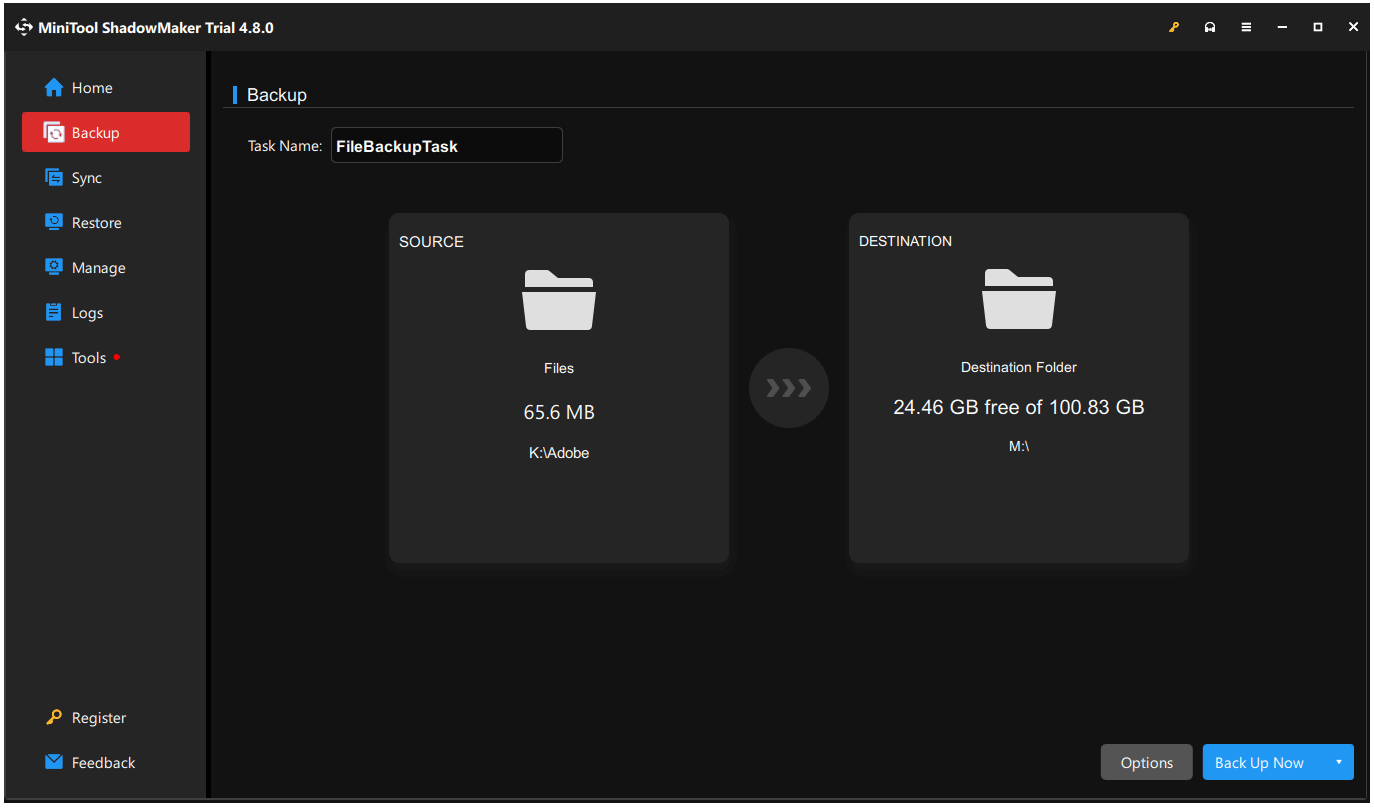
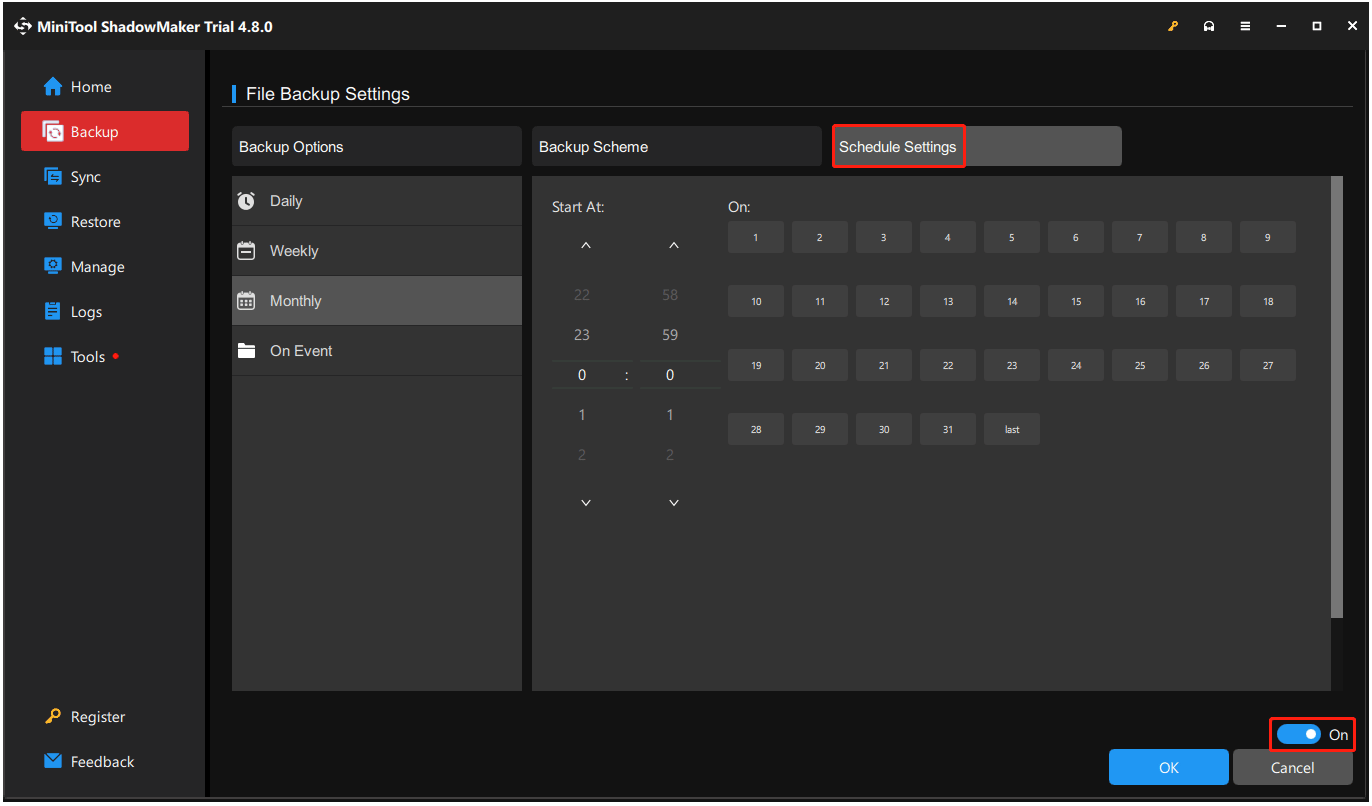
Step 3. To set a scheduled backup, click Options in the lower right corner, click Schedule Settings, toggle it On, and then pick a time point to back up your data daily, weekly, monthly, or on events. Finally, click OK.
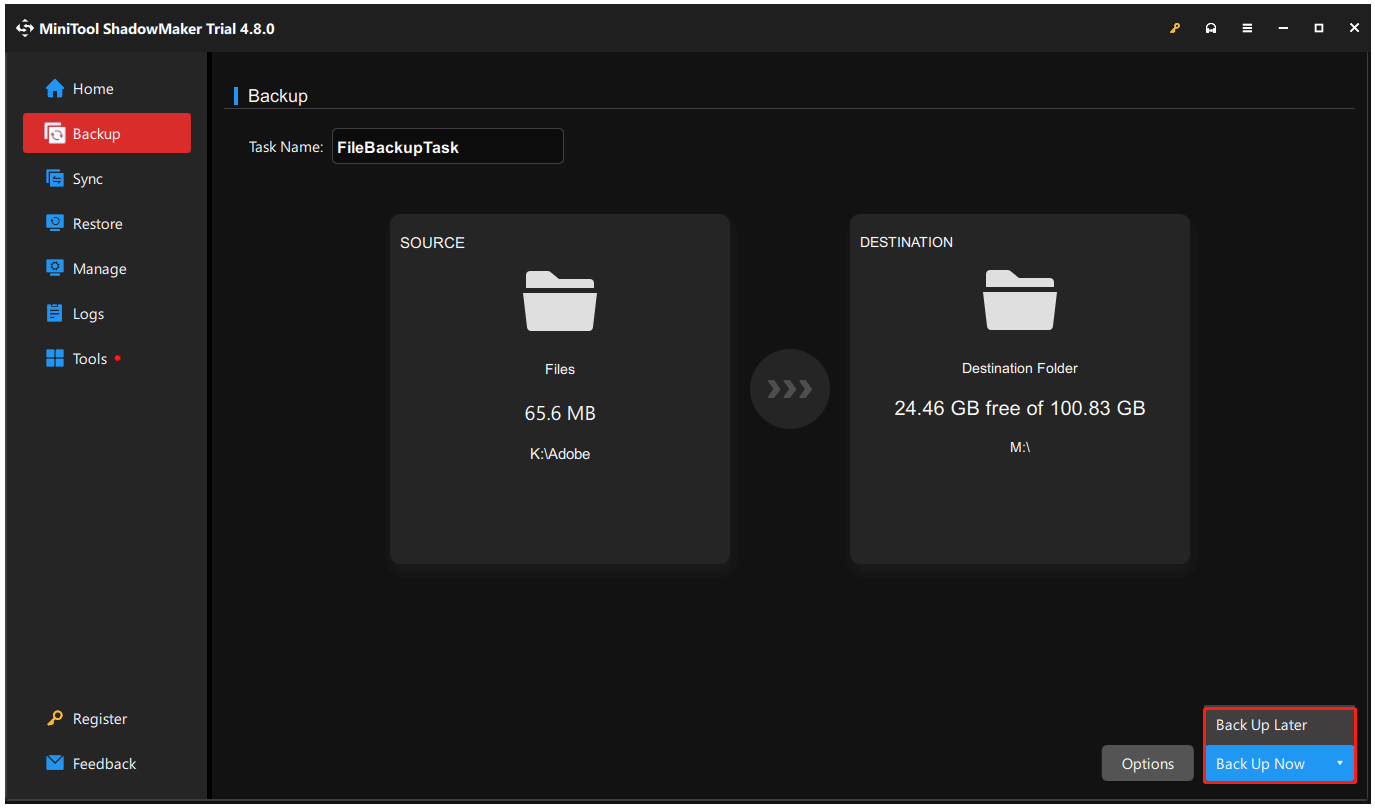
Step 4. Either click Back Up Now to perform an instant backup or click Back Up Later to delay the task.
#2. Check Carefully Before Formatting
To prevent accidental data loss during formatting, you should triple-verify the drive letter, label, and capacity.
#3. Label Drives Clearly
Rename your drives with descriptive labels (e.g., “Work Files,” “Personal Photos”) to avoid confusing them with empty or external drives.
Unformat Hard Drive FAQ
Bottom Line
Accidentally formatting a hard drive in Windows is a stressful experience. By taking action to prevent data overwriting and using the correct unformatting tool, you can successfully recover lost files.
If you have any problems or suggestions when using MiniTool Partition Wizard, you can contact us by sending an email via [email protected]. We’ll get back to you as soon as possible.
User Comments :