
Deleted files can usually be recovered unless they have been overwritten. Start by checking the Recycle Bin or backups such as Windows File History. For permanently deleted files, a data recovery tool like MiniTool Partition Wizard can scan your drive and help you recover deleted files.
Deleted files are not always permanently lost. In Windows 10/11, you can recover deleted files if they have not been overwritten. Stop using the drive immediately, then restore files from backups or use a reliable data recovery tool to scan and recover deleted files from SSD.
![How to Recover Files from a Formatted Hard Drive [3 Methods]](https://images.minitool.com/partitionwizard.com/images/uploads/2026/04/recover-formatted-hard-drive-thumbnail.png)
How to Recover Deleted Files?
The recovery methods below are arranged from the simplest to the most advanced. Start with the Recycle Bin and backups before using professional data recovery software for permanently deleted files.
How to Recover Deleted Files Quickly
| Step | Action | Why It Matters |
| 1 | Stop using the affected drive | Prevents deleted data from being overwritten |
| 2 | Check Recycle Bin | Fastest recovery method |
| 3 | Use recovery software | Recover permanently deleted files |
| 4 | Save recovered files to another drive | Avoids overwriting |
Method 1: Recover Deleted Files from Recycle Bin
When you normally delete a file in Windows, it is usually moved to the Recycle Bin rather than immediately removed from the storage device.
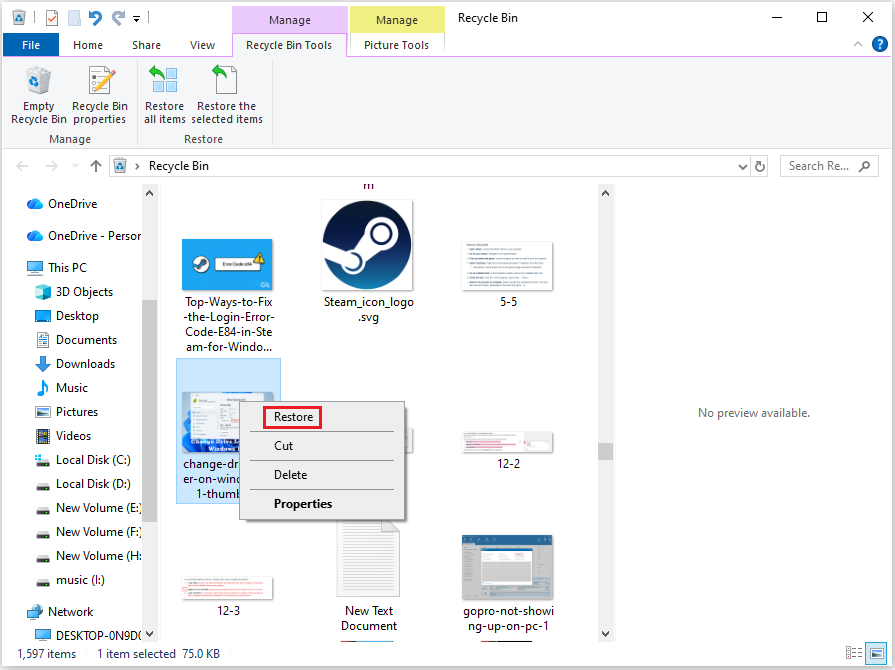
If you haven’t emptied the Recycle Bin, you can restore deleted files from it.
Here are the steps:
- Right-click on the Recycle Bin icon and choose Open.
- Look for the deleted files you want to restore.
- Right-click on the files and choose Restore from the context menu.
Method 2: Recover Deleted Files from File History
Windows File History is a built-in Windows feature for automatic file backup and restoration. By default, it scans for changes in the user’s personal folders every hour and copies modified or new files to a designated backup location (such as an external hard drive or a network location).
If you enabled this feature before the files are deleted, you can use it to recover previous versions of the files. Here is how to recover deleted files using this tool.
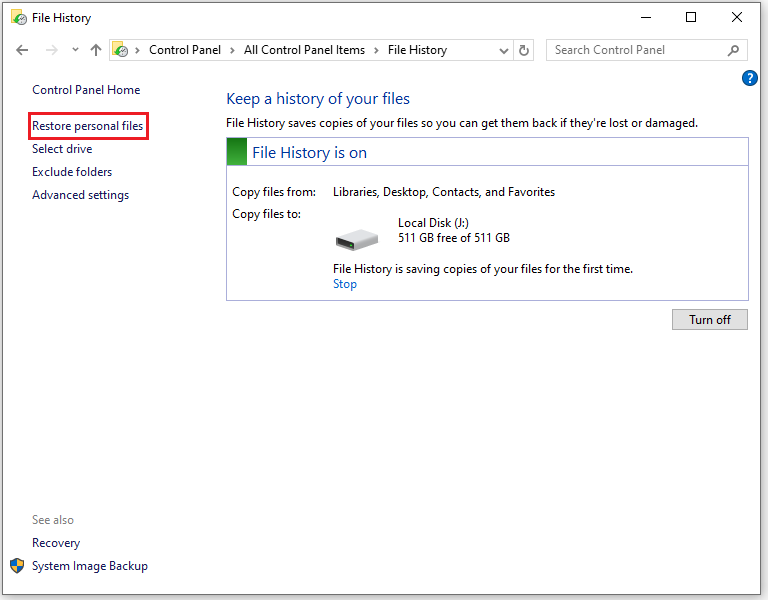
- Open Control Panel
- Change View by to Small icons and click File History.
- Click Restore personal files on the left-hand menu.
- Select the deleted files you want to recover, then click Restore to recover them to the original location.
- To save the files to a different location rather than their original path, click the Gear icon and select Restore to.
Also read: How to Enable or Disable File History in Windows? Look Here!
Method 3: Recover Deleted Files from Cloud Backup
If your files were synced to a cloud storage service before they were deleted, you may be able to restore them without using data recovery software.
Cloud services such as OneDrive, Google Drive, and Dropbox usually keep deleted files in a Recycle Bin or Deleted Files folder for a limited time. Check the cloud storage’s recycle bin first. If the files are no longer available, continue to the next recovery method.
Also read: [Explained] Cloud Backup – What Is It & How Does It Work?
Method 4: Recover Deleted Files from MiniTool Partition Wizard
When the Recycle Bin is emptied or the file is permanently deleted, Windows removes the file’s reference from the file system, while the underlying data may remain until it is overwritten.
If the methods mentioned above fail to restore deleted files, you can turn to professional data recovery software for assistance.
MiniTool Partition Wizard, for instance, is an excellent tool capable of performing deep disk scans to recover deleted files Windows 10/11.
Here is how to find deleted files on Windows 11/10 using this software.
MiniTool Partition Wizard DemoClick to Download100%Clean & Safe
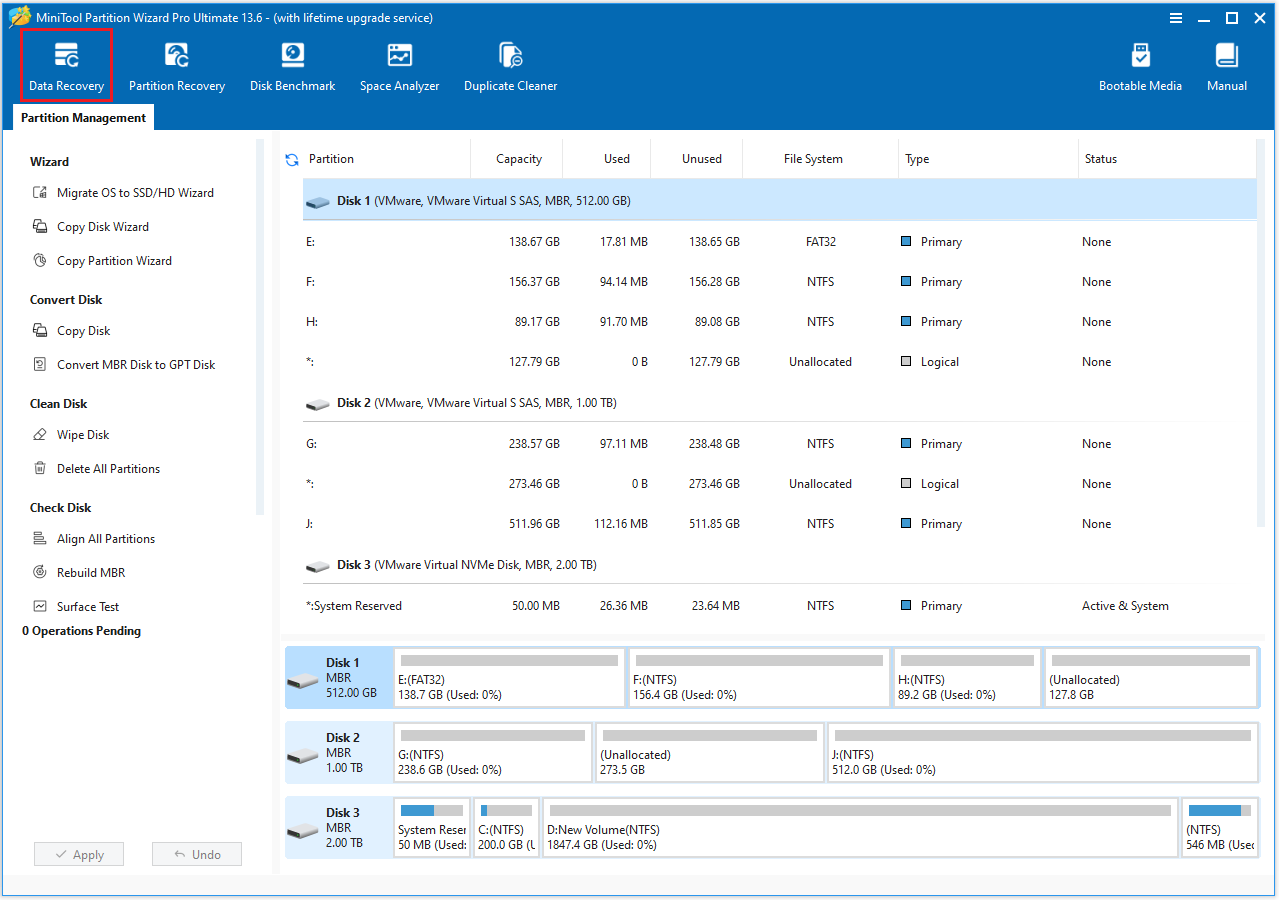
Step 1: Run MiniTool Partition Wizard, navigate to the main interface, and choose Data Recovery.
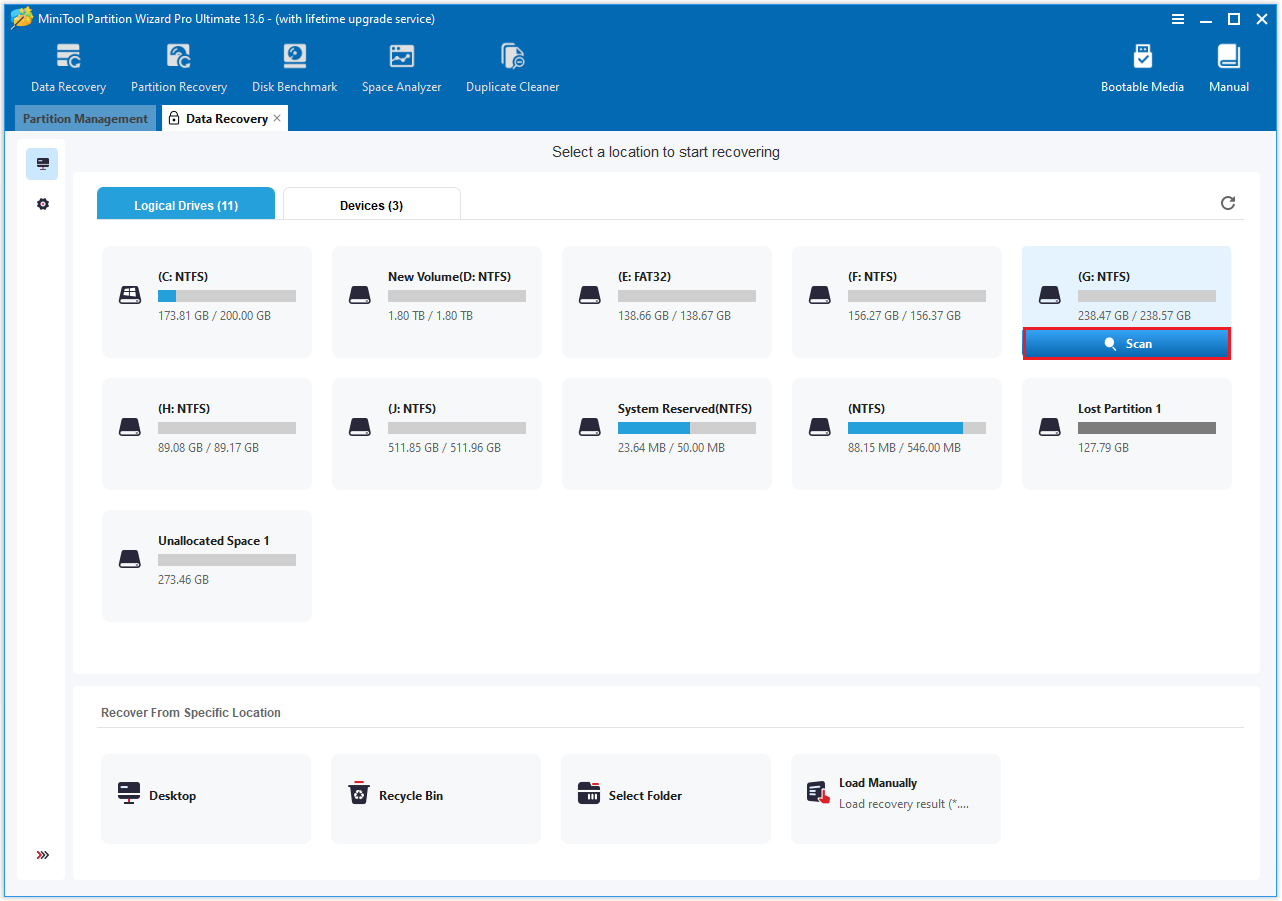
Step 2: In the Logical Drives section, you can view all disk partitions. Next, select the hard drive containing the lost files, and then click Scan.
Step 3: If the desired data is found, you can click the Pause or Stop icon to get instant data recovery.
Step 4: To locate your files more efficiently, you can use the following features:
- Type: In this section, all files are categorized by their type and format.
- Filter: This feature lets you narrow down results by excluding unwanted files based on factors such as file type, last modified date, size, and category.
- Search: It allows you to perform a targeted search.
- Preview: Select a file and click Preview to verify whether it’s the one you need.
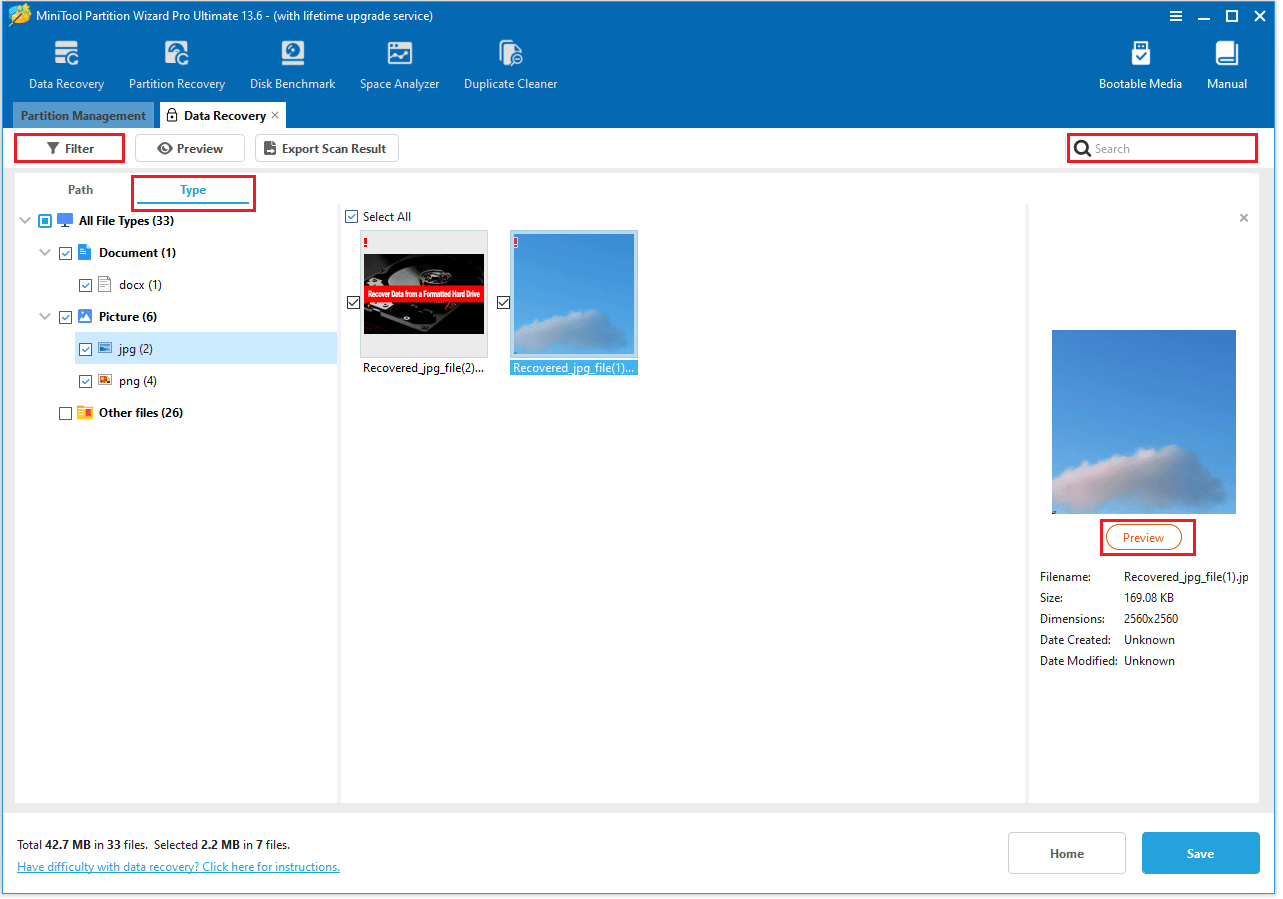
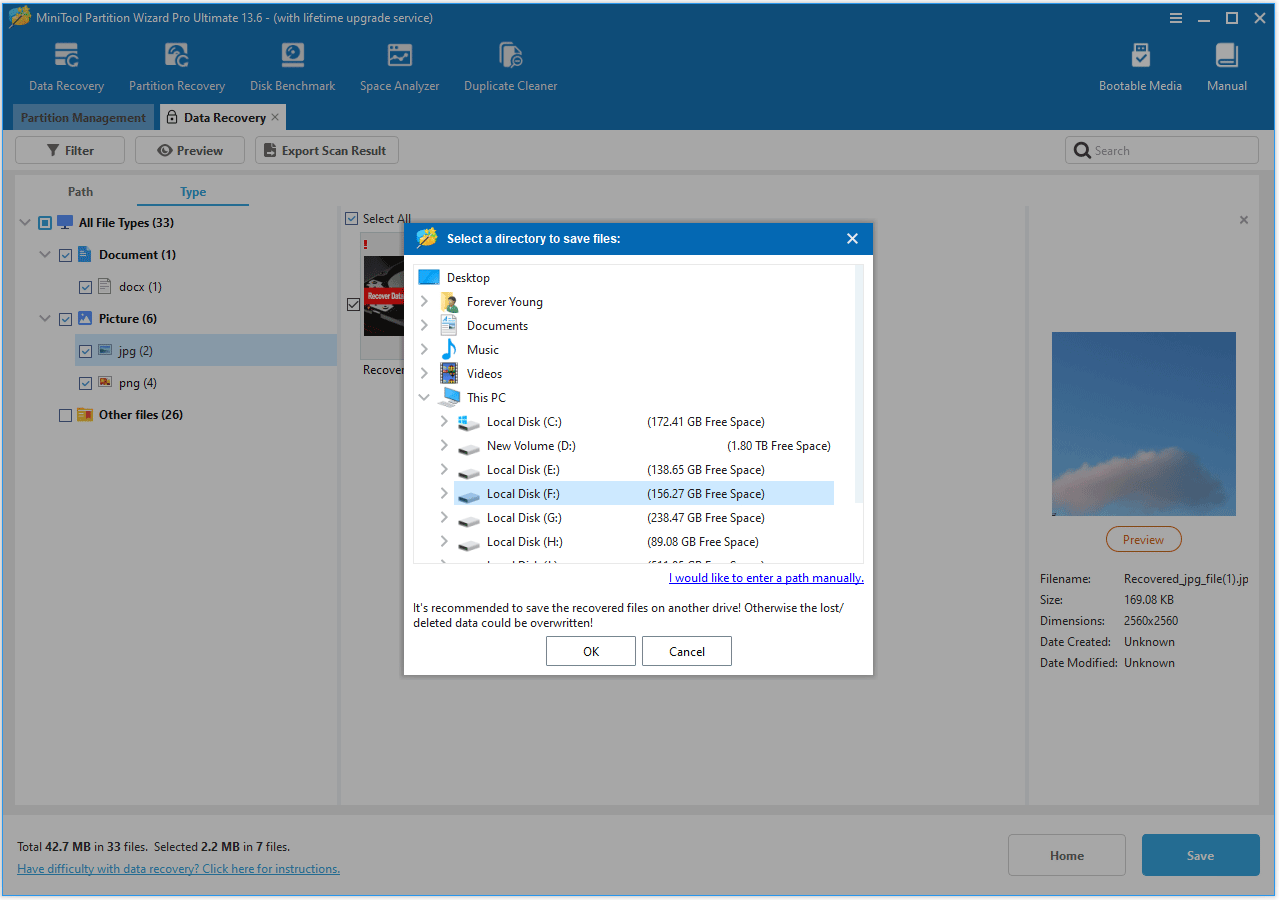
Step 5: Choose the deleted files you want to recover, then click Save. In the pop-up window, select where you’d like to store the recovered files, and click OK.
Recover Deleted Files FAQ
Bottom Line
Deleted files in Windows 10 and 11 can often be recovered using the Recycle Bin, File History, Cloud Backup, or professional recovery software.
If you have any questions or feedback about MiniTool Partition Wizard, feel free to contact our support team at [email protected] for additional help.
About The Author

Position: Columnist
Linda has been an editor at MiniTool for seven years. She continuously learns about computers and puts her knowledge into practice. Moreover, she is particularly knowledgeable in disk management, data recovery, system installation, and PDF editing. Her articles typically reference multiple examples or are based on her own experience, providing users with the most suitable solutions.
User Comments :