
When extracting a ZIP file on Windows 10/11, you may encounter the error message “0x80010135: Path Too Long.”
This error usually occurs when the complete file path exceeds the maximum length supported by Windows, preventing File Explorer from completing the extraction process.
This post explains what causes error 0x80010135, and how to fix the Windows path too long error.
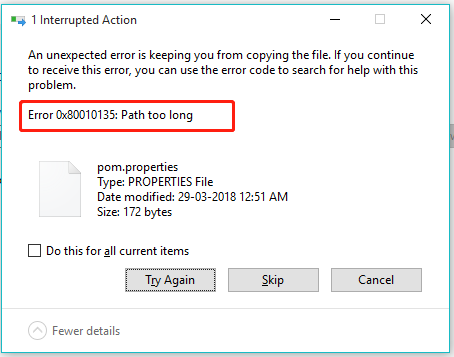
Why Does Error 0x80010135: Path Too Long Occur?
Error 0x80010135 most commonly occurs in the following situations:
- Long file or folder names: Files with lengthy names increase the total path length.
- Deep folder structures: Multiple nested folders can quickly exceed Windows path limitations.
- Windows path length limitation: Some Windows applications are still subject to the legacy 260-character path limit.
- Outdated extraction tools: Older compression utilities may not support long file paths.
Now that you understand what causes error 0x80010135: Path Too Long, it’s time to fix this ZIP extraction issue.
In the following sections, we’ll walk you through several proven solutions to help you extract files successfully on Windows 10/11.
Method 1. Reduce the ZIP File Name
The simplest way to resolve the error is to reduce the length of the ZIP file name. Here are the steps:
- Open File Explorer and go to the current directory containing the target file.
- Right-click the file and select Rename.
- Enter a short filename title.
Method 2. Extract the File to the Root Directory
Move the compressed ZIP file or target folder to a root directory (e.g., C:\ or D:\) instead of a subfolder. Root directories have the shortest possible base paths.
- Rename the file to a minimized version; this will help minimize the filename size in the parent directory.
- Copy the file and move it to drive C. This step is to extract the file to the root directory, reducing the path size.
- You will not encounter any problems when extracting the ZIP file to the new location.
Method 3. Enable the Long Path Support in Registry Editor
There is a way to break through the Windows 260-character limit. If your file path exceeds the limit, follow the guide below to enable the long path support in Registry Editor.
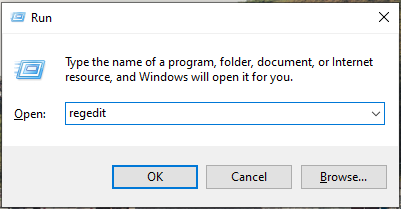
Step 1. Press the Win + R keys to open the Run dialog box, and then type regedit in the box and hit Enter.
Step 2. In the Registry Editor window, go to the following path via the left navigation bar.
HKEY_LOCAL_MACHINESYSTEMCurrentControlSetControlFileSystem
Step 3. With the FileSystem entry selected in the left panel, scroll down the list of DWORDs, right-click the LongPathsEnabled DWORD and select Modified.
Step 4. Change the Value data of the DWORD from 0 to 1 and click on OK to save the change.
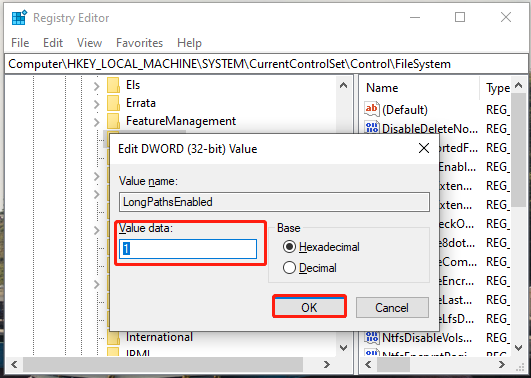
Step 5. Close the Registry Editor and restart your computer to see if the path too long error unzip message persists.
In addition, long path support can also be enabled through the Local Group Policy Editor. Follow these steps:
- Press Win + R, type msc, and hit Enter.
- Go to Computer Configuration > Administrative Templates > System > Filesystem.
- Double-click Enable Win32 long paths, set it to Enabled, and click Apply > OK.
- Exit Local Group Policy Editor. Then restart your PC.
Method 4. Use an Alternative Zip File Extraction Tool
Usually, Windows built-in unzip tool can help you extract files without issues. However, sometimes, you may encounter various errors like “the compressed zipped folder is invalid”, “error 42125 zip archive is corrupted” and “error path too long0x80010135”. This might be because the Windows tool cannot handle some particular zip formats.
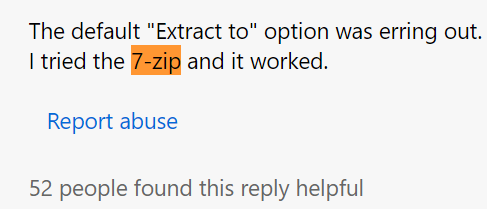
Some users from the answesmicrosoft.com forum reported that using 7-zip can get rid of the error. Here you may try using an alternative file extraction tool like 7-zip or WinRAR.
Besides, several tools can help you manage long file paths:
- TeraCopy: A file copying tool that supports long paths.
- Long path tools: Tools specifically designed for handling long filenames.
Method 5. Use Command Prompt to Copy or Move the File
You can use Command Prompt to bypass the Windows Explorer limitations. Here is the guide:
Step 1. Type cmd in the Run box and press Enter.
Step 2. Use the xcopy or robocopy command and press Enter:
- xcopy “C:\source\very_long_path” “C:\destination” /E /I
- robocopy “C:\source” “C:\destination” /E /COPYALL /R:1 /W:1
Method 6. Redownload the Zipped File
As mentioned above, the “error path too long” message can appear due to incorrect or unsuccessful installation of the software. In this case, we recommend you re-download the zipped file/folder from a trusted source and extract it to see if the error still occurs.
![Classic Shell Needs to Configure Itself for the New OS? [Fixed]](https://images.minitool.com/partitionwizard.com/images/uploads/2022/05/classic-shell-needs-to-configure-itself-for-the-os-thumbnail.jpg)
Error 0x80010135: Path Too Long FAQ
Bottom Line
Error 0x80010135: path too long is a solvable issue. This post offers 6 methods to solve it. If your files are lost accidentally, you can get them back using MiniTool Partition Wizard.
User Comments :