
You can test RAM on Windows 11/10 using Windows Memory Diagnostic without installing third-party software. For a more thorough test, use MemTest86 from a bootable USB drive.
If your computer gets unstable or runs slowly, you may consider checking your computer’s RAM for problems. To test RAM, you can use the Windows built-in utility or download another free advanced tool.
So how to test RAM in Windows 11/10? Here are 3 options that can help you make a RAM test, including Windows Memory Diagnostic, MemTest86, and Memtest86.
- Windows Memory Diagnostic: the easiest built-in Windows tool.
- MemTest86: a more comprehensive bootable memory-testing tool.
- Memtest86+: a free, open-source alternative for bootable RAM testing.
MiniTool System Booster TrialClick to Download100%Clean & Safe
Method 1. Test RAM with Windows Memory Diagnostic
Windows Memory Diagnostic is a hidden system tool included in Windows 10. You can follow these steps to run this utility.
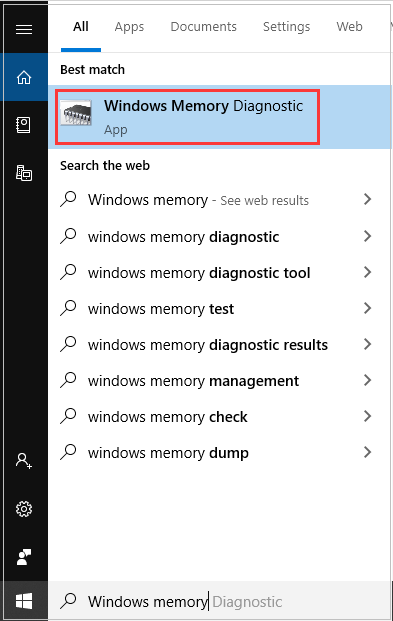
Step 1. Type Windows Memory Diagnostic in the search box and double click this program under the Best match.
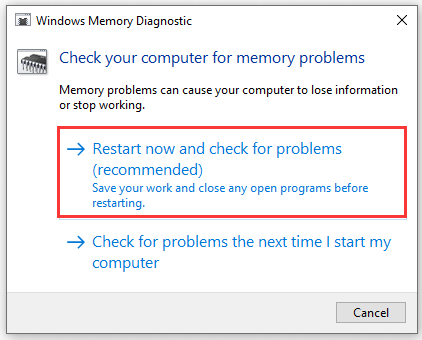
Step 2. You will receive a message saying Check your computer for memory problems. Here are 2 options for you to perform a RAM test. It is recommended that you click Restart now and check for problems. Well, you can click Check for problems for next time I start my commuter
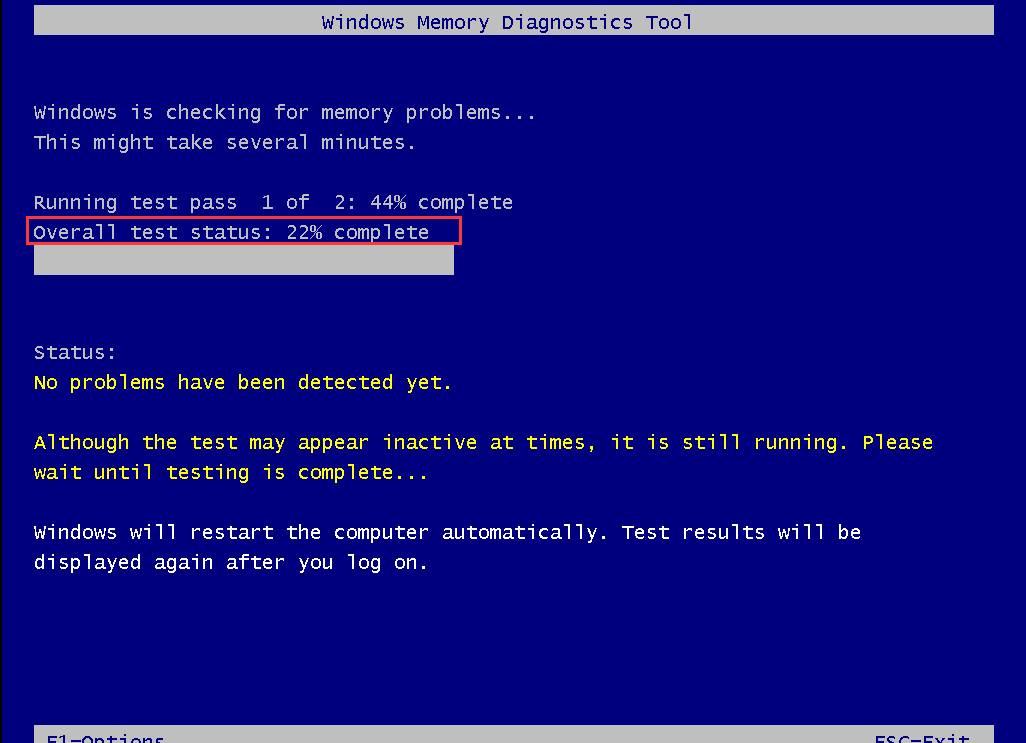
Step 3. Then your computer will restart and Windows Memory Diagnostics Tool will automatically perform the RAM test. This process may take you some time. You can see the overall test status bar and the detected problems during this process.
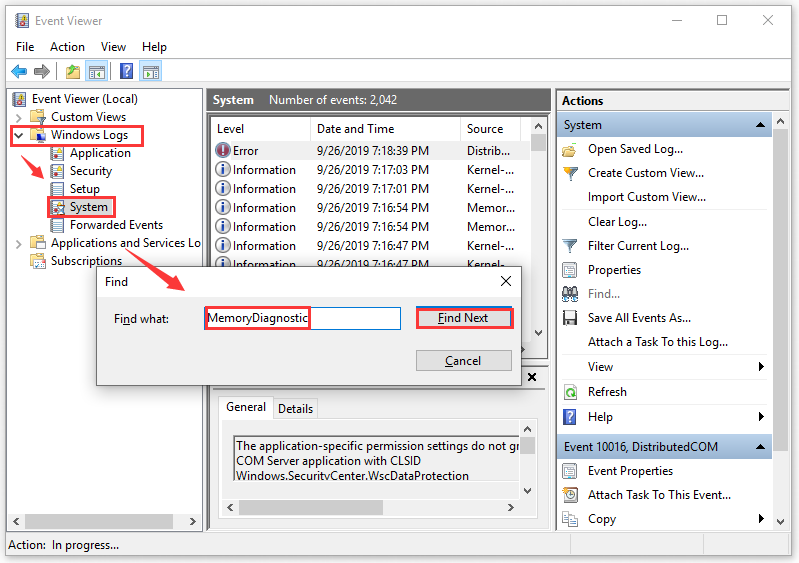
Step 4. After the RAM test finishes, your computer will reboot automatically. If you want to see the test results, you need to open the Event Viewer by right-clicking the Start menu and select Event Viewer.
Step 5. Go to Windows Logs and System, you will see a list of events. To find the RAM test results, you can click Find on the right pane and type MemoryDiagnostic in the box. After clicking Find Next, you will see the results at the bottom of the window.
How long does a RAM test take? Windows Memory Diagnostic usually completes relatively quickly, but the exact time depends on:
- total RAM capacity
- memory speed
- CPU
- selected test configuration
- system configuration
Method 2. Test RAM with MemTest86
MemTest86 is another RAM test program that you can use it for more powerful features. It can find some issues that Windows Memory Diagnostic won’t find and perform wider RAM tests. More importantly, this tool provides you with an ISO image that can be burned to a CD or copied to a USB drive.
Here is a simple guide you can follow to run this app.
Step 1. Run the MemTest86.exe file and create a bootable USB drive with the ISO image.
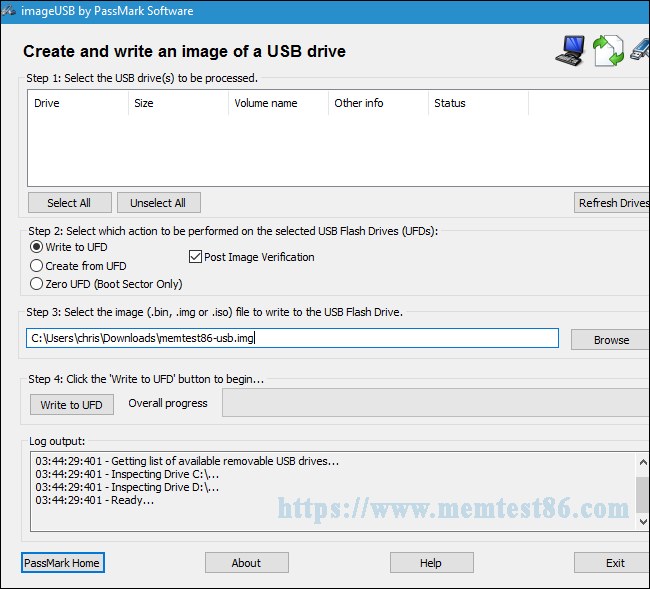
Step 2. Reboot your computer with this bootable USB drive. Then this tool will automatically perform a RAM test. This process will take a few minutes, you can see the information about any errors during the process. When the process completes, exit the window and restart your computer.
Method 3. Test RAM with Memtest86+
Memtest86+ is a modified version of Memtest86. It also provides you a free RAM test. It is recommended that you perform a RAM test with Memtest86+.
This software has some similarities with Memtest86. You can run it on Windows as well as Mac to create a bootable USB drive, but this program operates differently and provides you with a more comprehensive RAM test.
What Does a RAM Test Result Mean?
The most important part of memory testing is understanding the result.
| Result | What it means |
| No errors | The selected test did not detect memory errors |
| One or more errors | The memory subsystem may be unstable |
| Errors occur repeatedly | The problem deserves further investigation |
| Errors only with XMP/EXPO | The configured memory profile may be unstable |
| Errors with multiple sticks but not individually | Compatibility, timing, slot, or memory-controller issues are possible |
| One module consistently fails | That module may be defective |
A clean test does not guarantee that RAM can never cause a problem. Some intermittent issues may require longer testing or different configurations.
Likewise, an error does not automatically prove that a specific RAM stick is defective.
If a test shows errors and you have multiple RAM sticks installed:
- Power down and unplug your PC.
- Remove all RAM sticks except one.
- Run the test again on that single stick.
- Repeat the process one by one for each stick and slot to isolate whether a specific module or motherboard slot is broken.
Otherwise, replace the memory.
Bottom Line
Testing RAM is a useful way to investigate blue screens, crashes, freezes, corrupted files, and unexplained Windows instability.
If you want the simplest solution, try Windows Memory Diagnostic, MemTest86, or MemTest86+.
User Comments :