
Factory resetting Windows 11 can help fix system errors, remove malware, or prepare your PC for sale. This guide from MiniTool Partition Wizard explains 3 methods: using the Settings app, accessing Advanced Startup when the PC won’t boot, or reinstalling Windows 11 from a bootable USB drive, on how to reset Windows 11.
Factory resetting Windows reinstalls the operating system and brings the computer back to its original factory condition.
The following section details the circumstances under which you need to reset Windows 11, and the specific steps involved.
You can also follow this video guide.
Common Reasons to Factory Reset Windows 11
Here are some common situations that may require a factory reset:
- Frequent system crashes or blue screen errors.
- Serious performance issues.
- Virus or malware infection.
- Corrupted Windows system files.
- Resetting Windows 11 after replacing the motherboard, CPU, or hard drive can avoid driver conflicts and improve compatibility.
- Preparing to sell or donate your computer.
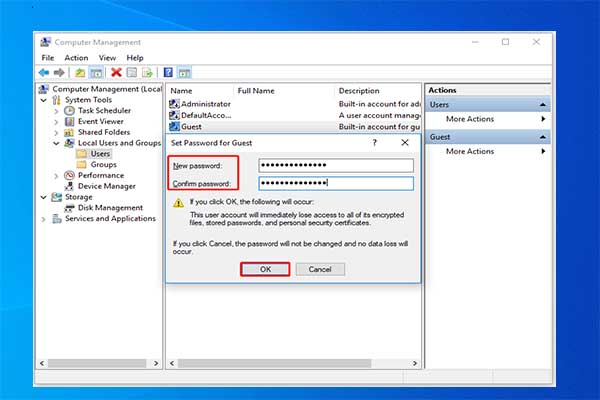
How to Reset Windows 11
There are some ways to reset Windows 11 depending on your situation.
You can reset your PC through Settings, use Advanced Startup if your system cannot boot normally, or perform a clean installation using a USB drive.
The steps below will guide you through how to reset Windows 11 to factory settings in detail.
| Situation | Reset Method | What Happens | Difficulty |
| PC is slow or unstable | Keep My Files | Reinstalls Windows but keeps personal files | Easy |
| Selling or donating the PC | Remove Everything | Deletes files, apps, and settings | Easy |
| Windows cannot start normally | Reset from Boot | Optional | Medium |
| The system is severely corrupted | Reinstall via USB | Performs a clean Windows installation | Hard |
Method 1: Reset Windows 11 via Settings
How to reset laptop?
You can reset Windows 11 using the built-in Reset this PC feature in Settings.
This option lets you reinstall Windows while choosing to keep your files or remove everything, making it a quick way to fix system problems or refresh your PC.
Here are the steps on how to factory reset laptop Windows 11:
Step 1: Click the Start icon and choose Settings.
Step 2: Navigate to System > Recovery > Reset PC button.
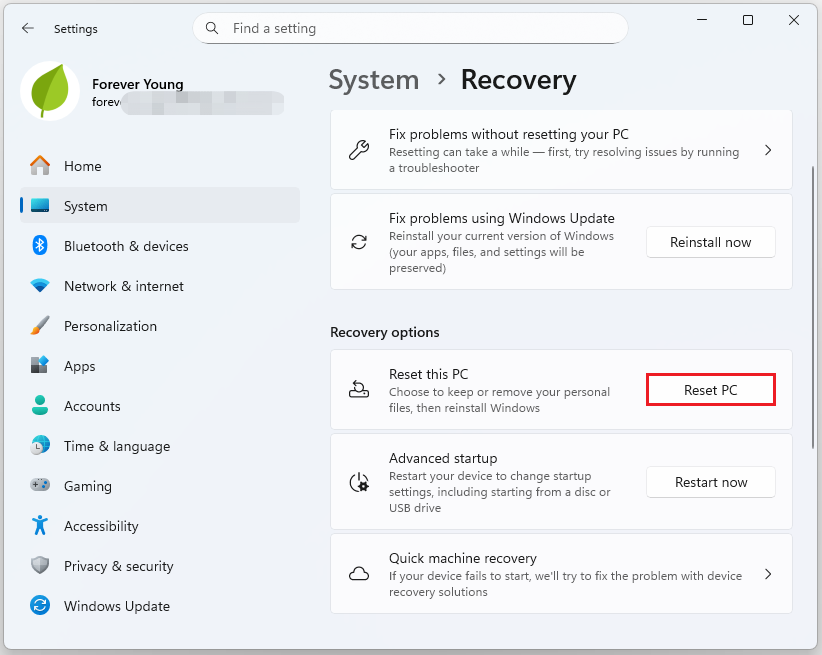
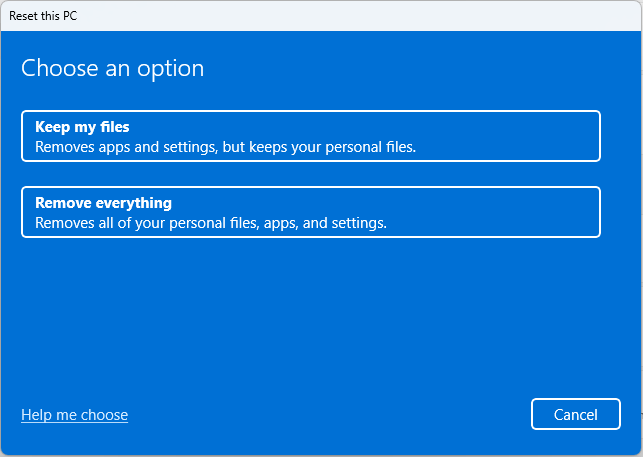
Step 3: Choose Keep my files or Remove everything.
- Keep my files: It will remove apps and settings, but keep your personal files.
- Remove everything: It will delete all of your personal files, apps, and settings.
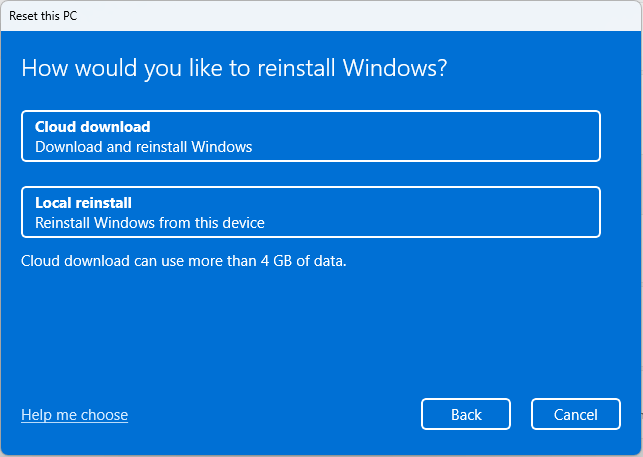
Step 4: Choose Cloud download or Local reinstall.
- Cloud download: It downloads the latest version of Windows directly from Microsoft servers. Requires a stable internet connection and will download over 4 GB of data.
- Local reinstall: It reinstalls Windows using the local recovery image. Reinstallation may fail if existing local files are corrupted.
Step 5: In the Additional settings window, click Next.
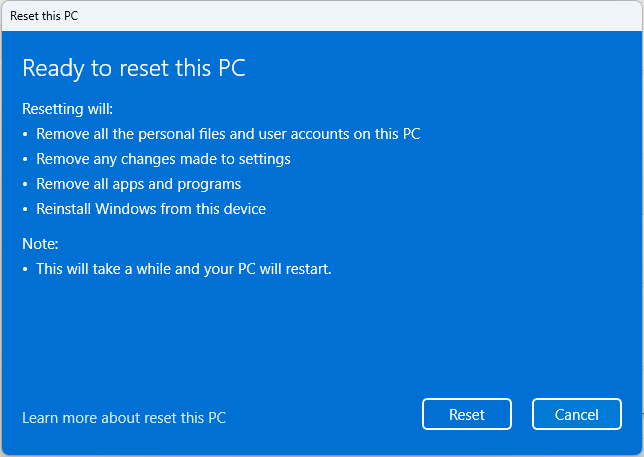
Step 6: Select Reset to start the process and wait until your PC completes the reset.
Also read: Best Fixes for Reset This PC Not Working in Windows 10/11.
Method 2: Reset Windows 11 via Advanced Startup
Advanced Startup is used when Windows 11 cannot boot normally, or you cannot log in. It allows you to reset the PC from the Windows Recovery Environment and fix serious system issues.
Here are the steps to perform a Windows 11 factory reset from boot.
Step 1: Turn on your PC, force shutdown when the logo appears, and repeat this step 3 times. After that, Windows will automatically load the WinRE screen.
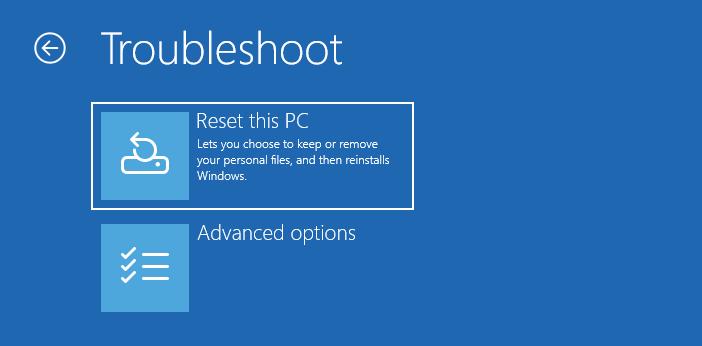
Step 2: Once in WinRE, navigate to Troubleshoot > Reset this PC.
Step 3: Choose Keep my files or Remove everything.
Step 4: Select Cloud download or Local reinstall.
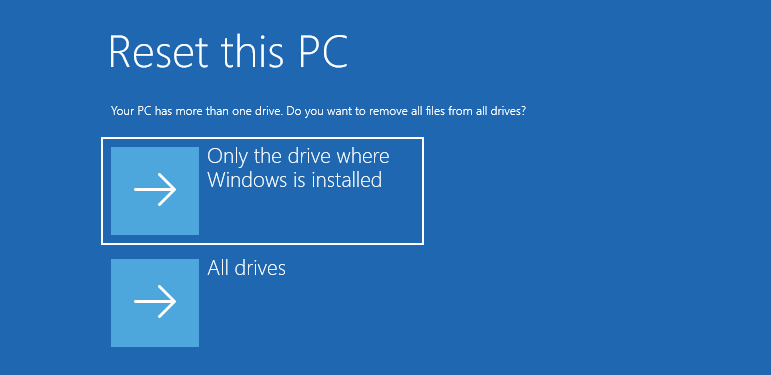
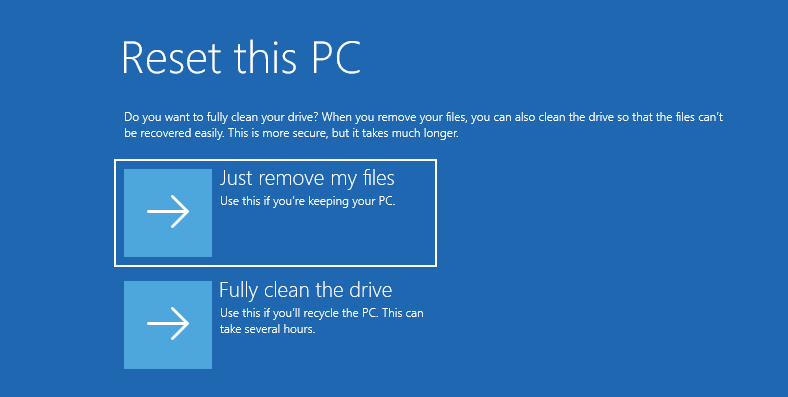
Step 5: If you choose Remove everything, you’ll see the following screen: Only the drive where Windows is installed or All drives.
Step 6: Then, select either Just remove my files or Fully clean the drive, and click Reset to begin the reset process.
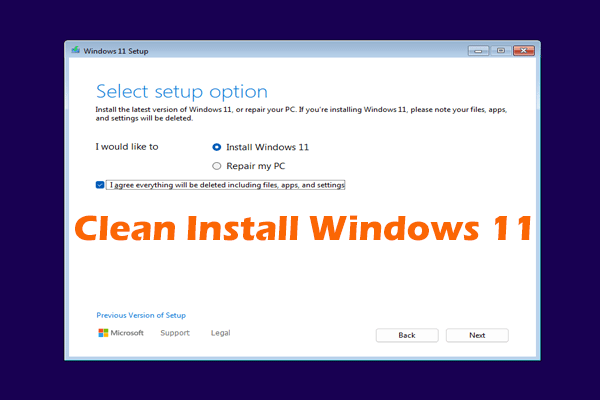
Method 3: Reset Windows 11 via USB Installation Media
If Windows 11 fails to boot properly, or if the built-in reset feature is unavailable, you can reset the system using USB installation media.
This method performs a clean installation and is suitable for situations where the system is severely corrupted, you are unable to access the operating system, or you are experiencing frequent errors.
Step 1: Create a bootable USB drive for Windows 11 installation.
- On a properly functioning PC, open Microsoft’s official Windows 11 download page.
- Click the Download Now option under the Create Windows 11 Installation Media section.
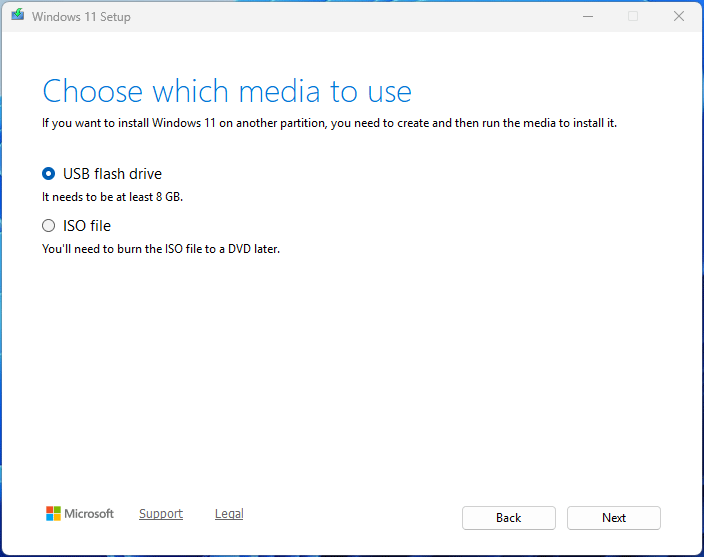
- Connect a USB drive to your working PC and run the MediaCreationTool.exe file, accept the license terms, and click Next.
- Choose the USB flash drive option and click Next.
- The tool will download the Windows 11 files and create the bootable media.
Step 2: Boot your PC from the USB.
- Turn off the computer that needs to be reinstalled completely.
- Insert the bootable Windows 11 USB drive.
- Turn on the PC and immediately begin repeatedly pressing the Boot menu key (F12, F11, F8, F10, etc.).
- Use the arrow keys to select your USB drive, then press Enter.
Step 3: Proceed with the Windows 11 installation steps.
- Select your preferred Language, Time, and Keyboard layout, then click Next.
- Click Install Now.
- Click I don’t have a product key.
- Select a Windows 11 edition you previously had installed.
- Accept the license terms.
- You will see a list of drives. If you want a fresh install, delete all existing partitions on your main drive.
- Select the unallocated space to install Windows 11.
- Click Install to start the Windows 11 reinstallation.
Once the installation of Windows 11 is complete, you must first perform the initial system setup (such as account login and network connection), and then install the necessary hardware drivers and commonly used software.
How to Reset Windows 11 FAQ
The former preserves your personal files, while the latter deletes all personal files, apps, and settings, restoring your computer to its original factory state.
Common causes include insufficient hardware performance, ongoing background updates or data synchronization, resource-intensive software re-installations, and an aging hard drive.
However, the former is simpler to perform and relies on built-in system features, whereas the latter is more thorough and requires the use of installation media for a manual installation.
Bottom Line
Resetting Windows 11 helps resolve system malfunctions or prepare your computer for reuse. Depending on your needs, you can choose to either retain your personal files or completely erase all content.
You can carry out the reset process via Settings, Advanced Startup, or USB installation media. However, before proceeding, please be sure to back up your data.
User Comments :