
You can change a drive letter on Windows 11 using Settings, Disk Management, Command Prompt, PowerShell, or MiniTool Partition Wizard. This guide explains each method step by step and shows how to assign a drive letter when needed.
Quick Answer: Which Method Should You Choose?
| Method | Best for | Difficulty |
| Settings app | Quick change for everyday users | Easy |
| Disk Management | Changing or adding a letter with Windows’ built-in tool | Easy |
| Command Prompt | Users comfortable with DiskPart commands | Medium |
| PowerShell | Scripting or batch changes | Medium |
| MiniTool Partition Wizard | Beginners who prefer a simple graphical tool | Easy |
What Is a Drive Letter
A drive letter (also called a device letter) is a single alphabetic character, from A to Z, that Windows assigns to a storage device or partition so you can access it in File Explorer, such as C:, D:, or E:.
In Windows, C: is assigned by default to the primary hard drive or primary partition where the operating system is installed.
A: and B: were originally used for floppy disk drives and are rarely used in modern computers. Drive letters like D: and E: are typically assigned to other drives, such as additional hard drive partitions, CD/DVD/Blu-ray drives, or devices like USB flash drives.
Note: Some partitions, such as the boot partition and the system reserved partition, do not automatically receive drive letters and are therefore not visible or directly accessible in File Explorer.
Now that you know what drive letters are, let’s take a look at how to change drive letters on Windows 11.
How to Change Drive Letter on Windows 11
You can change or assign a drive letter on Windows 11 with built-in tools or third-party software. Below are five methods, from the simplest to the more advanced.
Method 1: Via Settings App
Step 1: Click the Start icon and choose Settings.
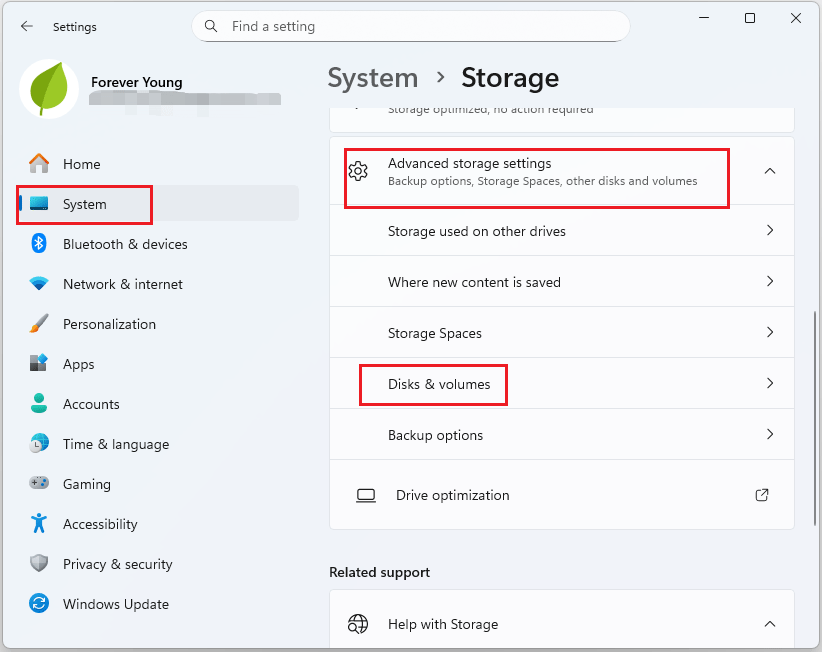
Step 2: In the left pane, select System. Then, click Storage > Advanced storage settings > Disks & volumes.
Step 3: Click the drive for which you want to change the drive letter and select Properties.
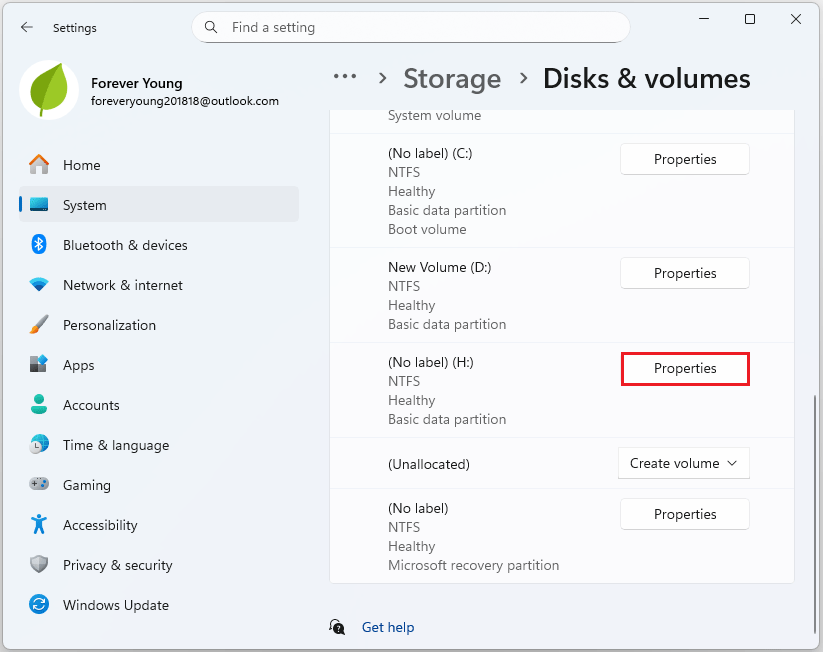
Step 4: Under the Volume Data section, click the Change drive letter button.
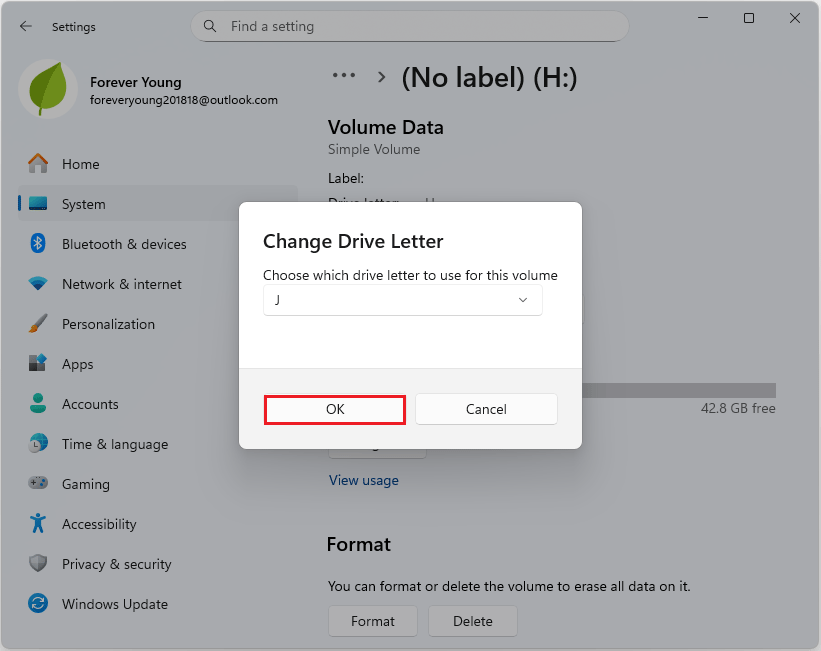
Step 5: Choose a letter and click OK to keep the changes.
Method 2: Via Disk Management
Disk Management is Windows’ built-in tool for managing disks and partitions. It lets you create, delete, extend, shrink, and format partitions.
The following are detailed steps for changing a drive letter:
Step 1: Right-click the Start button and select Disk Management.
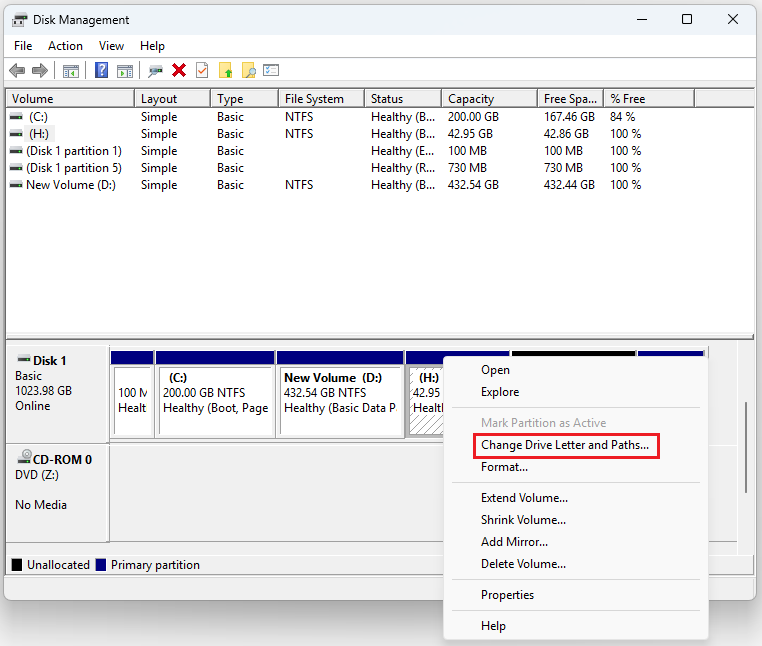
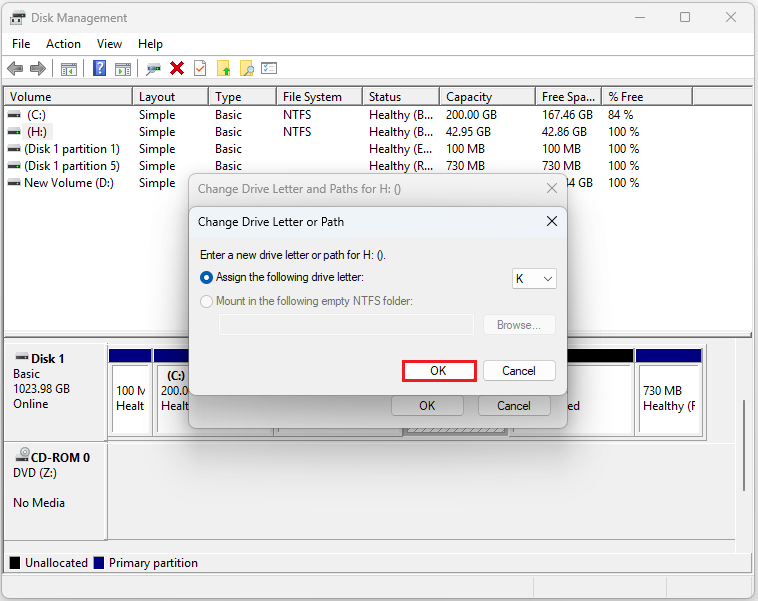
Step 2: Right-click the partition where you want to change the drive letter and then select the option Change Drive Letter and Paths.
Step 3: In the pop-up window, click the Change button. Then, select a drive letter and click OK > Yes to save the changes.
Method 3: Via Command Prompt
The Command Prompt is a command-line tool in Windows that allows you to perform various operations by entering commands.
It can help you perform operations such as changing drive letters, formatting disks, and extending partitions.
However, unfamiliar users should be cautious to avoid data loss or system damage due to incorrect commands.
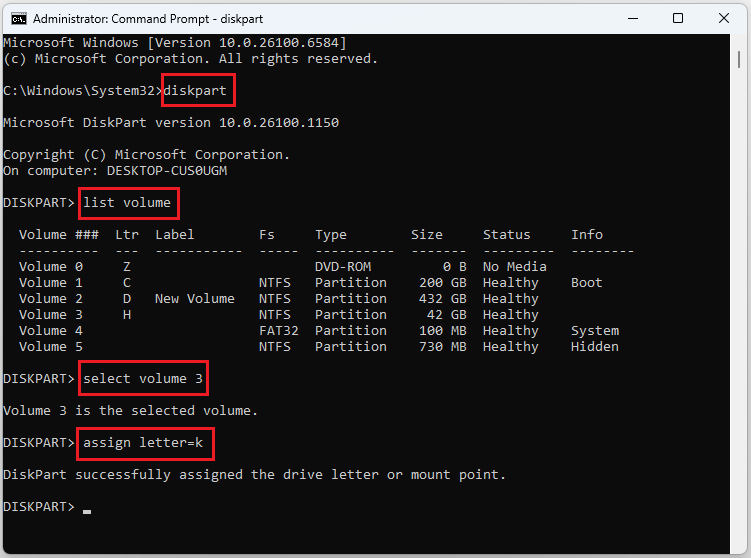
Step 1: Type cmd in the Search box and choose Run as administrator.
Step 2: Type the following commands one by one and press Enter.
- diskpart
- list volume
- select volume 3 (replace 3 with the volume number you want to change)
- assign letter=k (replace k with the letter you want to use)
Method 4: Via Windows PowerShell
The steps below explain how to change a drive letter on Windows 11 with PowerShell.
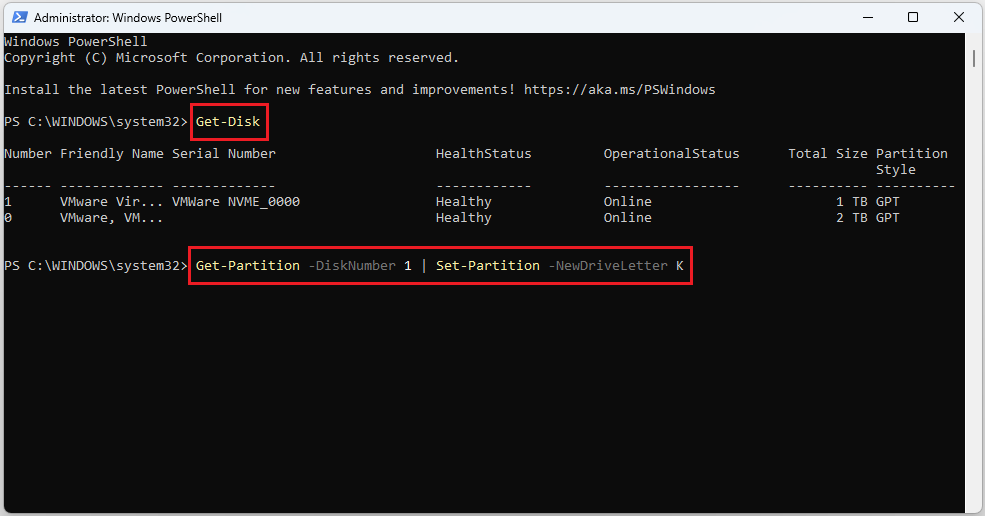
Step 1: Type Windows PowerShell in the Search box and choose Run as administrator.
Step 2: Type the command Get-Disk and press Enter to identify the hard drive.
Step 3: Then type Get-Partition -DiskNumber 1 | Set-Partition -NewDriveLetter K and press Enter. (In the above command, replace “1” with the disk number of the drive you want to assign a drive letter to. The letter “K” represents the drive letter to be assigned to the drive.)
Method 5: Via MiniTool Partition Wizard
MiniTool Partition Wizard is a disk partition software that can also help you change drive letters by using the Change Letter feature.
This is ideal for casual users unfamiliar with the command line or system settings.
MiniTool Partition Wizard FreeClick to Download100%Clean & Safe
Step 1: Launch MiniTool Partition Wizard to its main interface. Right-click the partition and choose Change Letter.
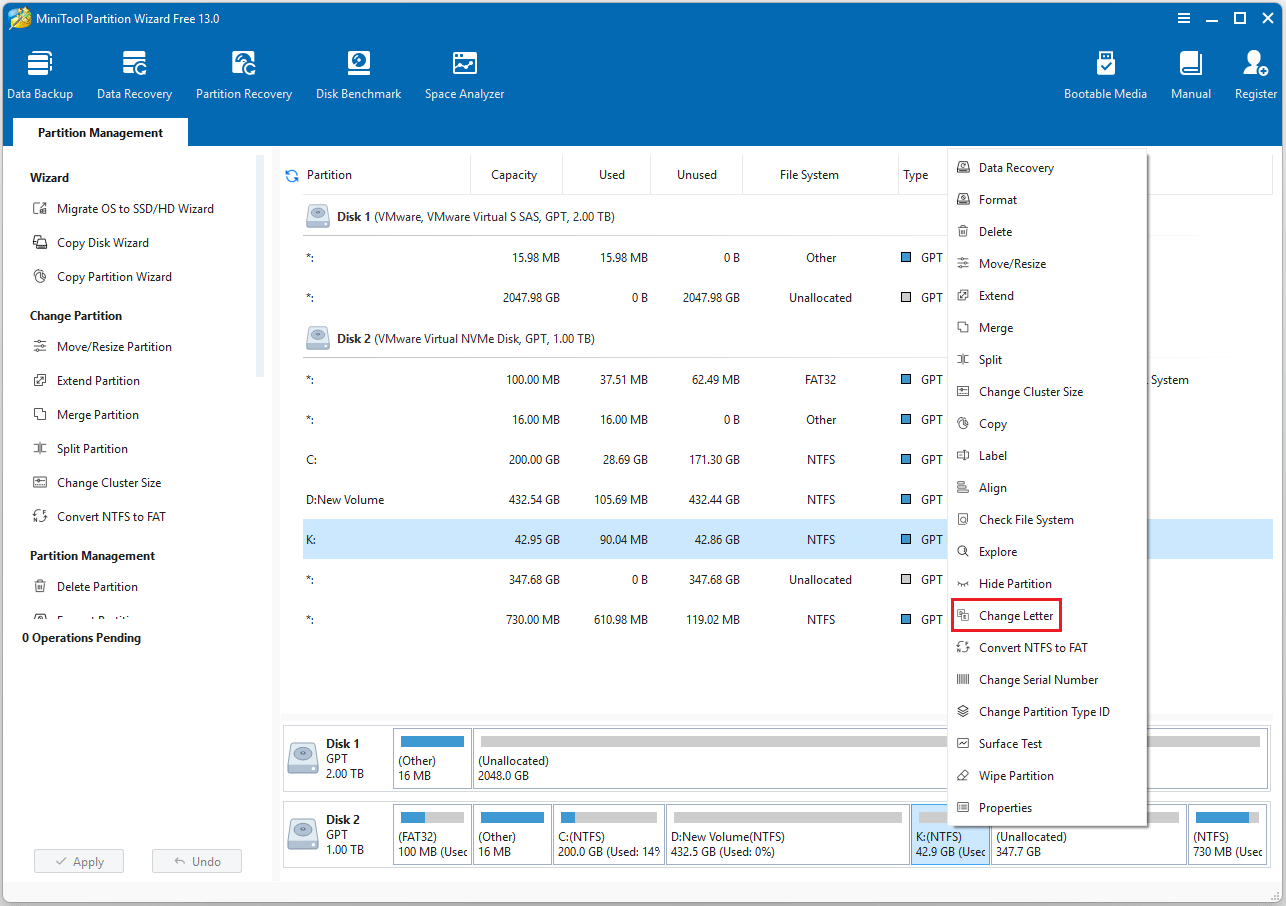
Step 2: In the new pop-up window, select a new letter and click OK > Apply.
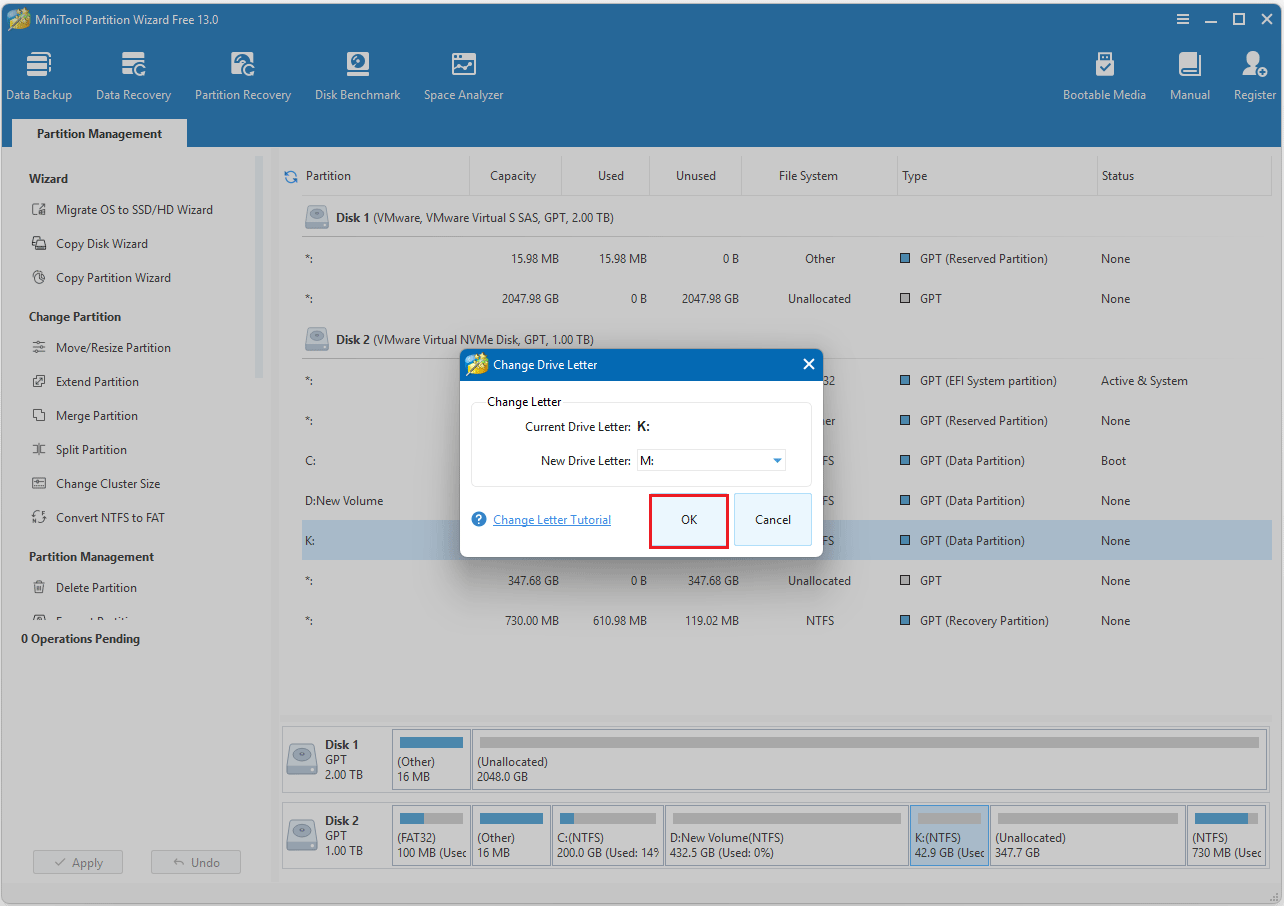
As you can see, the steps to change a letter by using MiniTool Partition Wizard are very simple. It’s worth trying.
In addition to changing a drive letter, it can also help you extend/move/merge/split partitions, clone HDD to SSD, wipe disks, recover data from hard drives, convert disks between MBR and GPT, and perform conversion between FAT32 and NTFS without data loss.
Why Change or Assign a Drive Letter
Now that you know how to change a drive letter on Windows 11, you may wonder when it is worth doing. These are the most common situations where you need to change or assign a drive letter:
- A new drive or partition has no letter, so it doesn’t show up in File Explorer.
- An external drive keeps getting a different letter, or two devices conflict.
- You want a tidy layout, such as D: for data and E: for backups.
- A program or script expects a specific drive letter.
If one of these applies to you, pick the method above that best fits your comfort level and follow its steps.
Bottom Line
This article introduces five practical methods for changing drive letters on Windows 11, including using Command Prompt, PowerShell, and tools like MiniTool Partition Wizard, to help you easily change drive letters based on your needs.
If you have any questions or suggestions while using MiniTool Partition Wizard, you can contact us at [email protected] for further assistance.
Change Drive Letter on Windows 11 FAQ
About The Author

Position: Columnist
Charlotte is a technology columnist with a strong focus on the Windows operating system, specializing in disk management, backup, and data recovery. She is passionate about analyzing computer errors, identifying root causes, and delivering practical solutions. In her free time, she stays updated on the latest developments in computer systems and hardware while continuously learning new technologies to broaden her expertise. Her writing style is clear and easy to understand, making complex technical topics accessible even to users with limited computer knowledge.
User Comments :