
Your laptop battery is draining so fast, which is caused by incorrect power settings, battery degradation, etc. To solve this problem, MiniTool Partition Wizard offers methods to optimize power settings, manage apps/processes, check battery health, etc.
A laptop battery is a rechargeable device that powers a laptop. It allows the laptop to operate without being plugged into a power outlet. The battery is typically located on the bottom of the laptop and can be easily removed for replacement or maintenance.
On average, a battery lasts 8 to 10 hours before needing to be recharged. Why does my battery drain so fast on my laptop? Here is a real situation from a forum user:
What are the reasons as to why laptop battery drains so fast? I got a second-hand laptop, and its battery is draining way too quickly. Is there a possible fix for it?https://www.reddit.com/r/laptops/comments/18ufli2/what_are_the_reasons_as_to_why_laptop_battery/
If you have the same doubts and don’t know how to fix this problem, refer to the detailed information below.
This article will delve into the most common causes of rapid laptop battery drain and provide practical solutions to extend battery life and everyday usage time.
Back Up Your Data Before Proceeding
If your laptop battery drains so fast, your computer may shut down unexpectedly, resulting in data loss.
Therefore, before attempting any troubleshooting steps, back up your data to an external hard drive or USB flash drive to ensure your laptop is not affected by a sudden power outage.
To ensure the safety of large amounts of data, we recommend using the Windows backup software MiniTool ShadowMaker to back up important files.
This convenient tool has powerful advanced features capable of performing all common backup tasks, including file backup, system backup, partition backup, and disk backup.
Now, let’s start creating a file backup using this tool:
Step 1. Download, install, and launch MiniTool ShadowMaker.
MiniTool ShadowMaker TrialClick to Download100%Clean & Safe
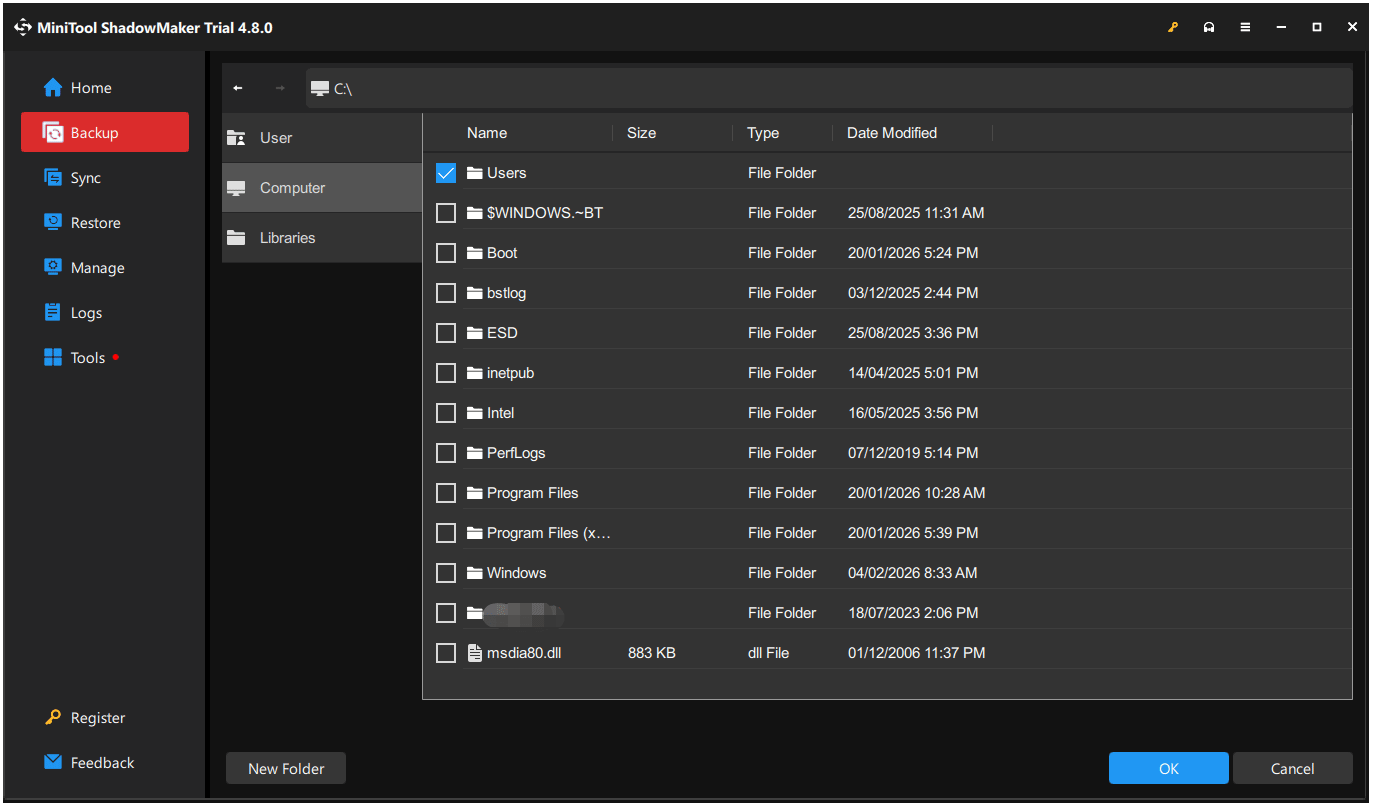
Step 2. On the Backup page, go to SOURCE > Folders and Files > select the files you want to back up > click OK to return to the Backup page.
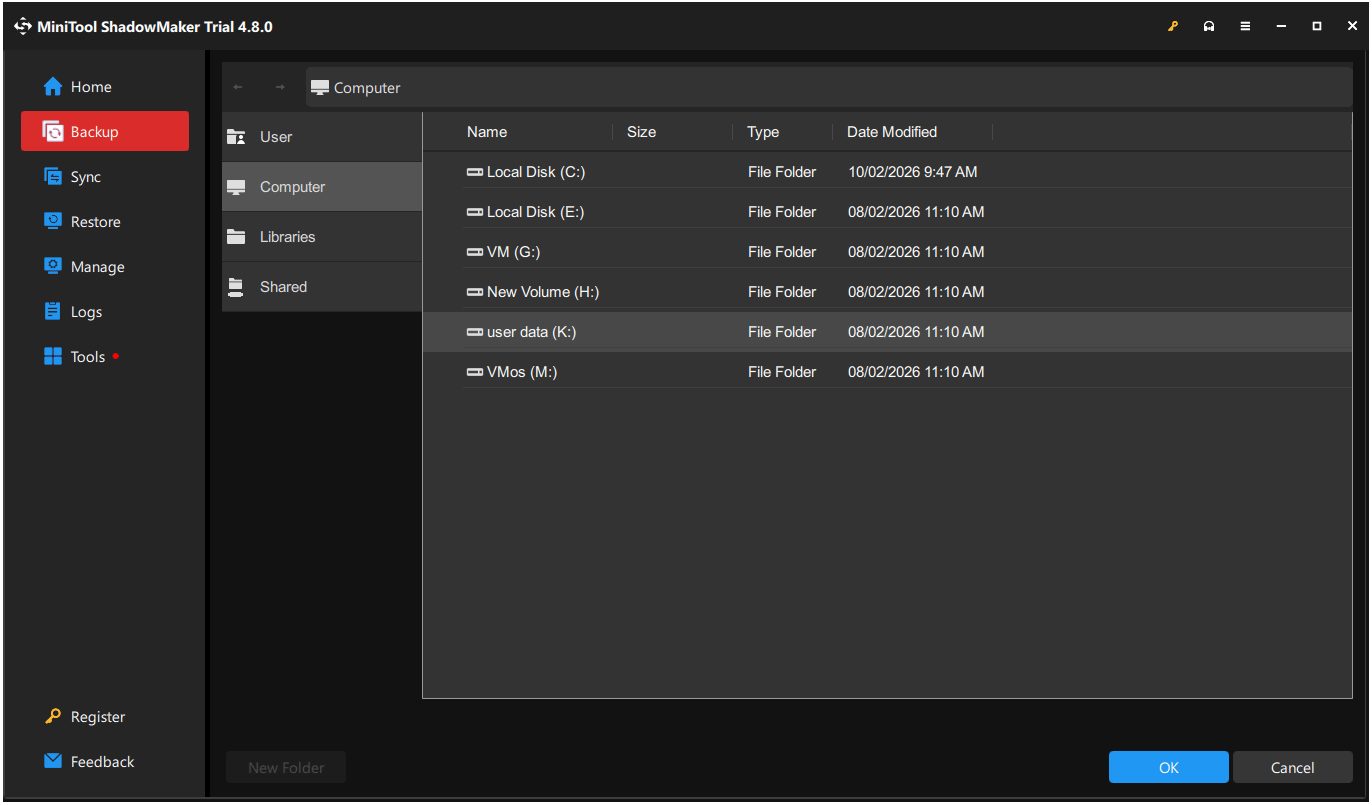
Then, click DESTINATION to select a USB flash drive or external hard drive as the storage path for the backup task. Then click OK.
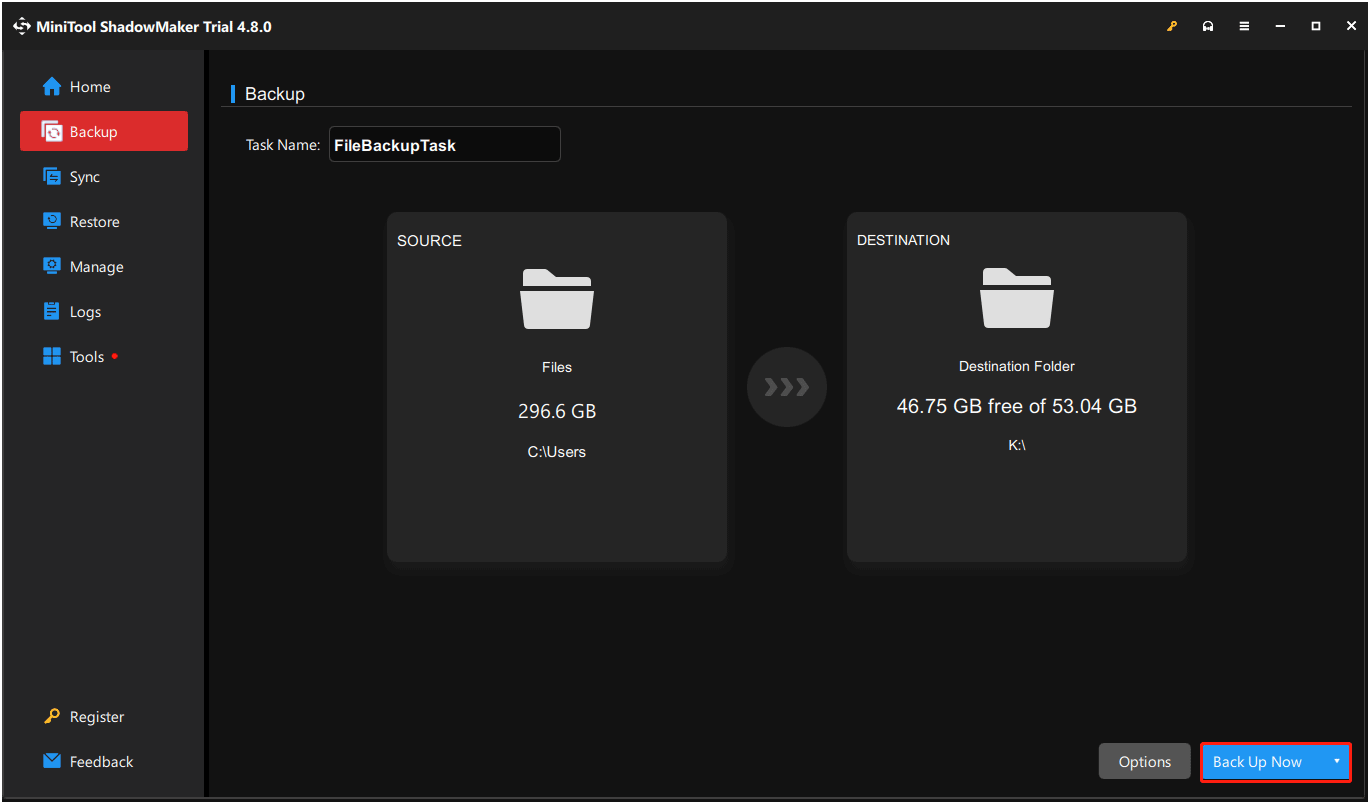
Step 3. Click Back Up Now to begin the backup process immediately.
Why Does My Laptop Battery Drain So Fast?
How long does a laptop battery last? Laptop battery life depends on a variety of factors, including battery type, age, and usage habits.
On average, laptop batteries last 8 to 10 years. However, battery life will vary depending on how often you use your laptop, the applications you run, and the power management settings you enable.
There are many reasons why laptop batteries drain so fast:
- High screen brightness: The screen is usually the most power-hungry part of a laptop. Turning the screen brightness to maximum will significantly increase battery consumption.
- Too many background applications and processes: Resource-intensive programs, such as video editing software or games, and numerous background tasks or applications can consume a lot of battery even when they are not being used.
- Incorrect power settings: Your laptop power plan may be set to “Performance” mode, which prioritizes speed over battery life.
- Constant connections: Wi-Fi and Bluetooth connections continually search for networks and devices, consuming battery. Unnecessary network connections and external devices, such as USB drives, wireless mice, or external hard drives, can also drain your laptop’s power.
- Outdated software or corrupted drivers: Faulty drivers can put hardware components in a high-power state, increasing power consumption. Outdated apps may have memory leaks or inefficient background processes, forcing the CPU and other components to work harder, resulting in faster battery drain.
- Physical battery degradation: All batteries age over time. If your laptop is several years old, the battery may have aged to the point where it no longer holds a full charge.
- Heat: Using your laptop in hot environments or with clogged vents can cause overheating, which forces the fans to work harder, draining the battery faster.
How to Fix Laptop Battery Draining So Fast?
Here, try the methods below to mitigate battery drain and extend the lifespan of your laptop battery.
Method 1. Adjust Screen Brightness
Whether you’re using an ultra-high-definition monitor or a standard monitor, the screen consumes a significant amount of your computer’s power. Lowering the screen brightness is the simplest way to reduce power consumption. Here is the guide.
- Press Win + I to open Windows Settings.
- Go to System > Display.
- Find the Brightness level slider and drag it to the left to lower the brightness.
Method 2. Turn Off the Backlit Keyboard
Some laptops come equipped with a backlit keyboard. While convenient for nighttime use, this can drain the battery. Turning it off can help extend your laptop’s battery life, especially during extended battery-powered use.
The method for turning off the backlit keyboard varies depending on the laptop manufacturer and model, but it’s usually done via keyboard shortcuts or system settings.
Most laptops have dedicated function keys or key combinations to control the keyboard backlight. Look for keys with a backlight icon on the top row (F1-F12) or on the arrow keys.
On other models, you may need to press and hold the Fn key while pressing the backlight key (e.g., Fn + Spacebar on Lenovo laptops, Fn + F10 on some Dell laptops).
Alternatively, you can go to Control Center > Mouse and Keyboard, and then disable this feature in the “Keyboard Backlight” section.
Method 3. Close Unnecessary Apps and Processes
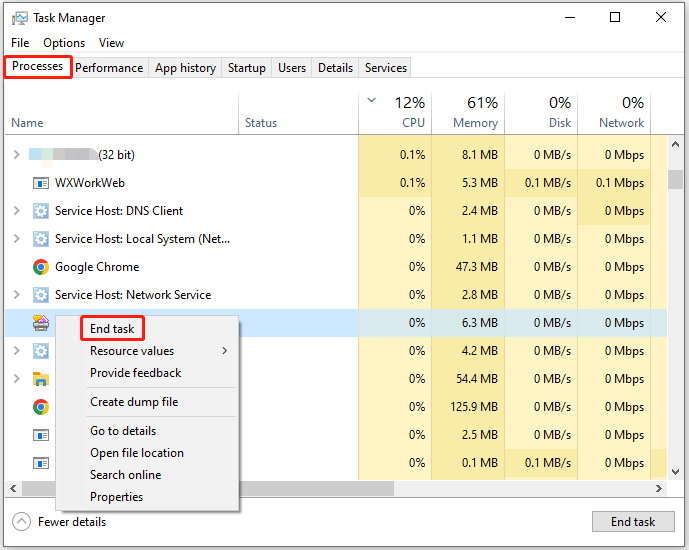
As mentioned above, unnecessary apps and processes can consume battery power. So, closing these apps and processes via the Task Manager can save power.
- Press Ctrl + Shift + Esc to open Task Manager.
- In the Processes tab, find apps you don’t need, right-click them, and select End task.
- Switch to the Startup tab, right-click on unnecessary startup apps, and select Disable.
Method 4. Optimize Power Settings
To mitigate battery drain, change your laptop’s power settings to a power-saver setting. The steps are as follows:
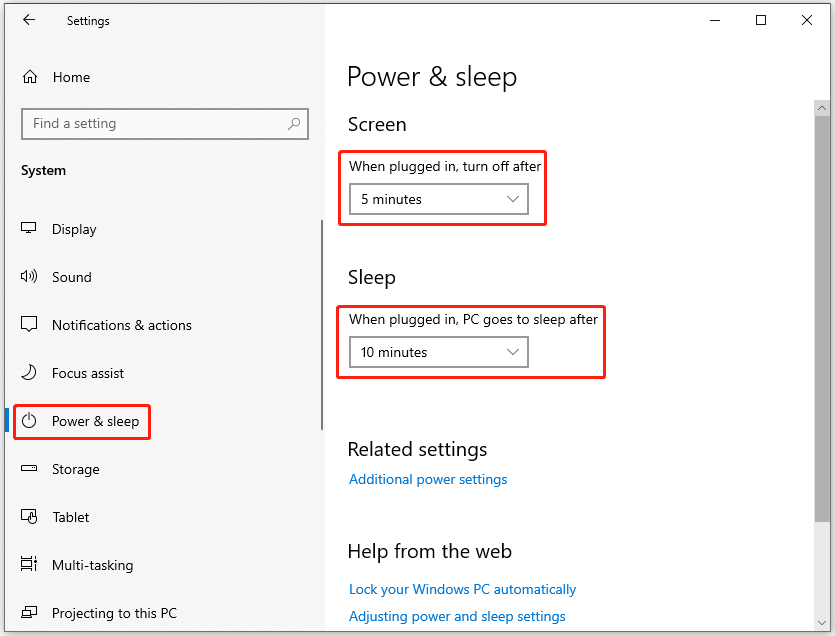
Step 1. Adjust the screen and sleep settings.
- Open Settings and select System.
- Select Power & sleep and set your screen to turn off after 1-5 minutes of inactivity and your laptop to go to sleep after 5–10 minutes.
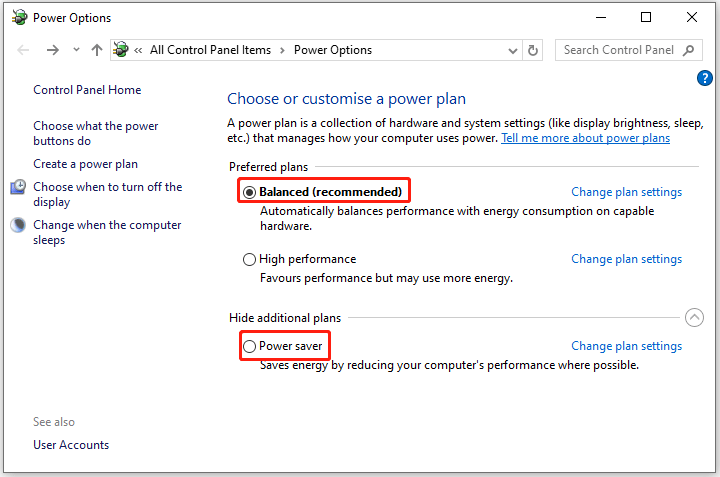
Step 2. Change power mode to a Balanced or Power saver plan, especially when running on battery.
- In the Power & sleep of Settings window, click Additional power settings.
- In the pop-up Power Options window, choose a Balanced or Power saver plan.
Method 5. Disconnect the Unnecessary Network and External Devices
If your laptop is connected to numerous networks or peripherals, it will drain its battery. Therefore, disconnect or remove network connections that are no longer needed.
In addition to network connections, you can also disconnect unnecessary peripherals such as USB drives, wireless mice, CD/DVD drives, Bluetooth speakers, etc., from the system. Connecting multiple devices can drain the laptop’s battery.
Method 6. Update Device Drivers and Software
Regularly update your operating system and application firmware to ensure optimal performance and power efficiency. Here are the steps to update drivers and software.
Update device drivers
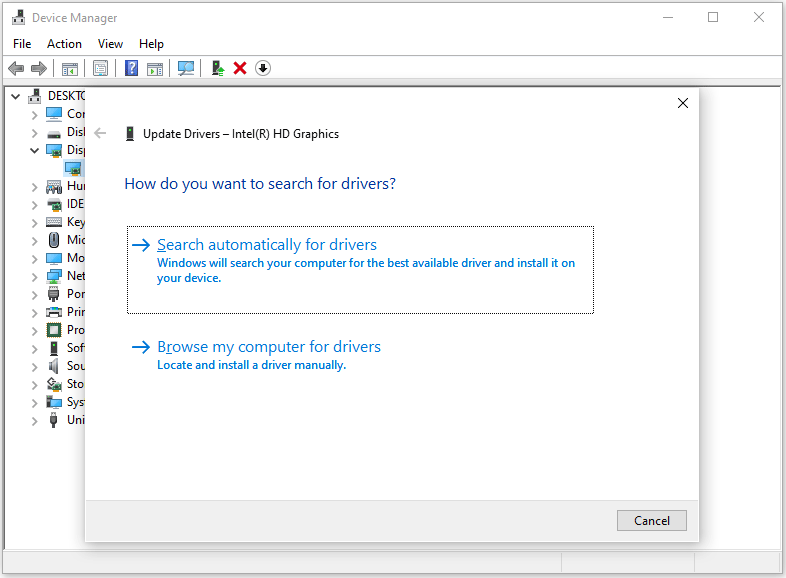
- Press Win + X, and then select Device Manager.
- Expand the category, right-click the device you want to update, and select Update driver.
- Choose Search automatically for drivers and follow the on-screen instructions.
Update software
- Built-in updates: Most applications have an About or Help menu with a Check for updates option.
- Microsoft Store: Open the Store app, go to Library, and click Get updates.
Method 7. Keep Ventilation and Fans Clean
Why is my laptop battery draining so fast? Dust buildup and poor airflow can cause laptops to overheat. This leads to several things that drain the battery:
- Increased component stress: The CPU, GPU, and other internal components will work harder at higher temperatures to function properly, requiring more energy.
- Fan overspeed: Clogged vents and dirty fans force the cooling system to run at high speeds continuously, consuming a significant amount of battery power.
- Battery degradation: Prolonged exposure to overheating accelerates the chemical degradation of lithium-ion batteries, permanently reducing their energy storage capacity over time.
Therefore, keeping your laptop’s ventilation system and fans clean is crucial. To maintain optimal battery health and prevent overheating, follow these guidelines:
- Use a suitable surface: Always place your laptop on a hard, flat surface (such as a table) to ensure airflow. Avoid using it on soft surfaces (such as beds, sofas, or pillows), as these can clog vents.
- Regular cleaning: Clean your laptop’s vents and fans regularly.
- External cleaning: Turn off your laptop and unplug the power cord. Use compressed air to blow short bursts of air into the vents to remove accumulated dust and debris.
- Use a cooling pad: An external laptop cooling pad can provide additional airflow and help maintain a lower operating temperature during heavy use.
Method 8. Check Battery Health
To check battery health, run a battery diagnostic and then check the battery report to determine if the battery needs replacement.
To do that, you can use the Command Prompt to generate a detailed HTML report that compares the design capacity to the current capacity.
Step 1. Run the battery diagnostic.
- Type cmd into the Search bar.
- Right-click Command Prompt and select Run as administrator.
- Type the powercfg /batteryreport command and press Enter. The command will create a detailed report, usually located at C:\Users\your-account\battery-report.html.
Step 2. Open and interpret the report.
- Navigate to the specified location using File Explorer and double-click the battery-report.html file to open it in your web browser.
- Look for the Installed battery section and compare the “Design Capacity” (the original maximum) with the “Full Charge Capacity” (the current maximum charge the battery can hold).
- A significant difference (e.g., the Full Charge Capacity is 80% or less of the Design Capacity) indicates notable wear and may mean it is time for a replacement.
Recover Lost Data from Your Laptop
If your laptop suddenly shuts down due to a depleted battery, your data may be lost. A power outage on a laptop can lead to a variety of data loss scenarios, primarily related to data being processed in volatile memory.
- Loss of unsaved data: Any work being processed (e.g., a document you are typing, unsaved game progress, unsaved spreadsheet changes) will be immediately lost if stored solely in the laptop’s volatile memory (RAM).
- File corruption: If a power outage occurs while writing to or saving a file to a storage drive, the file may become corrupted, meaning it may be inaccessible or lacking in critical information.
- File system corruption: A power outage during critical system operations (such as software installation, system updates, or disk defragmentation) can corrupt the file system itself. This may prevent the operating system from booting properly or render entire sections of the drive inaccessible.
- Hardware damage: In rare cases, a sudden power outage or subsequent voltage surge can cause physical damage to internal components.
To recover lost data due to a power outage, try the following methods:
- AutoRecover/AutoSave: Many applications, such as Microsoft Word or Excel, have built-in features that automatically save backup versions of files. After a power outage, the application will prompt you to restore the unsaved version when you reopen it.
- File system check: After an unexpected shutdown, the operating system typically runs the disk check tool chkdsk at startup to repair minor file system corruption.
- Restore from backup: This is the most reliable method. If you regularly use local backups (external hard drives) or cloud storage services, you can restore data from the most recent backup copy.
Why Does My Laptop Battery Drain So Fast FAQ
Bottom Line
Why is my battery draining so fast? Extend battery life by understanding the causes and taking steps to address them. While laptop batteries age over time, proper charging methods can maximize their lifespan.
User Comments :