
Bad System Config Info is a Windows Blue Screen of Death error that is usually caused by corrupted system files, registry issues, etc. In most cases, you can fix it by repairing system files, rebuilding the BCD, or restoring Windows. If the error prevents your PC from booting, recover important files via MiniTool Partition Wizard before reinstalling Windows.
BAD_SYSTEM_CONFIG_INFO is a Windows Blue Screen of Death error that usually occurs due to corrupted system configuration data, registry issues, or damaged boot files.
In some cases, a simple restart may resolve the problem. However, if the error keeps appearing, follow the solutions below to troubleshoot and fix it.

What Causes BAD_SYSTEM_CONFIG_INFO
BAD_SYSTEM_CONFIG_INFO is usually caused by corrupted system files, boot configuration issues, driver problems, or hardware failures. The table below lists the most common causes of this BSOD error.
| Category | Cause | Common Solution |
| Software & Files | Corrupt Registry Hives | Restore the registry or use System Restore |
| Software & Files | Damaged BCD | Rebuild the BCD |
| Software & Files | Interrupted Windows Updates | Uninstall the update or perform Startup Repair |
| Software & Files | Faulty Drivers | Update, roll back, or reinstall the driver |
| Hardware | Failing Storage Drive | Check the drive with CHKDSK and replace it if necessary |
| Hardware | Defective RAM | Run Windows Memory Diagnostic or replace the RAM |
Once you’ve identified the possible cause, use the troubleshooting methods below to fix the error.
Fix 1. Repair Windows System Files
Step 1: Restart the PC, and the Automatic Repair will be performed. Once it fails, click Advanced options to access the Windows recovery tools in WinRE.
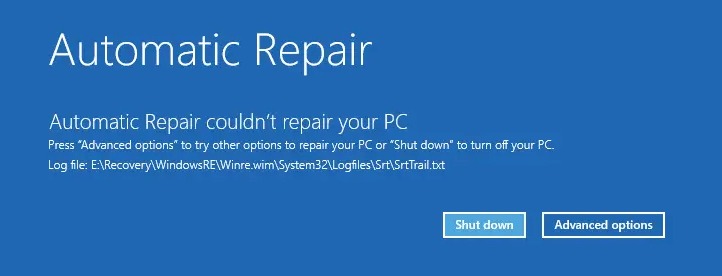
Step 2: Select Command Prompt and then use DiskPart commands to check if the boot drive still has the drive letter C.
- diskpart
- list volume
- exit
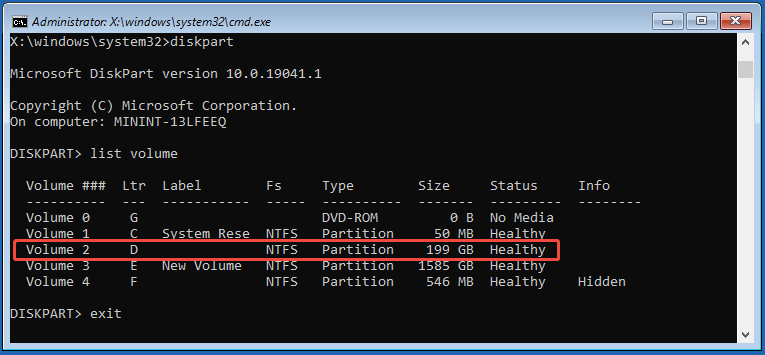
Step 3: In my case, the boot drive’s letter has been changed to D:. Therefore, execute the “sfc /scannow /offbootdir=d:\ /offwindir=d:\windows” command to repair Windows system files.
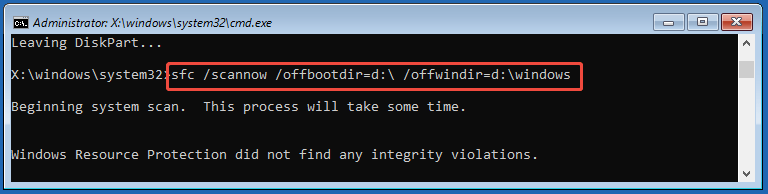
If you encounter issues when running the SFC Scannow command, read the SFC Scannow usage guide to find solutions.
Fix 2. Rebuild the BCD File
Step 1: Open Command Prompt in WinRE and then execute the following command lines one by one to assign a drive letter to the EFI partition.
- diskpart
- list volume
- select volume * (* is the volume number of the EFI system partition. It is usually a small, hidden FAT32 partition)
- assign letter=# (select a drive letter different from existing ones)
- exit
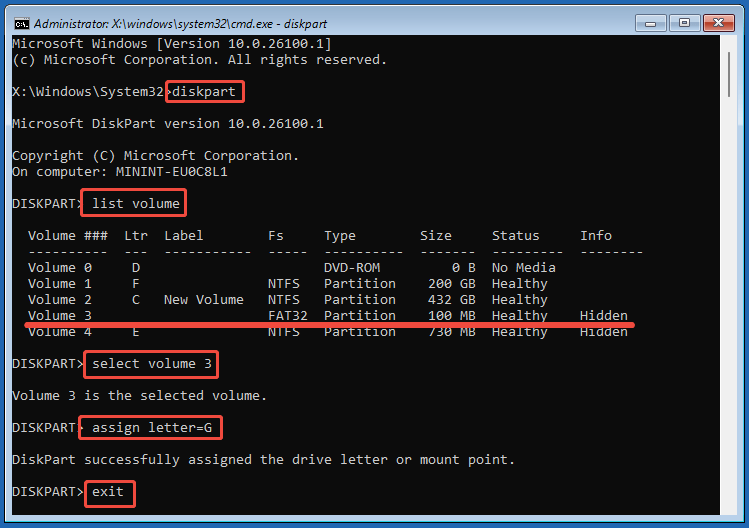
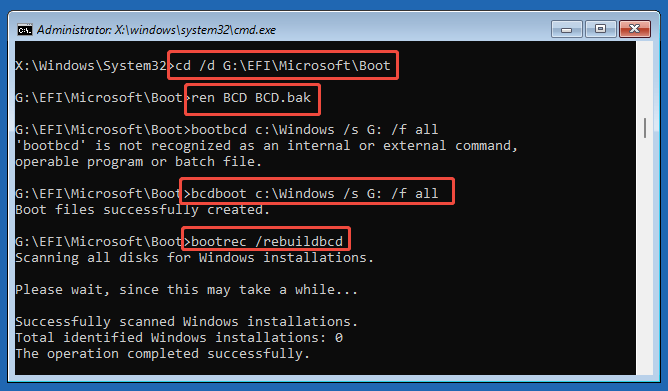
Step 2: Rebuild the BCD file with the following commands.
- cd /d #:\EFI\Microsoft\Boot
- ren BCD BCD.bak
- bcdboot C:\Windows /s #: /f ALL
- bootrec /rebuildbcd
Fix 3. Remove Limits on CPU Core Number and Memory
If you have manually configured system limits on the number of available CPU cores and memory, removing them can solve the Bad System Config Info BSOD.
To do that, open Command Prompt in WinRE and then execute the following 2 commands.
- bcdedit /deletevalue {default} numproc
- bcdedit /deletevalue {default} truncatememory
Fix 4. Replace Damaged Windows Config Files
As the Bad System Config Info implies, the files in C:\Windows\System32\config are damaged. Fortunately, there was a backup of the folder (called C:\Windows\System32\config\RegBack).
You can open Command Prompt in WinRE and then use the following commands to replace bad important config files with backup.
- cd C:\Windows\System32\config
- ren C:\Windows\System32\config\DEFAULT DEFAULT.old
- ren C:\Windows\System32\config\SAM SAM.old
- ren C:\Windows\System32\config\SECURITY SECURITY.old
- ren C:\Windows\System32\config\SOFTWARE SOFTWARE.old
- ren C:\Windows\System32\config\SYSTEM SYSTEM.old
- copy C:\Windows\System32\config\RegBack\DEFAULT C:\Windows\System32\config
- copy C:\Windows\System32\config\RegBack\SAM C:\Windows\System32\config
- copy C:\Windows\System32\config\RegBack\SECURITY C:\Windows\System32\config
- copy C:\Windows\System32\config\RegBack\SYSTEM C:\Windows\System32\config
- copy C:\Windows\System32\config\RegBack\SOFTWARE C:\Windows\System32\config
Fix 5. Perform System Restore, PC Reset, or Reinstallation
If the above methods don’t work, you can try performing a system restore, PC reset, or reinstallation. The first option allows you to retain personal files such as photos, documents, and videos, while the last two methods may involve formatting the disk and deleting all data.
If your computer contains important data, you can restore it using MiniTool Partition Wizard first, and then reset or reinstall the computer.
MiniTool Partition Wizard DemoClick to Download100%Clean & Safe
Here is how to recover data from an unbootable PC.
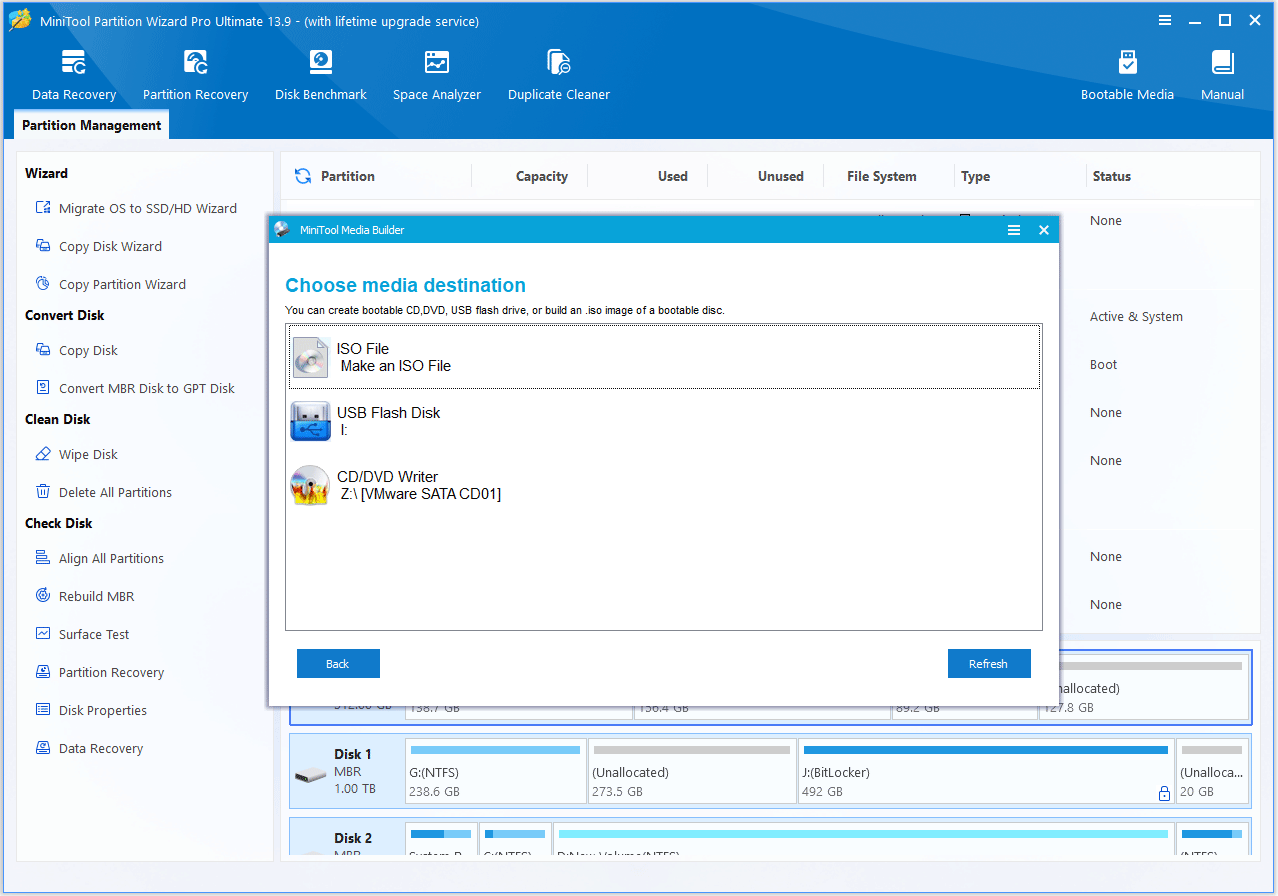
Step 1: Make a bootable disk of MiniTool Partition Wizard.
- On a well-running PC, connect a USB drive.
- Launch MiniTool Partition Wizard and click Bootable Media on the toolbar.
- Click WinPE-based media with MiniTool plug-in.
- Select the USB Flash Drive as the destination.
Step 2: Boot the Bad System Config Info BSOD computer from the USB.
- Insert the USB drive into the Bad System Config Info BSOD computer.
- Power on the PC and press the boot menu key (F12, F11, Esc, or F2).
- Select the USB drive from the menu.
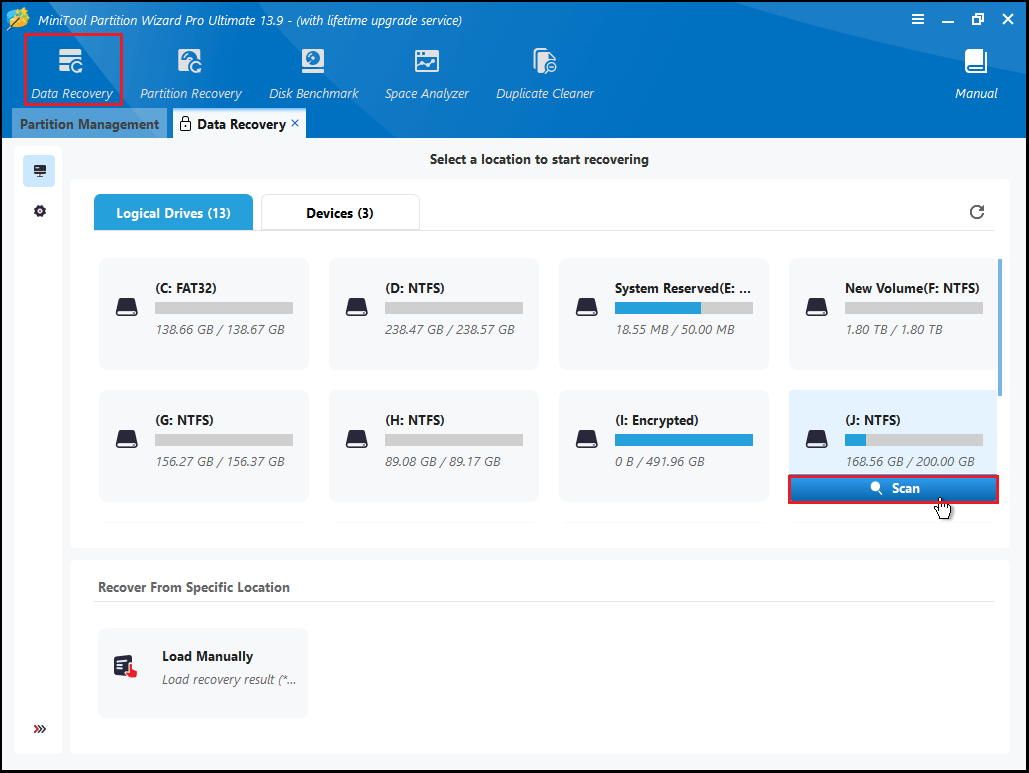
Step 3: Scan the drive for data recovery.
- Once the PC boots up, wait for MiniTool Partition Wizard to open automatically.
- Click Data Recovery.
- Select a partition or a location to scan.
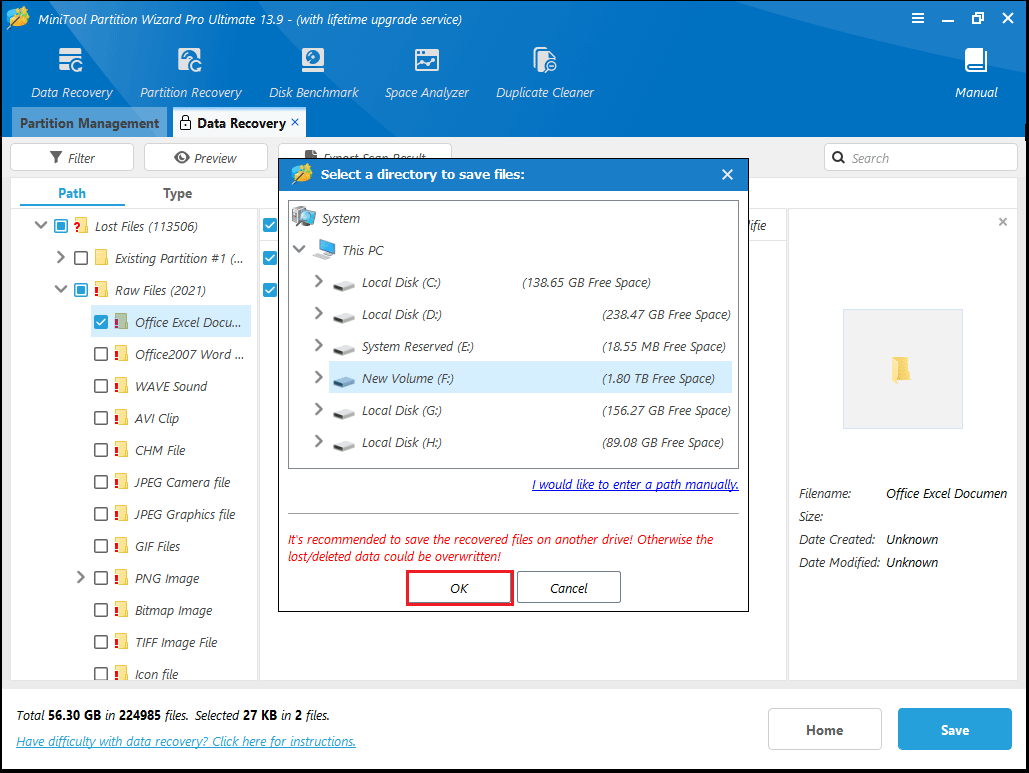
Step 4: After waiting a few minutes, terminate the scan. Under Path or Type, find the files you want to recover and click Save. Choose a safe location to put the recovered files.
Bottom Line
The above seven ways can solve bad system config info errors caused by most common reasons. If you have problems in data recovery or backup, please leave a comment or email [email protected] to for help.
User Comments :