
Need to shrink a Windows partition to create unallocated space, install another operating system, or better organize your hard drive? Windows provides 4 built-in tools including Disk Management and DiskPart. If you're looking for a more flexible solution, MiniTool Partition Wizard can also help you.
The Windows partition shrinking process will free up part of its allocated storage and convert it into unallocated space.
You can shrink a Windows partition using the built-in tools like Disk Management and DiskPart without deleting your data, provided the partition has enough contiguous free space.
If Windows can’t shrink the partition because of unmovable system files or other limitations, you can use a dedicated partition manager like MiniTool Partition Wizard to resize the partition more flexibly and create unallocated space for a new partition or to extend another volume.
This post introduces 5 tools to help you shrink a volume free and safely. Here is a comparison table of them. You can choose the best suitable method based on it.
| Methods | Handle Unmovable Files | Shrink Special Partitions | Difficulty |
| Storage Settings | No | No | Easy |
| Disk Management | No | No | Easy |
| DiskPart | No | No | Medium |
| PowerShell | No | No | Medium |
| MiniTool Partition Wizard | Yes | Can shrink System Reserved, ESP, Recovery, OEM, and FAT32 partitions. | Easy |
2. DiskPart and PowerShell support script.
Now, keep reading to learn how to use these tools to shrink a volume in Windows 11/10.
Method 1. Shrink a Partition Using Windows Storage Settings
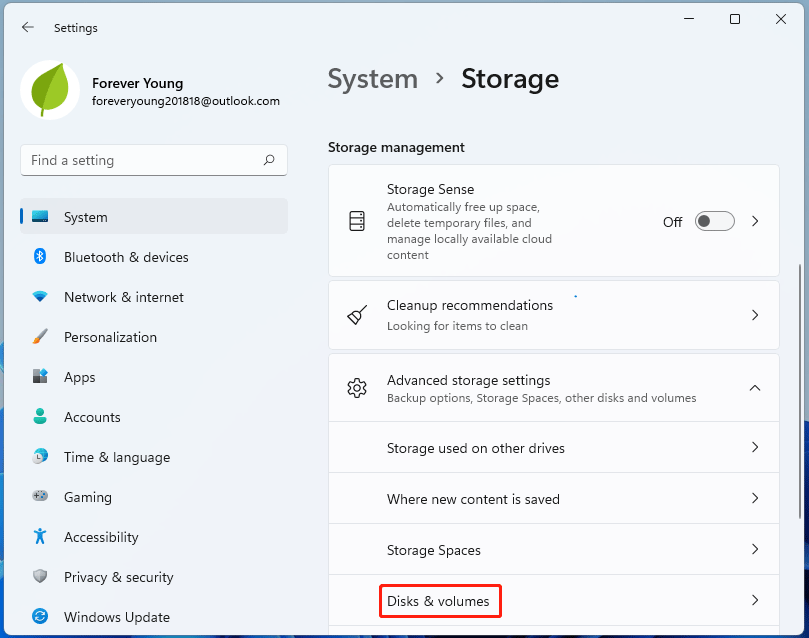
Step 1: Press the Windows logo key + I to open Settings. Go to System > Storage. Under Storage management, expand Advanced storage settings, and then click Disks & volumes.
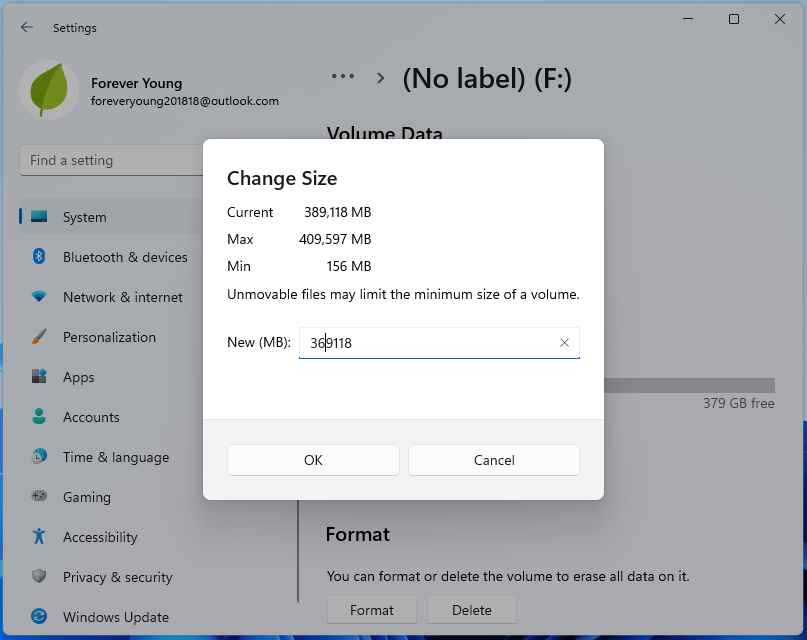
Step 2: Click the partition that you want to resize and then click the Properties button. Click the Change size button. On the pop-up window, type the new size of the partition in MB. You can see the Max size and Min size you can enter. Then, click OK.
Method 2. Shrink a Partition Using Disk Management
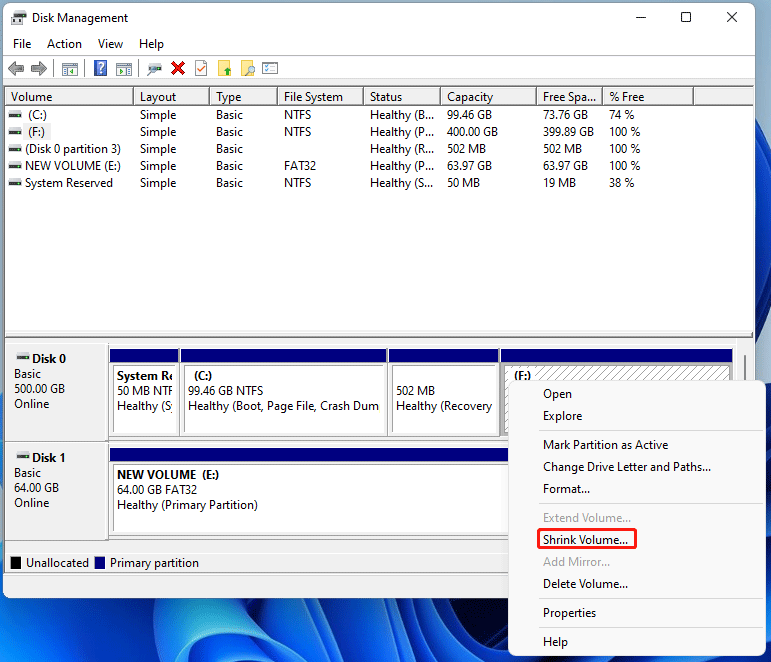
Step 1: Press the Windows logo key + X and then select Disk Management from the menu. The Disk Management tool will open. Now, right-click on an NTFS partition, including the C drive, and then select Shrink Volume.
Step 2: After querying shrink space, you can enter the amount of space to shrink in MB. After that, click the Shrink button to start the shrinking process.
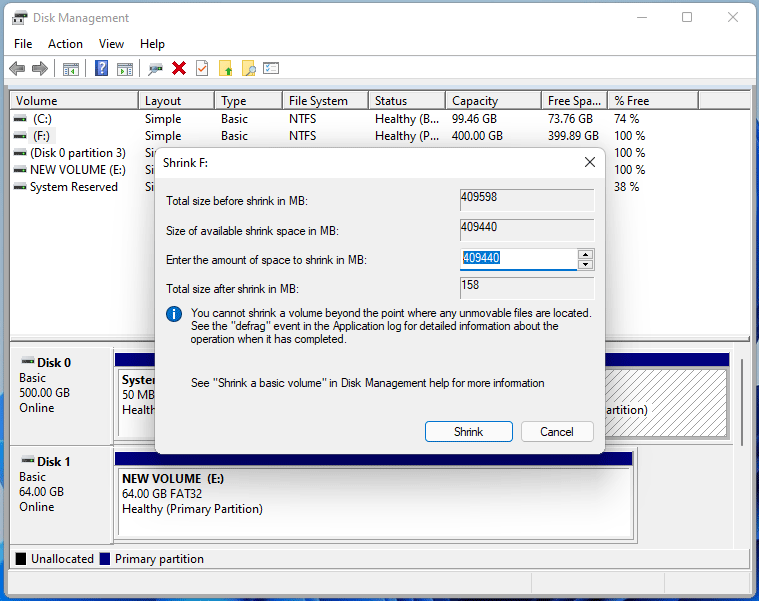
After that, Windows will create unallocated space after shrinking the partition.
Method 3. Shrink a Partition Using DiskPart
Step 1: Press the Windows logo key + R and type “diskpart”. Then, press Enter and click Yes to open the diskpart.exe input window.
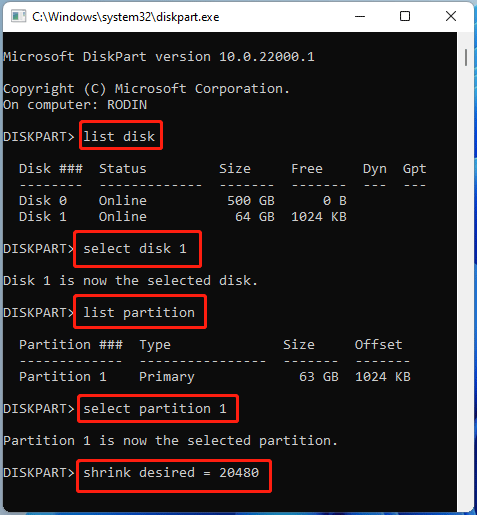
Step 2: On the window, execute the following commands one by one to shrink a partition.
- list disk (it will list all disks connected to the PC)
- select disk * (* is the disk number of the hard drive where the volume you want to shrink is located)
- list partition (it will list all partitions located on the selected disk)
- select partition # (# is the volume number of the partition that you want to shrink)
- shrink desired = xx (the unit of the number is MB and the command means that the partition will be shrunk by xx MB)
Method 4. Shrink a Partition Using PowerShell
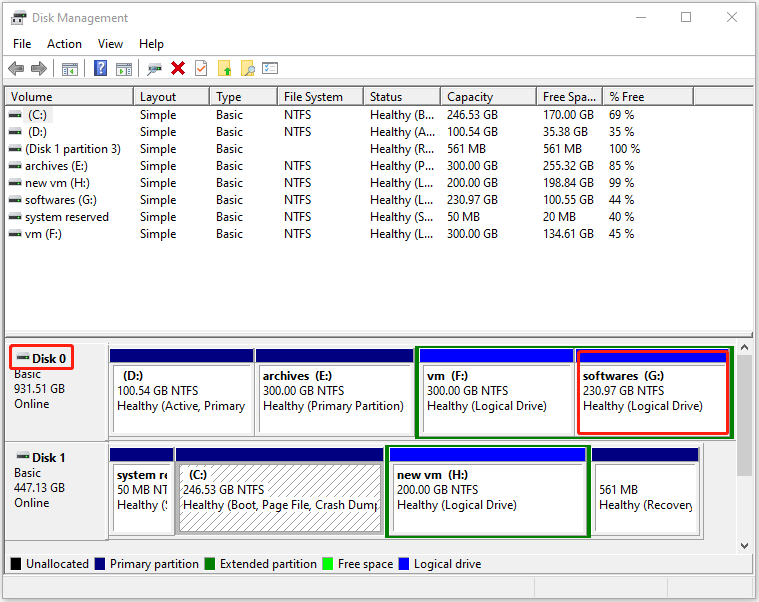
Step 1: Open Disk Management to check the disk number of the hard drive where you want to resize partition Windows 10/11. You need to write down it. In my case, I want to resize the G drive on Disk 0.
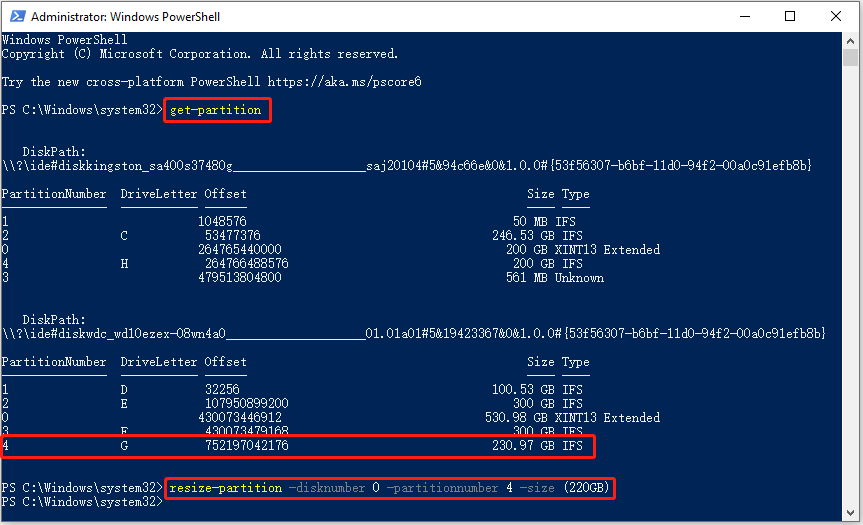
Step 2: Press the Windows logo key + X and then select Windows PowerShell (Admin) from the menu. Then, execute the following commands one by one:
- Get-Partition (this will list all partitions and display their details. You can write down the volume number of the partition that you want to shrink or extend. In my case, the partition number of the G drive is 4)
- Resize-Partition -DiskNumber * -PartitionNumber # -Size (XX) (* is the disk number you wrote down before, # is the volume number you wrote before, and XX is the final size you want the partition to be)
Method 5. Shrink a Partition Using MiniTool Partition Wizard
MiniTool Partition Wizard is a professional disk and partition management tool. It has a Move/Resize feature to help you do a Windows 11 shrink partition without losing data. In addition, this software can also shrink multiple partitions and gather the unallocated space.
Besides, MiniTool Partition Wizard has many useful features. For example, it can help you partition a hard drive, format FAT32 on various storage media, convert MBR to GPT, recover data from hard drives, etc. It’s worth trying.
How to shrink a partition in Windows 11/10 using MiniTool Partition Wizard? Here is the guide:
MiniTool Partition Wizard FreeClick to Download100%Clean & Safe
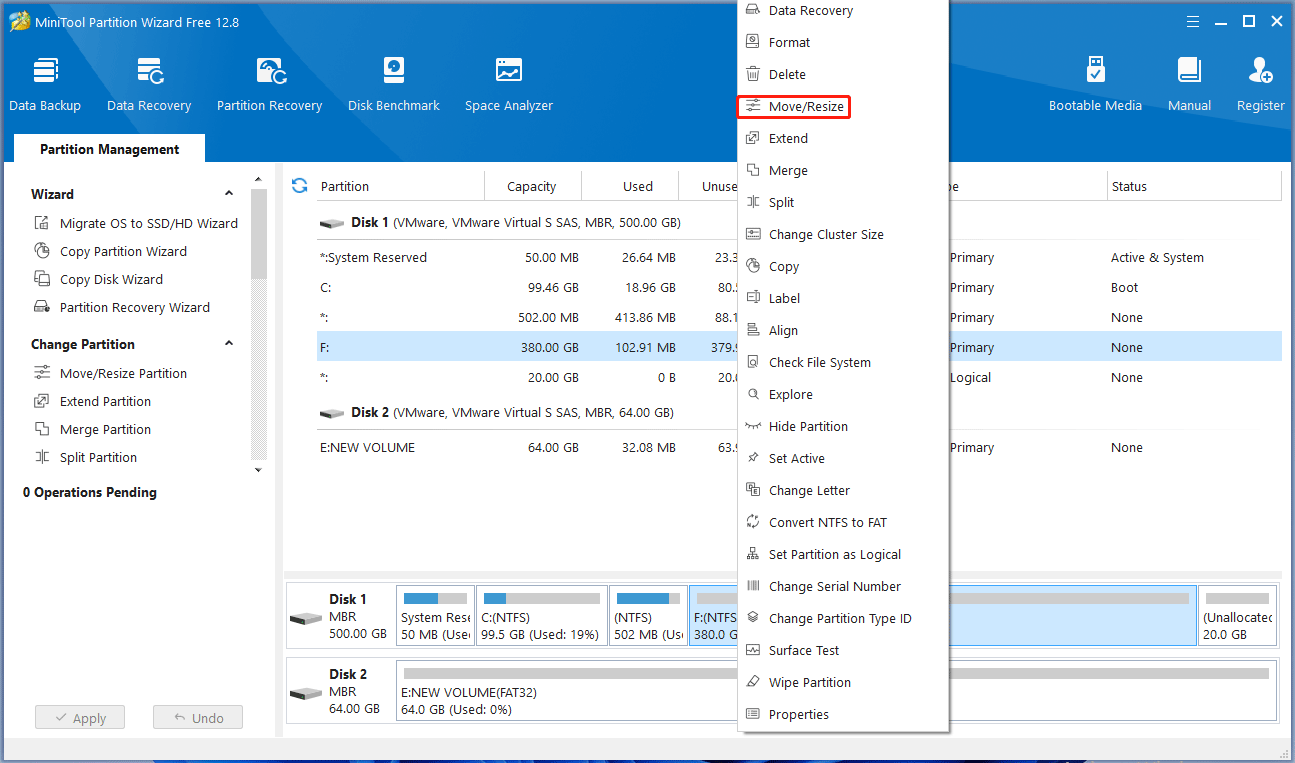
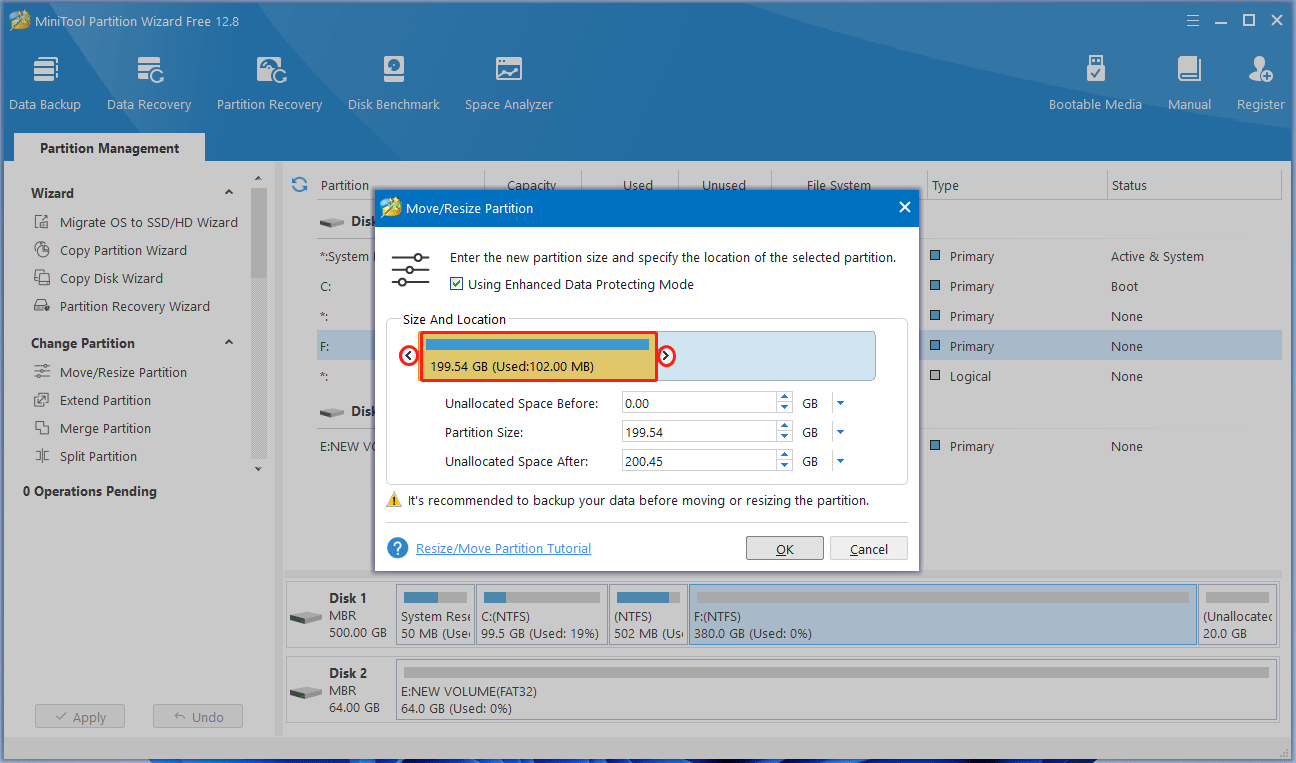
Step 1: Download, install, and launch MiniTool Partition Wizard. Right-click on the partition that you want to resize and then select the Move/Resize option from the menu.
Step 2: On the pop-up window, you can drag the arrow icons on the two sides of the partition to resize it. You can also drag the block of the partition to the left or right to move its location. Then, click OK.
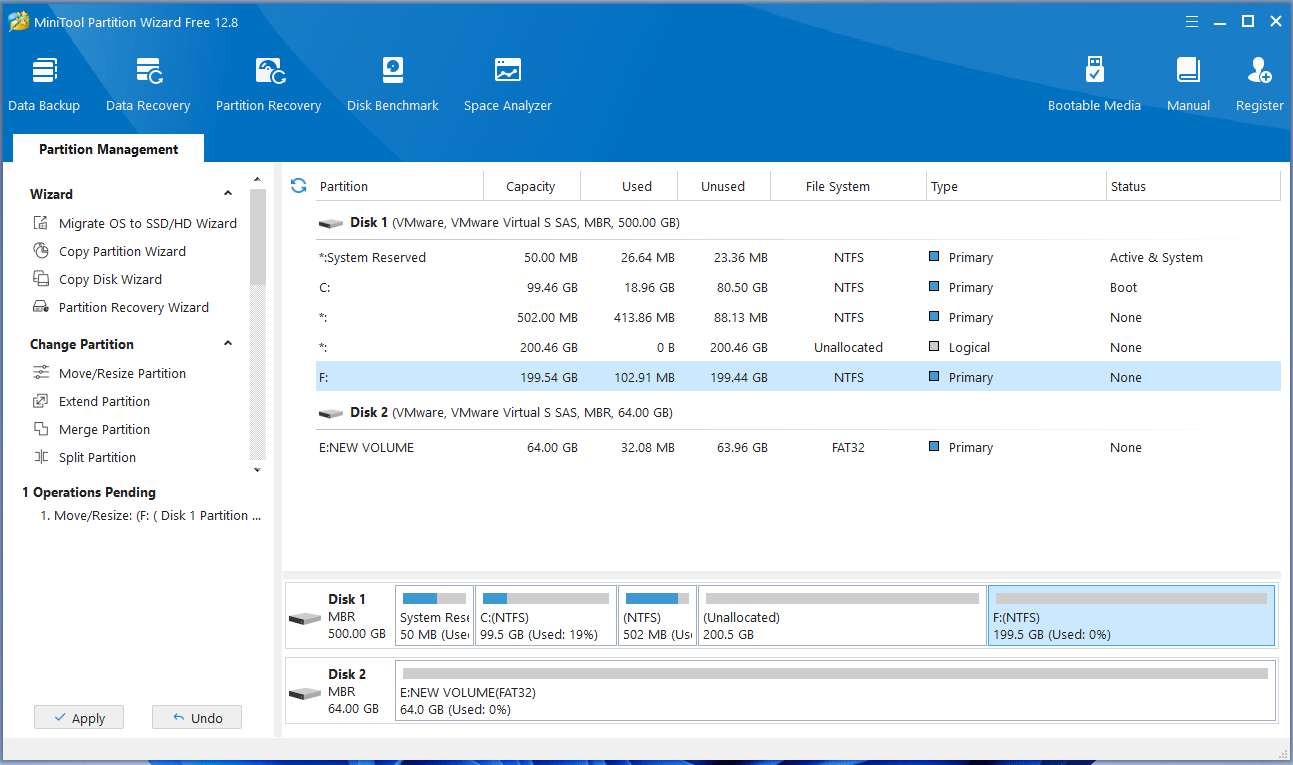
Step 3: Click the Apply button to execute the pending operation. If you resize the C drive, a PC restart may be required.
Sometimes, according to your conditions, MiniTool Partition Wizard can offer you better methods to do Windows 11 resize partition without losing data. For example:
- If you want to shrink a partition and then create a new partition using the unallocated space, MiniTool Partition Wizard’s Split Partition feature is recommended. It can split a FAT32 or NTFS partition into two partitions.
- If the reason why you want to shrink a partition is to add the unallocated space to another partition, MiniTool Partition Wizard’s Extend Partition feature is recommended. It can extend a partition by taking free space from other partitions or unallocated space directly, regardless of the distance.
Windows 10/11 Shrink Partition FAQ
But avoid reducing the system partition too aggressively.
Before you begin, always back up your important files in case of an unexpected power outage or system error during the process.
Bottom Line
Shrinking a partition in Windows 11 or Windows 10 is usually straightforward to create space for another partition, perform a dual-boot, or reorganize oversized partitions.
For most users:
- Disk Management is the easiest method.
- DiskPart works well for advanced users.
- MiniTool Partition Wizard helps with FAT32 and complex layouts.
If Windows cannot shrink a partition properly, try MiniTool Partition Wizard. For any questions or suggestions about MiniTool Partition Wizard, contact us via [email protected]. We will get back to you as soon as possible.
About The Author

Position: Columnist
Linda has been an editor at MiniTool for seven years. She continuously learns about computers and puts her knowledge into practice. Moreover, she is particularly knowledgeable in disk management, data recovery, system installation, and PDF editing. Her articles typically reference multiple examples or are based on her own experience, providing users with the most suitable solutions.
User Comments :