
Want to check a list of installed Windows updates on your PC? Windows provides several ways to do this.
- Windows Update: Best for a quick, visual glance at your recent updates. It includes clickable links to patch notes but cannot be exported or copied easily.
- Command Prompt: Best for a fast text lookup on any machine. Running wmic qfe list gives you a quick list of hotfixes without needing to open the Settings menu.
- PowerShell: Best for advanced tracking and automation. Running Get-HotFix creates structured data that you can easily sort, filter, or export to a spreadsheet (CSV file).
Now, follow the steps below to get a list of installed Windows 10 updates.
Method 1. View Installed Windows Updates in Settings
Windows Updates is a powerful tool in Windows, users can check for updates, change the active hour and other useful features. Here, let’s see how to get a list of installed Windows 10 updates step by step.
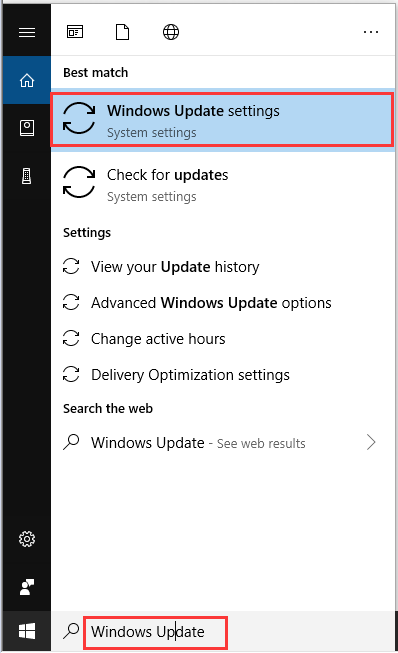
Step 1. Input Windows Update in Cortana and select Windows Update Settings.
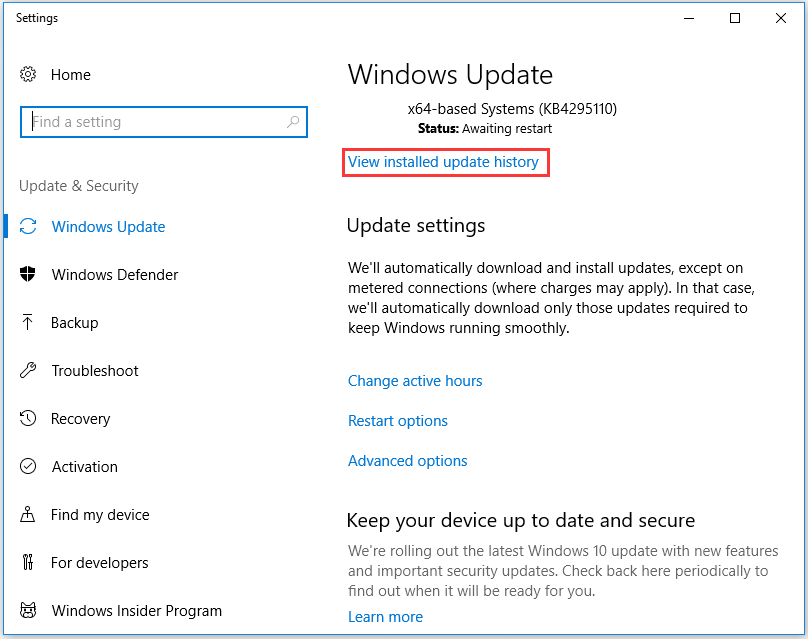
Step 2. In the pop-up window, click on View installed update history. Then you can get a list of installed Windows 10 updates.
Then you will see all the updates installed in history on your Windows 10, including Feature Updates, Driver Updates, Quality Updates, and Other Updates.
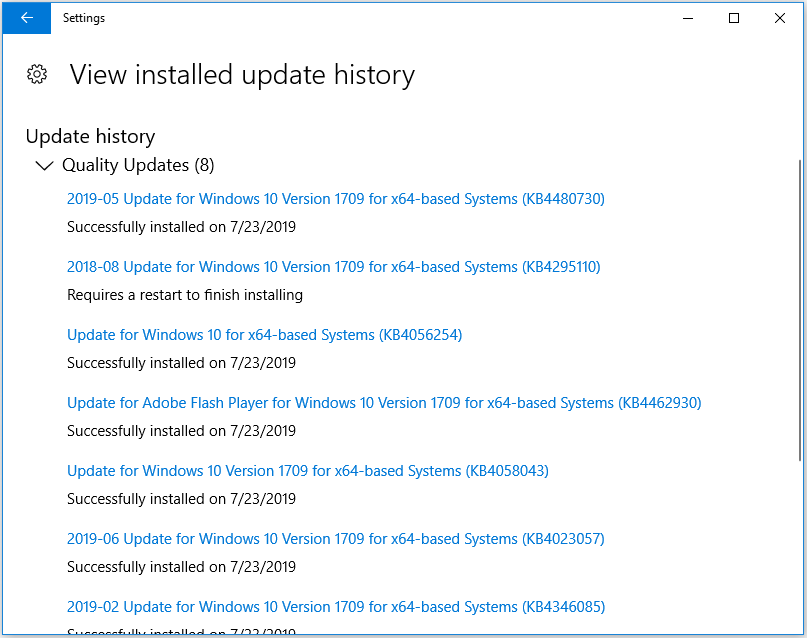
Tip: You need to go through the list of updates manually because you can’t search for a specific update by using this method.
In addition to this method, there are two simple ways about how to get a list of Windows 10 installed updates.
Method 2. View Installed Windows Updates Using Command Prompt
The list installed Windows 10 updates command line can be used to export the Windows 10 installed updates. Now, let’s see how to run them.
Option 1. WMIC Command to List Installed Windows Updates
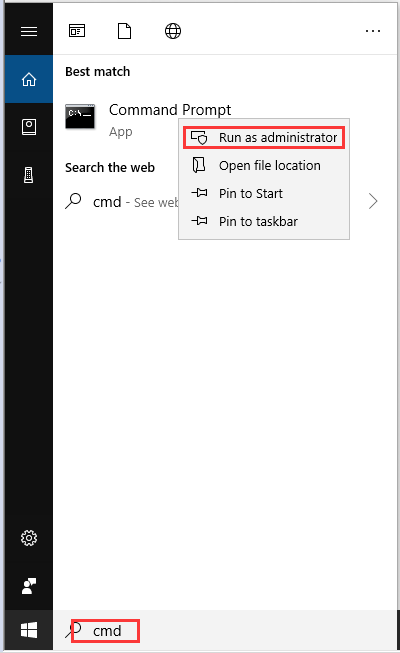
Step 1. Type cmd in the search box to open a command prompt and select as administrator.
Step 2. Type wmic qfe list full command to get all information about each hotfix installed on your computer.
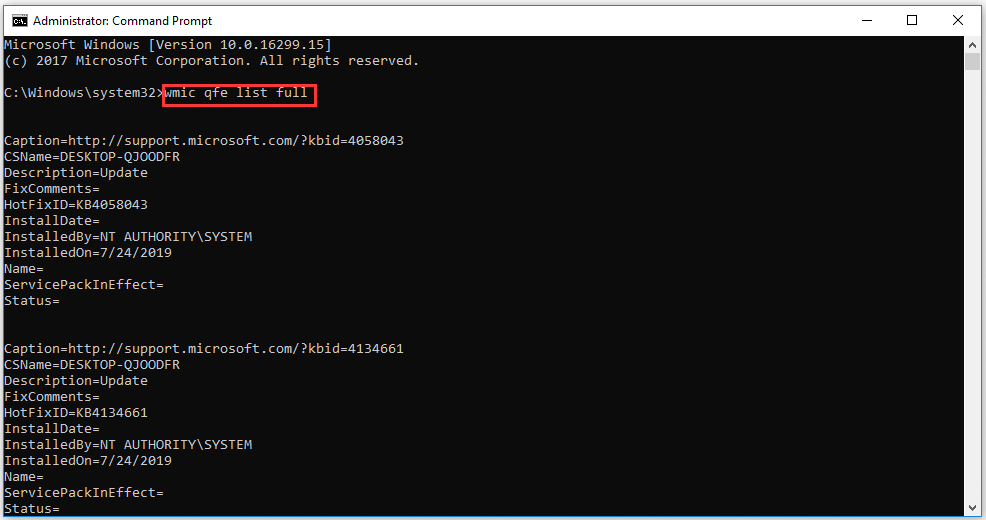
Then you can scroll up and down to view Windows 10 installed updates.
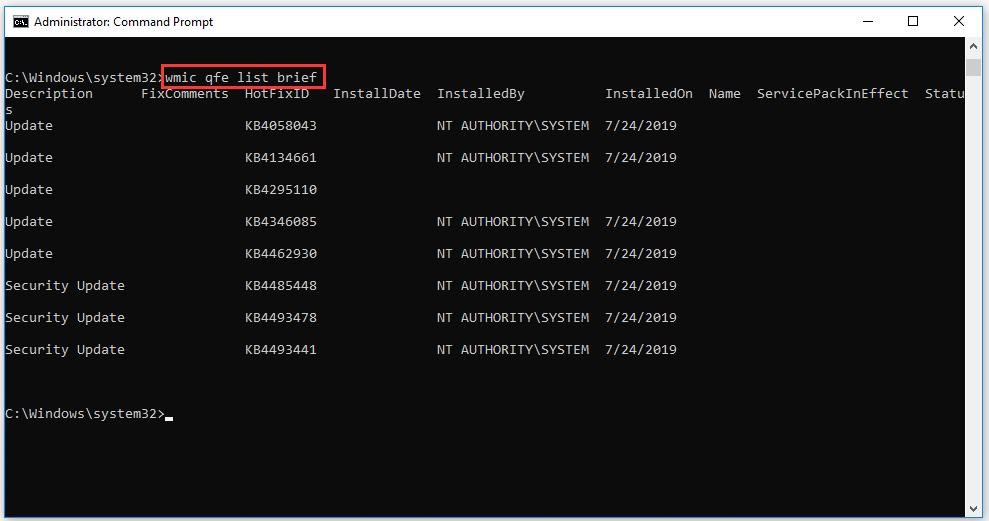
Or if the full information I not required, you can run wmic qfe list brief command.
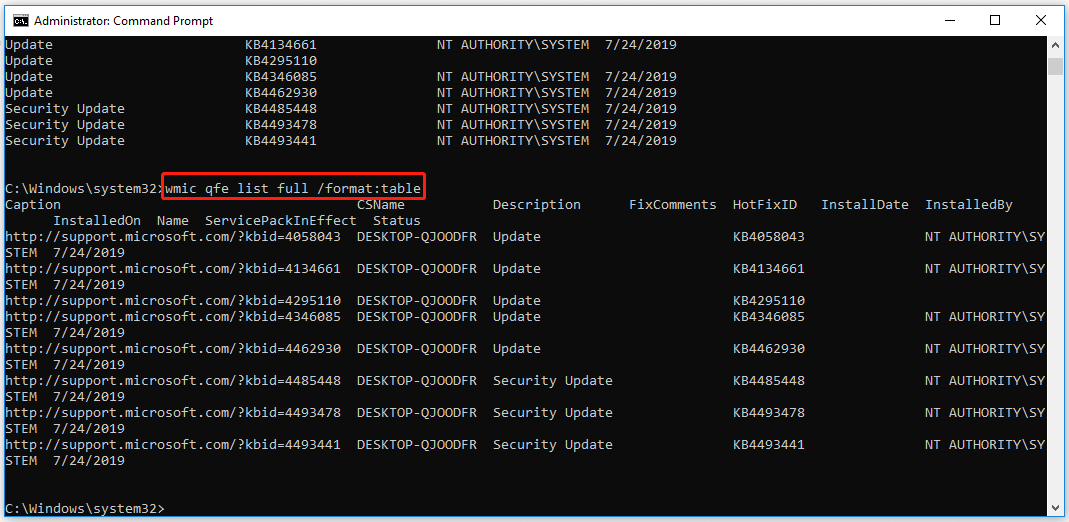
Type wmic qfe list full /format: table command to format the output as a table so that it is easy to read and comprehend.
Option 2. Run Systeminfo Command
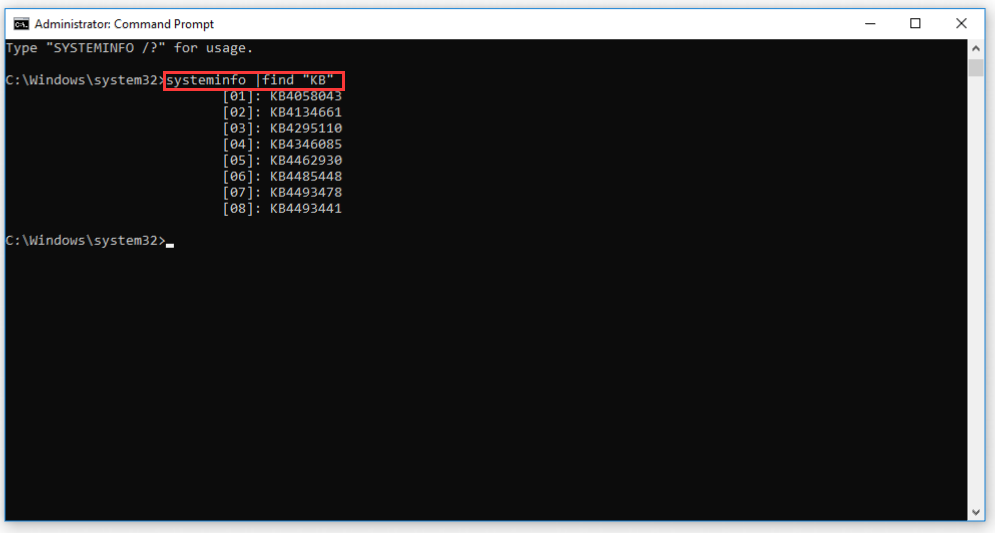
If you only want a list of knowledgebase updates numbers, then you can use the systeminfo command.
Step 1. Open command prompt window.
Step 2. Input systeminfo | find “KB” command and hit Enter button. Then you will see all Windows 10 knowledgebase updates number listed.
There is another easier way to export a list of installed Windows updates besides using the command line. Windows Powershell is a powerful tool that can be used to access various services an administrator in Windows.
Now, let see how to use this powerful tool to view Windows 10 installed updates.
Method 3. View Installed Windows Updates Using PowerShell
The list installed Windows 10 updates Powershell also enables you to get a list of Windows installed updates. Here is how to do this.
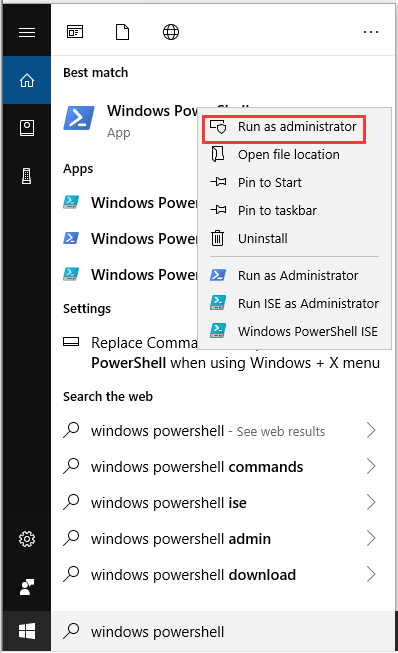
Step 1. Type Windows Powershell in the search box and right-click it to select Run as administrator.
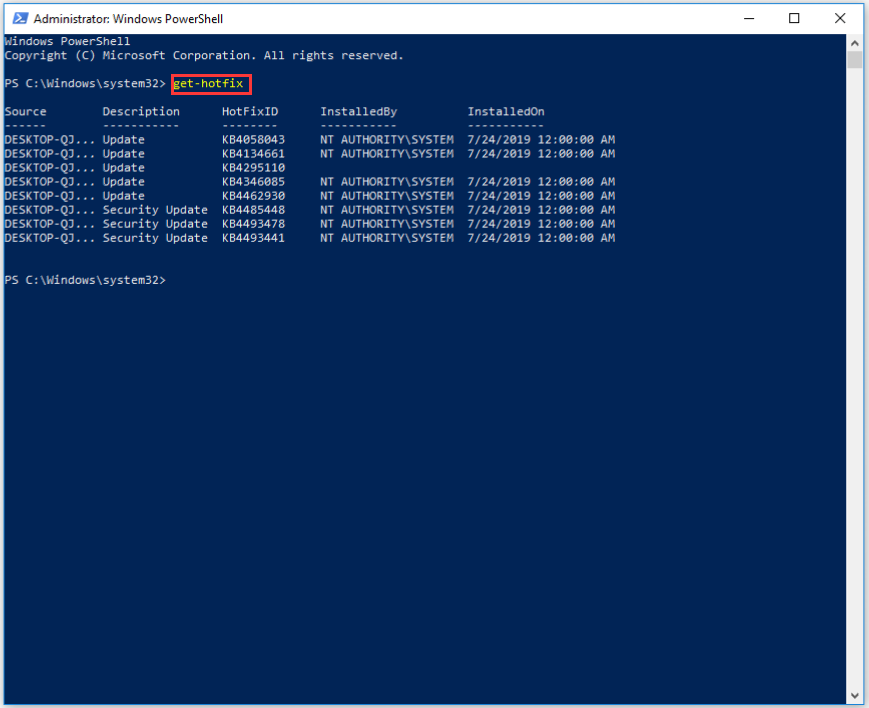
Step 2. In the pop-up window, type get-hotfix command and hit the Enter button. Then all the hotfix installed files on your computer will be listed here and the installation date of each hotfix will also be shown.
Bottom Line
To check your installed Windows updates, you can use the graphical Windows Update interface, Command Prompt, or PowerShell.
User Comments :