
Get “bootrec /fixboot access is denied” error when attempting to fix Windows 10 boot error? In this post, we show you the best solution to bootrec access is denied Windows 10 as well as the precaution. Read and have a try.
What Is Bootrec Fixboot Access Denied Error?
When trying to repair startup issues using the Windows Recovery Environment, many users encounter the following error:
bootrec /fixboot
Access is denied.
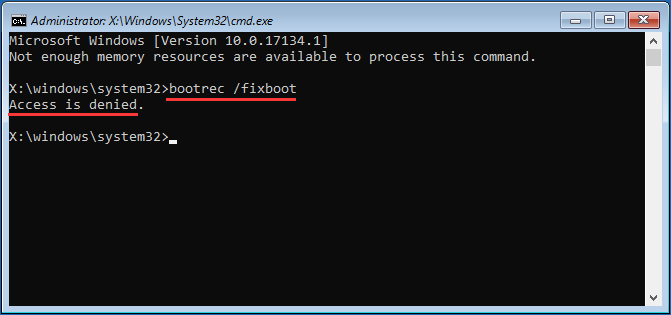
This error prevents Windows from repairing the boot sector and may leave the computer unable to start.
This error occurs when trying to repair a broken Windows boot system, particularly on modern Windows 10 or Windows 11 systems using UEFI/GPT partitioning. It means the system’s recovery environment cannot write new boot files to the EFI System Partition.
What Does Bootrec /Fixboot Do?
The command bootrec /fixboot writes a new Windows-compatible boot sector to the system partition.
Bootrec is a Windows command-line utility for repairing boot records, and /fixboot is the parameter that writes a new boot sector to the system partition.
It is commonly used when:
- Windows won’t start
- BCD is corrupted
- Boot files are damaged
- Blue screen occurs
Further reading:
Bootrec /fixboot is typically the second step in the standard sequence of four commands. Each command serves a specific purpose. The sequence is as follows:
- bootrec /fixmbr
- bootrec /fixboot
- bootrec /scanos
- bootrec /rebuildbcd
These commands are part of the bootrec.exe utility tool, which runs within the Windows Recovery Environment (WinRE) to fix critical boot startup issues, such as a missing or corrupted Windows bootloader, a corrupt Master Boot Record (MBR), or damaged Boot Configuration Data (BCD).
Why Does Bootrec /Fixboot Access Is Denied Appear?
Here are the most common reasons:
- EFI Partition Is Not Mounted: Windows Recovery Environment cannot write boot files if the EFI partition has no drive letter assigned.
- EFI Partition Is Corrupted: Improper shutdowns, failed updates, or cloning operations may damage the EFI partition.
- BCD Store Is Corrupted: Windows cannot locate valid boot entries.
- UEFI/GPT Boot Configuration Issues: Many users encounter this error after switching between UEFI and Legacy BIOS or after converting disks between GPT and MBR.
- Disk Errors or Bad Sectors:If your system drive has bad sectors, then the boot commands fail to execute properly.
Fortunately, this article covers factual causes and proven solutions with safe recovery methods.
Method 1. Fix Bootrec /Fixboot Access Is Denied on GPT Drive
This method is useful for the error appearing on a GPT drive. To repair, you need to prepare a Windows installation media. Now, try the steps below to create one:
- Click here to download Windows Media Creation Tool.
- Prepare a USB drive of at least 8GB disk space.
- Insert your USB drive into your computer, run Media Creation Tool and accept the agreement.
- Select Create installation media (USB flash drive, DVD, or ISO file) for another PC and hit Next.
- Select Use the recommended options for this PC and click Next.
- Select USB flash drive option and hit Next.
- Select your drive from the list and click Next.
- Let the process complete.
Once complete, insert the USB drive into your computer and reboot. When you see the option to boot from USB, press a key to do that. (If you have set your computer to boot from hard drive only, you need to enter BIOS setting to add USB drive to the boot list first.)
Then, follow the steps below to assign a drive letter to the EFI partition and rebuild boot files.
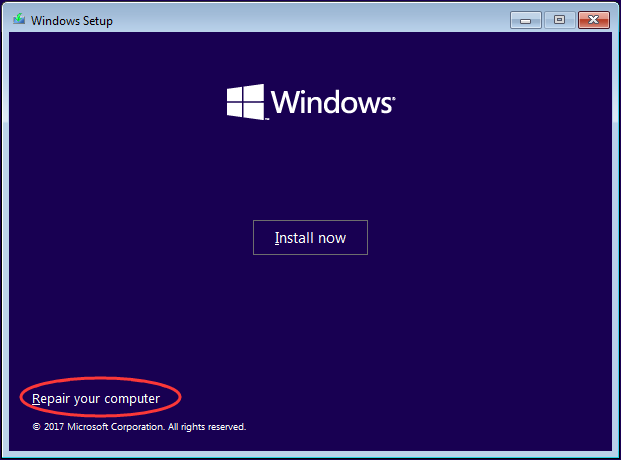
Step 1. From the initial Windows screen, accept the default settings for the language to install, the time and currency format as well as the keyboard or input method. Next, click the Repair your computer link instead of Install now.
Step 2. Select Troubleshoot and then Advanced Options.
Step 3. Select Command Prompt.
Step 4. Type diskpart and press the Enter key.
Step 5. Type list disk and press Enter. Now pay attention to the disk number and identify which one is the boot disk. Usually, it is Disk 0; if not, find the disk number in your own case and remember to type the correct one in the following relevant steps.
Step 6. Type select disk 0 and press Enter.
Step 7. Type list volume and press Enter. Now pay attention to the volume number of the EFI partition.
Step 8. Type select volume N and press Enter. Also, type the one in your own case instead of N.
Step 9. Type assign letter=N: and press Enter. N: can be replaced by any drive letter that is not taken by any partition. Remember which drive letter you assign here for it is rather useful in the rest steps.
Step 10. Type exit and press Enter to leave diskpart.
Step 11. Now type N: (the drive lettered you just assigned) and hit Enter.
Step 12. Type format N: /FS:FAT32 and hit Enter.
Step 13. Type bcdboot C:windows /s N: /f UEFI and hit Enter.
Now repeat the process of running the bootrec /fixboot command, bootrec access is denied Windows 10 should be solved now.
Method 2. Perform Startup Repair on MBR Disk
Some users say that Method 1 does not help at all because, in their cases, bootrec /fixboot access is denied no EFI partition exists on the boot disk. If you are in the same situation, try to perform a startup repair.
First of all, you need the help of MiniTool Partition Wizard Bootable, which is a built-in tool in MiniTool Partition Wizard Pro. Get this professional partition manager first and then follow the guide below to create a MiniTool bootable media and use it to boot your PC.
MiniTool Partition Wizard DemoClick to Download100%Clean & Safe
- How to Build Boot CD/DVD Discs and Boot Flash Drive with Bootable Media Builder?
- How to Boot from Burned MiniTool Bootable CD/DVD Discs or USB Flash Drive?
When you are in the main interface of the bootable MiniTool Partition Wizard, please do these operations:
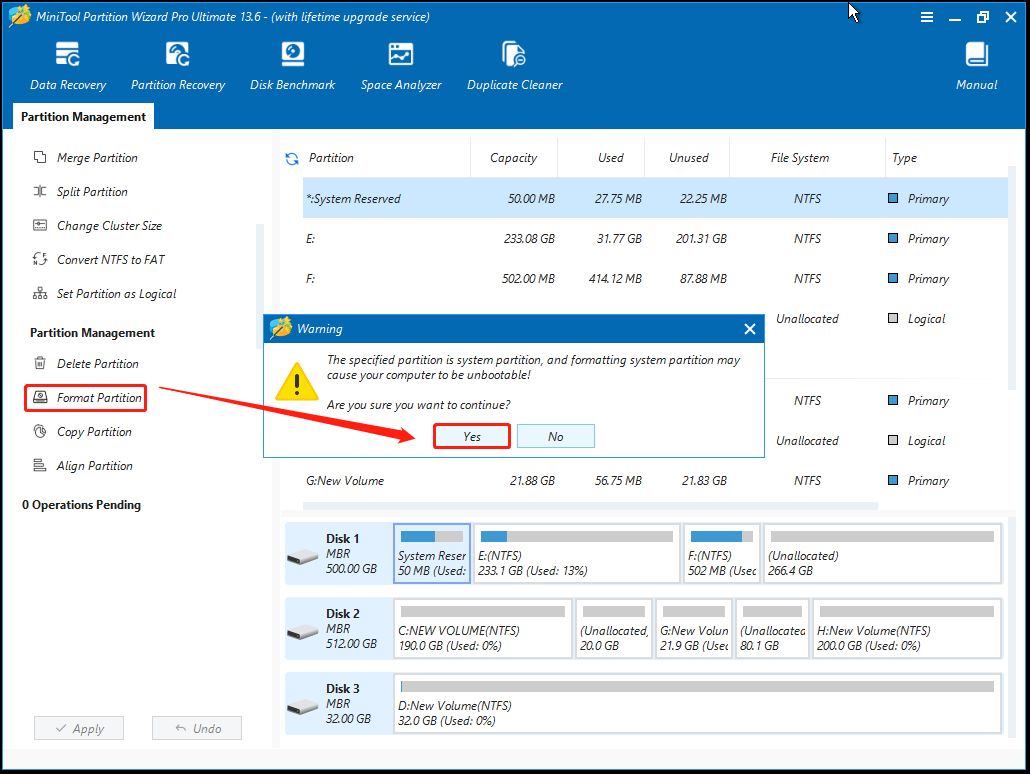
Step 1. Select the 500MB around system reserved partition and choose Format Partition from the action panel. You will receive a warning message saying this is a system partition and formatting may cause computer to be unbootable. Just click Yes to confirm.
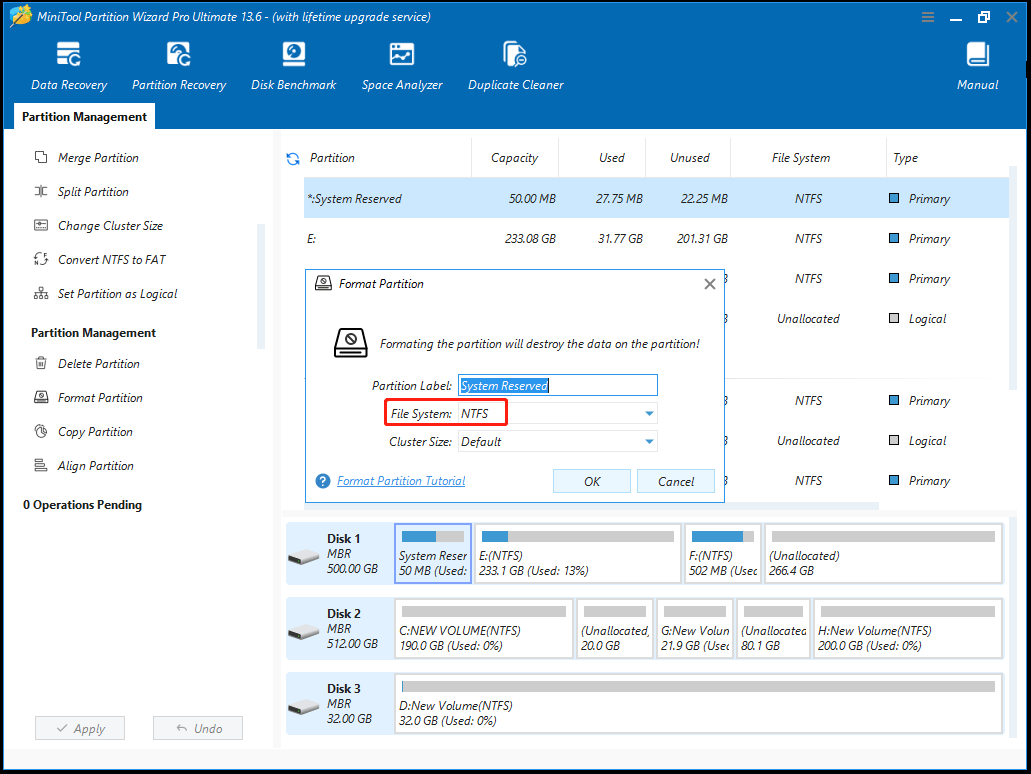
Step 2. Select NTFS as the desired file system and hit OK. Then press Apply button on the toolbar.
Now you have to get your Windows 10 repaired by the automatic Startup Repair utility.
- Boot your PC from the Windows installation media.
- From the initial Windows screen, select the language to install, the time and currency format as well as the keyboard or input method. Next, click the Repair your computerlink instead of Install now.
- Select Troubleshootand then Advanced Options.
- Select Startup repair. Immediately, it starts to detect and will try to fix the errors it has found. Usually, it brings a reboot. If it does, DO NOT press any key to boot from the USB drive again. Just wait for your Windows to load.
If Startup Repair says it couldn’t fix the error, continue with Method 3 to resolve bootrec access is denied Windows 10.
Method 3. Run CHKDSK
To repair disk errors using CHKDSK, here are 2 options:
- Use Windows Installation Disk
- Use Bootable Media created by MiniTool Partition Wizard
The detailed steps are shown below:
Option A: Use Windows Installation Disk
- After booting the computer from the Windows installation disk, skip the first-screen language selection and choose Repair your computer.
- Select Troubleshootand then Command Prompt.
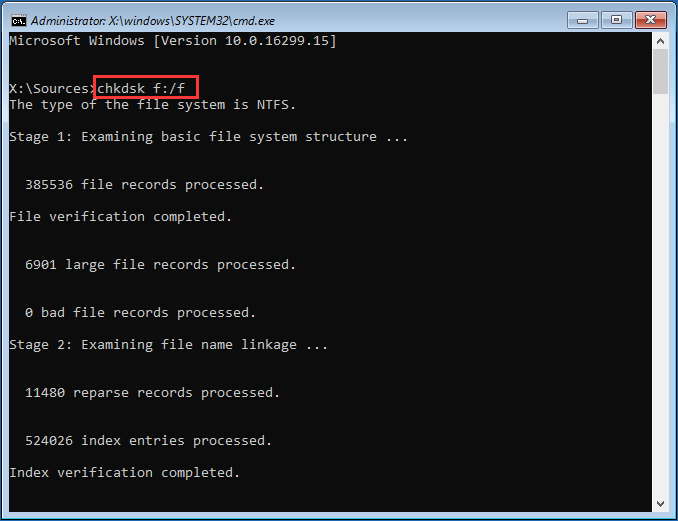
- Type chkdsk c: /r and hit Enter. This assumes Windows is installed on your C: drive. If the drive letter for your system partition is different, type the real one. (You can run diskpart > list volume to check according to partition size.)
- Allow the process to complete and reboot.
Option B: Use Bootable Media Created by MiniTool
- Boot your computer from MiniTool bootable media and then choose Partition Wizard from the menu. In this software, view the drive letter of your system partition and keep it in mind.
- Exit MiniTool Partition Wizard and chooseCommand Console from the menu.
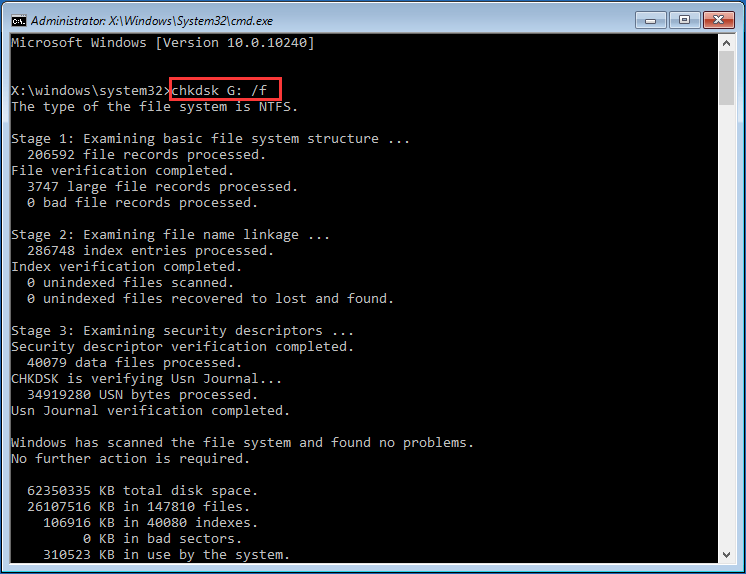
- Then type chkdsk c: /r and press Enter. (Please replace the drive with the one you paid special attention to just now.)
- Let the process complete and exit.
Method 4. Reinstall Windows
If the above methods don’t work, the last effort is to reinstall your Windows 11/10. Before that, get your important files to your access. Usually, with MiniTool Partition Wizard, you have 2 choices:
- Use the Copy Diskfeature to back up the whole system drive and then reformat the whole drive when you reinstall.
- Turn to the Data Recoveryfeature to recover files saved in the system partitions and then reinstall Windows to the original system partition.
MiniTool Partition Wizard DemoClick to Download100%Clean & Safe
Use Copy Disk
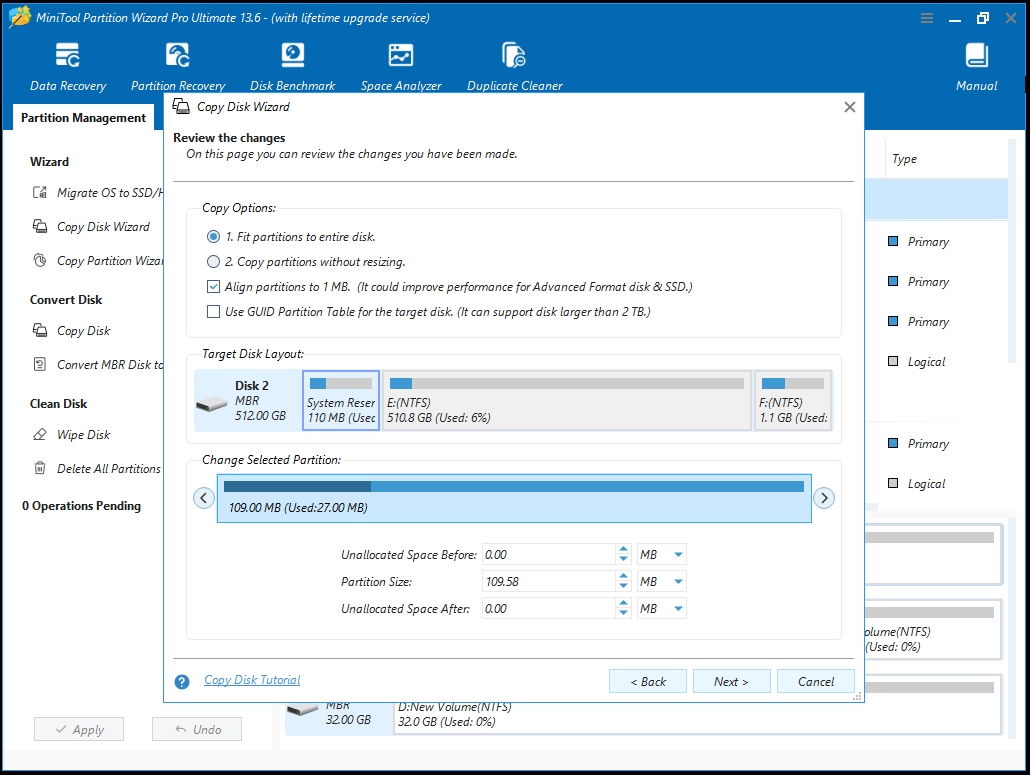
Here is a simple guide to copying the system disk with this software when the computer is unbootable:
- Use the created MiniTool Partition Wizard bootable media to boot your PC. Then connect an external hard drive of which the whole data can be overwritten.
- In the main interface, right-click the system disk and select the Copyfeature from the context menu.
- Follow the wizard to select the target disk and adjust the copy options.
- Click Finish > Apply.
Use Data Recovery
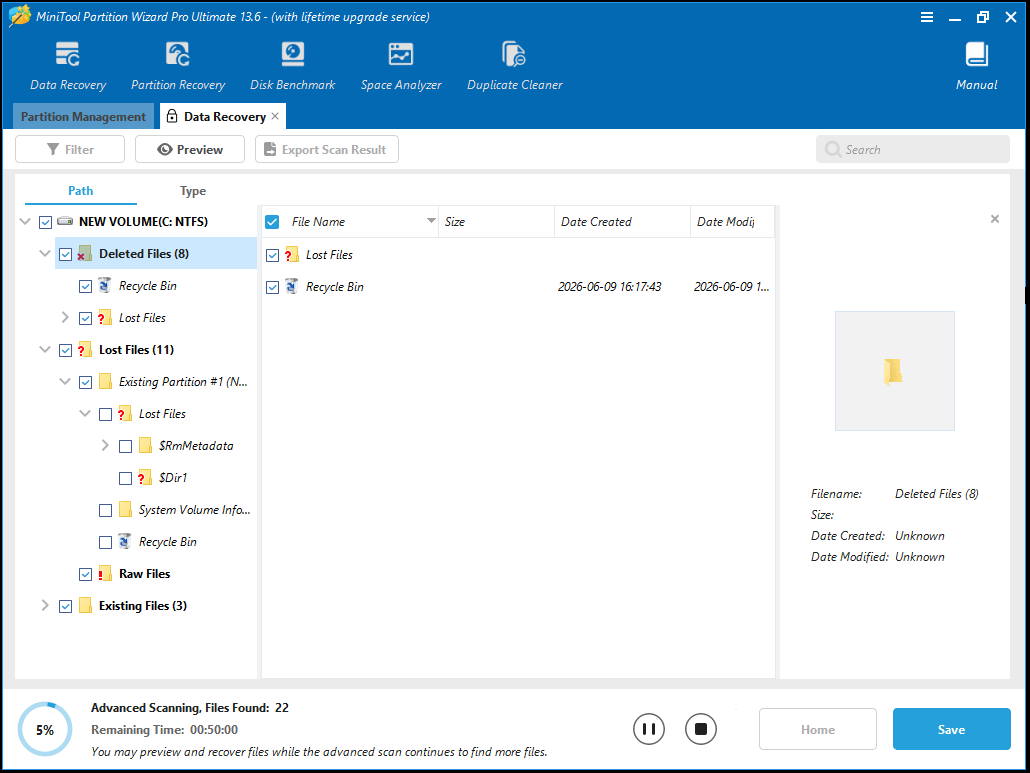
Here is a simple guide to recovering files using the Data Recovery feature when the PC fails to boot:
- Use the MiniTool Partition Wizard bootable media to boot your PC.
- Click Data Recovery from the toolbar. Then select the real system partition and click Scan.
- When Data Recovery has finished the scan (or you can pause/stop the scan once the needed files are found), check the files you want to recover and click Saveto keep these files on a non-system disk.
After you have saved the important files from the system partition, you can go ahead to reinstall Windows 10/11.
Back Up Your Computer for Error Prevention
To avoid boot errors and the bootrec fixboot access is denied error, you should consider making system image backups.
As for that, we strongly recommend a Windows backup software, MiniTool ShadowMaker. It is a comprehensive backup solution designed for Windows that allows you to back up operating systems, disks, partitions, and files.
MiniTool ShadowMaker TrialClick to Download100%Clean & Safe
See the guide on how to backup PC to an external hard drive:
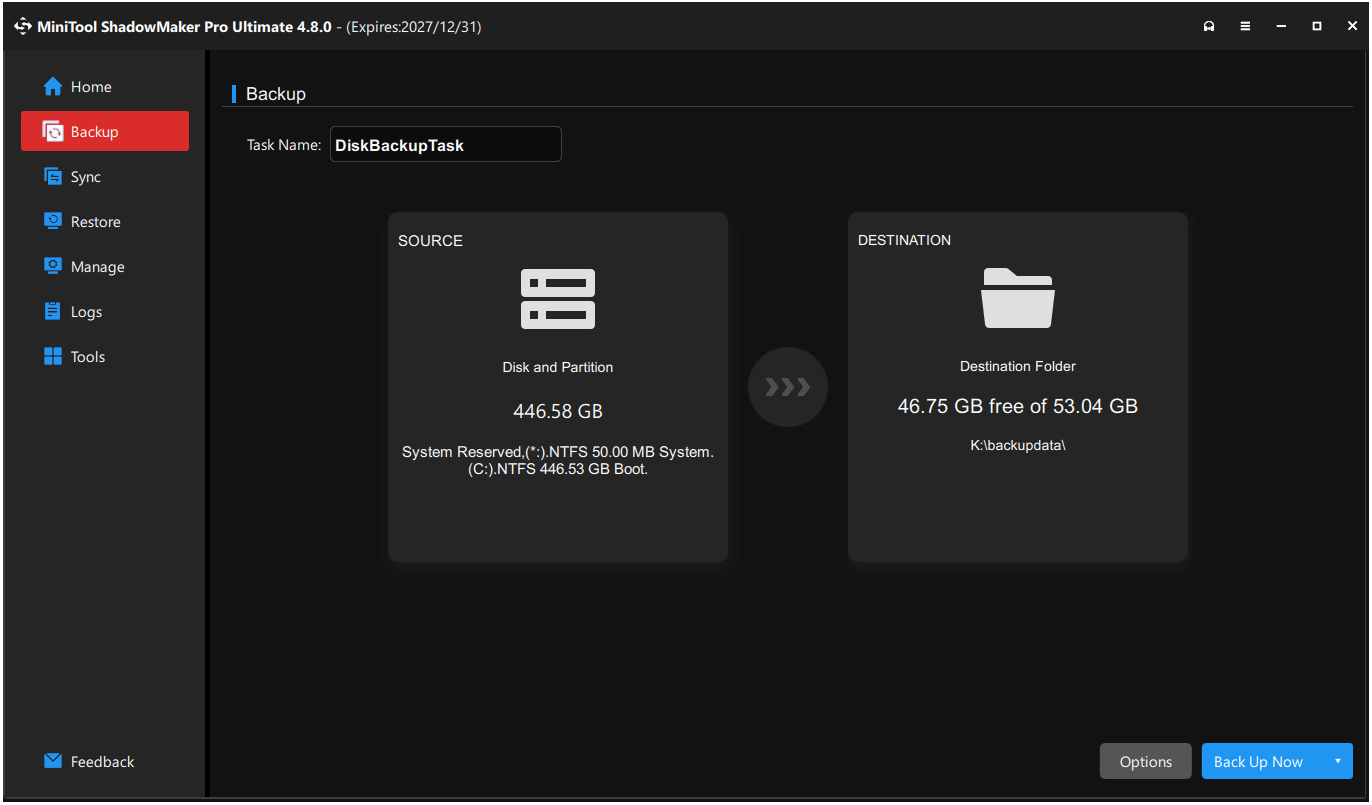
Step 1. Connect an external hard drive to your Windows PC.
Step 2. Double-click on MiniTool ShadowMaker and tap on Keep Trial after finishing loading.
Step 3. In the left pane, click on Backup. Then, you see that system partitions are selected by default as the backup source. If you only want to create a system image, you only need to go to DESTINATION to choose an external drive. Then, start the system backup.
If you want to back up files on your PC, choose the files that you want to protect – go to SOURCE > Folders and Files, check the items you want to back up, and click OK. Then, choose an external drive as the storage device.
Step 4. Finally, start the file backup by clicking Back Up Now.
Besides, here are the other future prevention tips:
- Avoid force shutdown
- Use genuine Windows updates
- Check disk health regularly
- Install antivirus protection
Bootrec Fixboot Access Is Denied FAQ
- Reboot the computer.
- Press F8 as the Windows logo appears.
- Select Repair Your Computer.
- Select Command Prompt from the System Recovery Options menu.
- When you are in the Command Prompt, execute bootrec /rebuildbcd.
- Use VPNs.
- Try accessing the site through its IP.
- Use browser extensions like Hola.
- Address the GoogleDNS / OpenDNS / 1.1.1.1 DNS.
- Boot your computer into Recovery Mode.
- Launch Command Prompt under Advanced Options.
- To rebuild BCD, use the command bootrec /rebuildbcd. This will scan for your operating systems and let you select the OS you want to add to BCD.
- Wait for the command to complete.
Bottom Line
The “Bootrec /Fixboot Access Is Denied” error is usually caused by EFI partition access problems, corrupted boot files, or damaged boot configuration data. This post offers effective methods to fix this issue.
If you have any difficulty in using our software, don’t hesitate to contact us via [email protected]. Be sure you have a clear statement of your issue. We read and reply soon.
User Comments :